Working With Knits: Sewing The Summerhaus Nico Pullover

So I haven’t posted since May…but is that right? Have I not sewn a garment since May?? I have done some other sewing, including another dress for my daughter. I will share it soon! Anyways, I finally have a new finish: the Nico Pullover a pattern by Summerhaus.
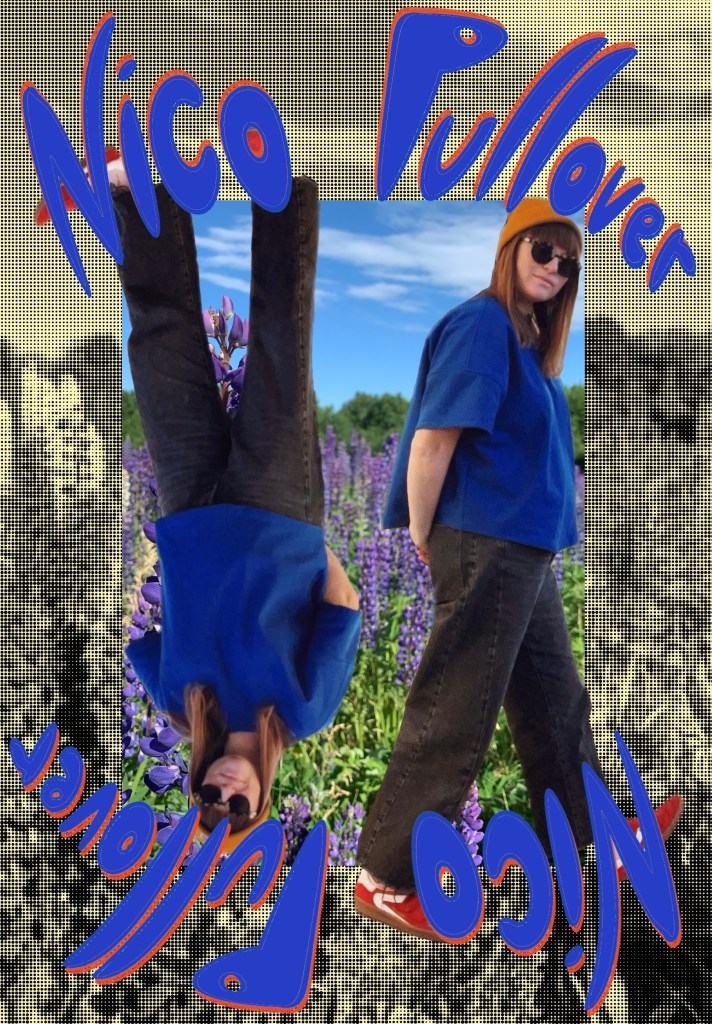
Sometimes writing a post is just an excuse for me to play around with images in Procreate

How This Top All Came To Be When I Was Afraid Of Knits

For a while now I’ve ignored patterns that are meant for knit fabric. I hadn’t tried sewing with them but heard that they’re frustrating and when I’m already getting frustrated with wovens why make things even harder on myself? So, what changed? There was a perfect storm here of supporting a good cause, getting a deal on a pattern that intrigued me, getting a deal on fabric, and finally wanting to stretch my skills a little and try new things.

In July Summerhaus had a pattern sale with profits benefiting Palestine so I bought her Poppy top and Nico Pullover patterns. While the Nico is sewn with a knit I really fell in love with the shape of the garment, knowing someday I would get over it and be brave enough to try working with a knit fabric.

In October I had a great thrift haul at Saver’s and found a good sized piece of blue sweatshirt material for $3.99, plus I had a $15 off $40 coupon to use. I didn’t have a tape measure with me (adding this to my purse now for future thrifting!) but it looked like enough for a top. And it was! I failed to look for any stretchy fabric at the last Textile Center garage sale in September so I was so happy that I scored this sweatshirt fleece. Finding exactly what I need at a thrift store is the biggest thrill (and don’t get me started on the brand new 125 count box of 3 gallon compost bags I got for a fraction of the actual retail value, I’m still riding that high too).
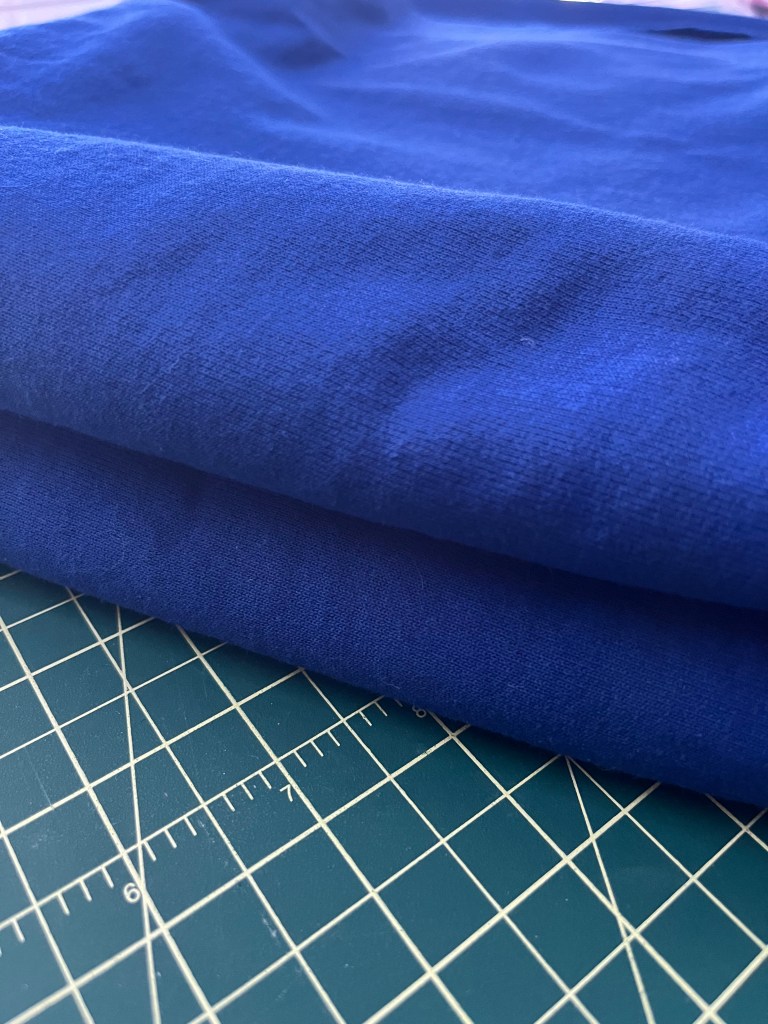
folded blue sweatshirt fleece fabric sitting on a green cutting mat with yellow lines
Washed, dried and ready to go!

I’m also way WAY more likely to dive into a project if I have a secondhand material to work with. The stakes are SO LOW so if it doesn’t work out as intended I didn’t lose much money, only time and effort but I would gain ~knowledge.~ This thrifted fleece was exactly what I needed to give sewing with knits a first try. Time to face my fear and take the plunge!

The Pattern

The Nico pullover is intended to be a boxy sweatshirt. It comes in two views, long sleeved and short sleeved. You can make it with a slightly curved hem or there are cut lines on the pattern for straightening it out. I think I had enough fabric to make a long sleeved version but decided I’d do the short sleeved version for two reasons: it’s quicker and I didn’t have any short sleeved sweatshirts in my closet. I also opted to keep the hem curved.
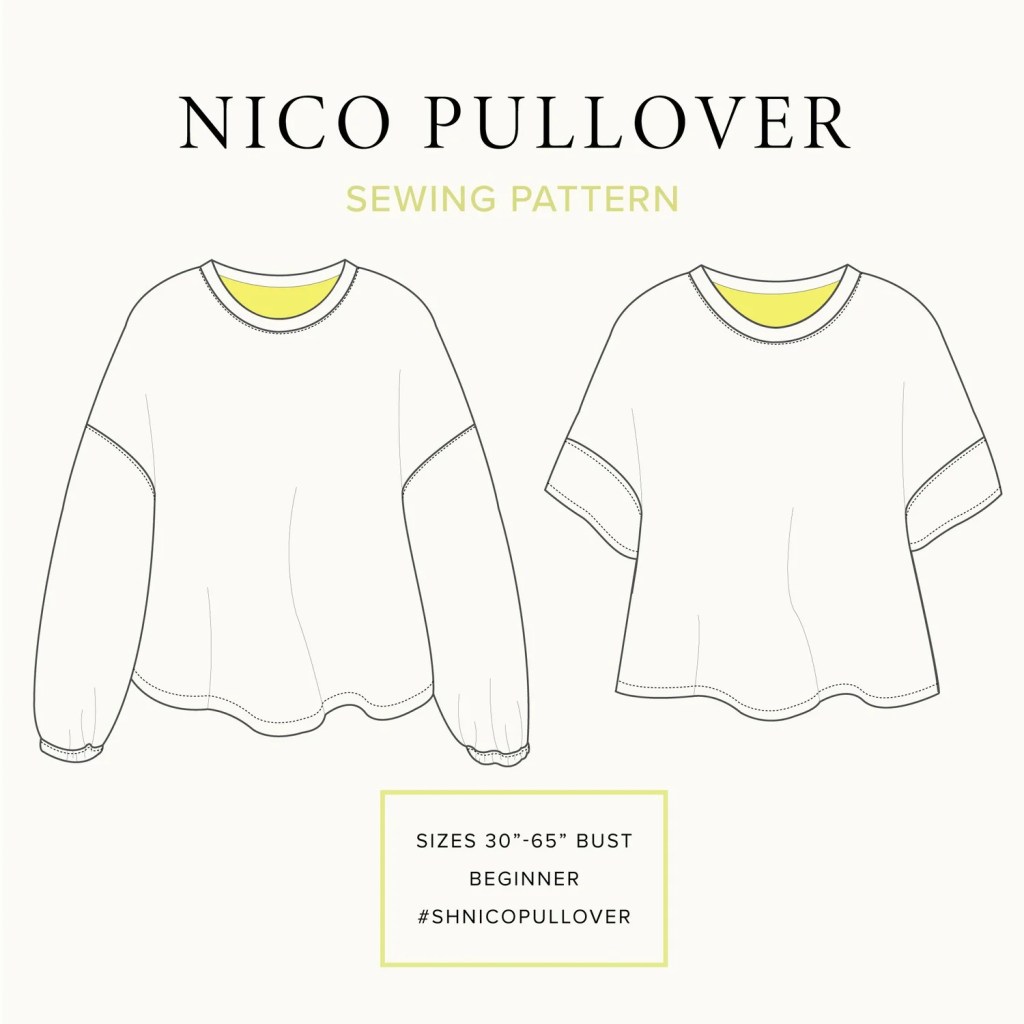
For the Nico you are only cutting out 5 pieces: a front, a back, the sleeves and the collar. To determine which collar pattern piece to use you have to figure out the stretch percentage of your fabric. There’s a handy chart in the instructions. If I had purchased this fabric online it likely would’ve had the stretch percentage listed but obviously there wasn’t any of this info on the Saver’s price tag 😆. This thrifted fleece was hardly stretchy and I determined the stretch percentage to be 20%.

This pattern is a quick sew! If you are an experienced sewist and especially experienced with knits you can knock this out in two hours. You don’t have to finish seams, there aren’t many pieces to sew, there’s minimal topstitching. Sewing with a knit was a fun challenge and it wasn’t as daunting as I made it out to be—perfect for helping me get back into garment sewing after a long break!

Sewing With A Knit

Having never sewn with a knit before I wasn’t even sure if I had the right needles. Thankfully after searching my stash I had a ballpoint needle and it worked great. I really couldn’t believe my luck while sewing this garment. It felt…easy?? I almost sewed this on my old but new-to-me serger (thanks auntie S!) but didn’t for 4 reasons:

  • I haven’t ever changed the needles on that thing (ope),
  • wasn’t sure if I could just use Schmetz needles in there,
  • really didn’t feel up for retheading it,
  • and I’m not that great at using it still.

Sewing it on my domestic machine it was!
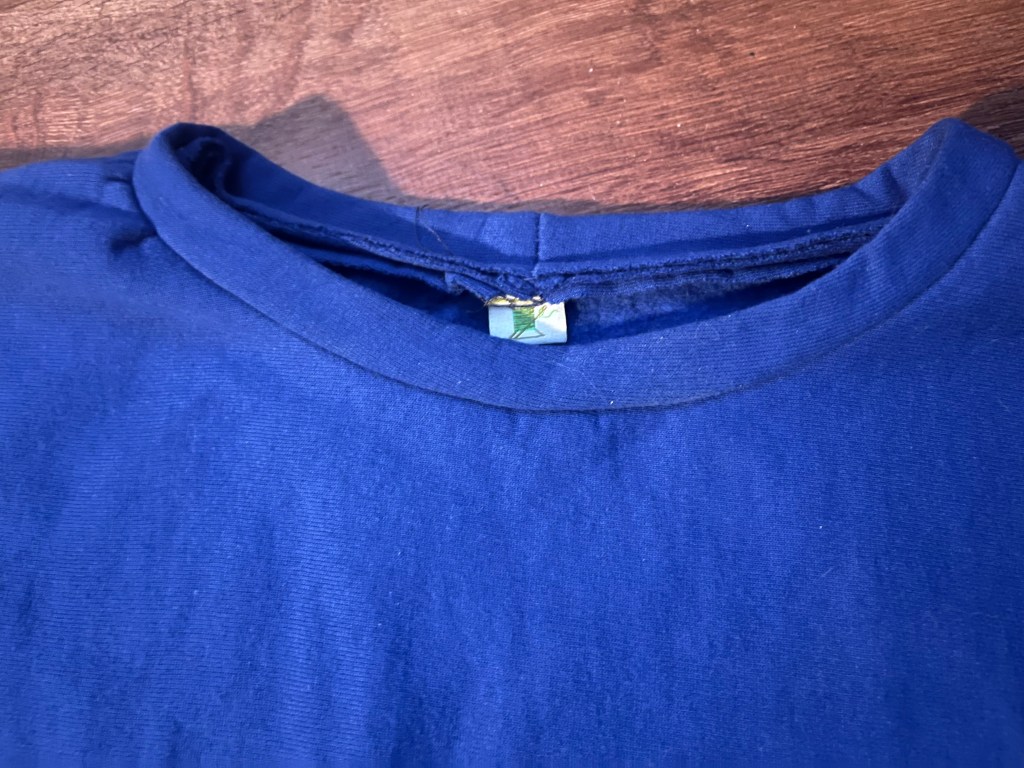
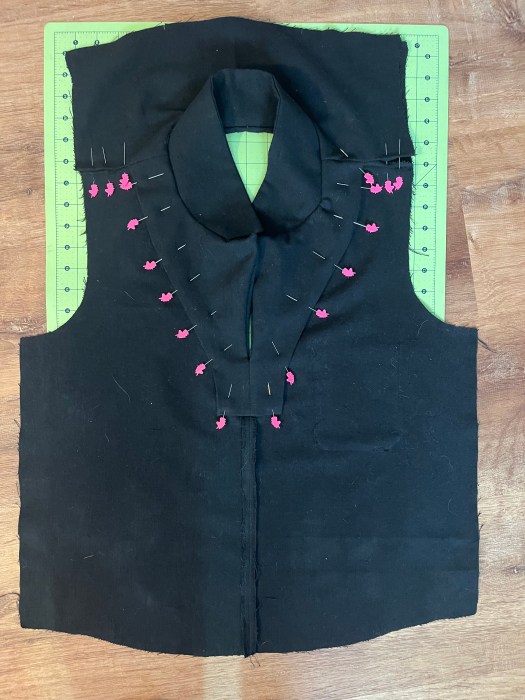
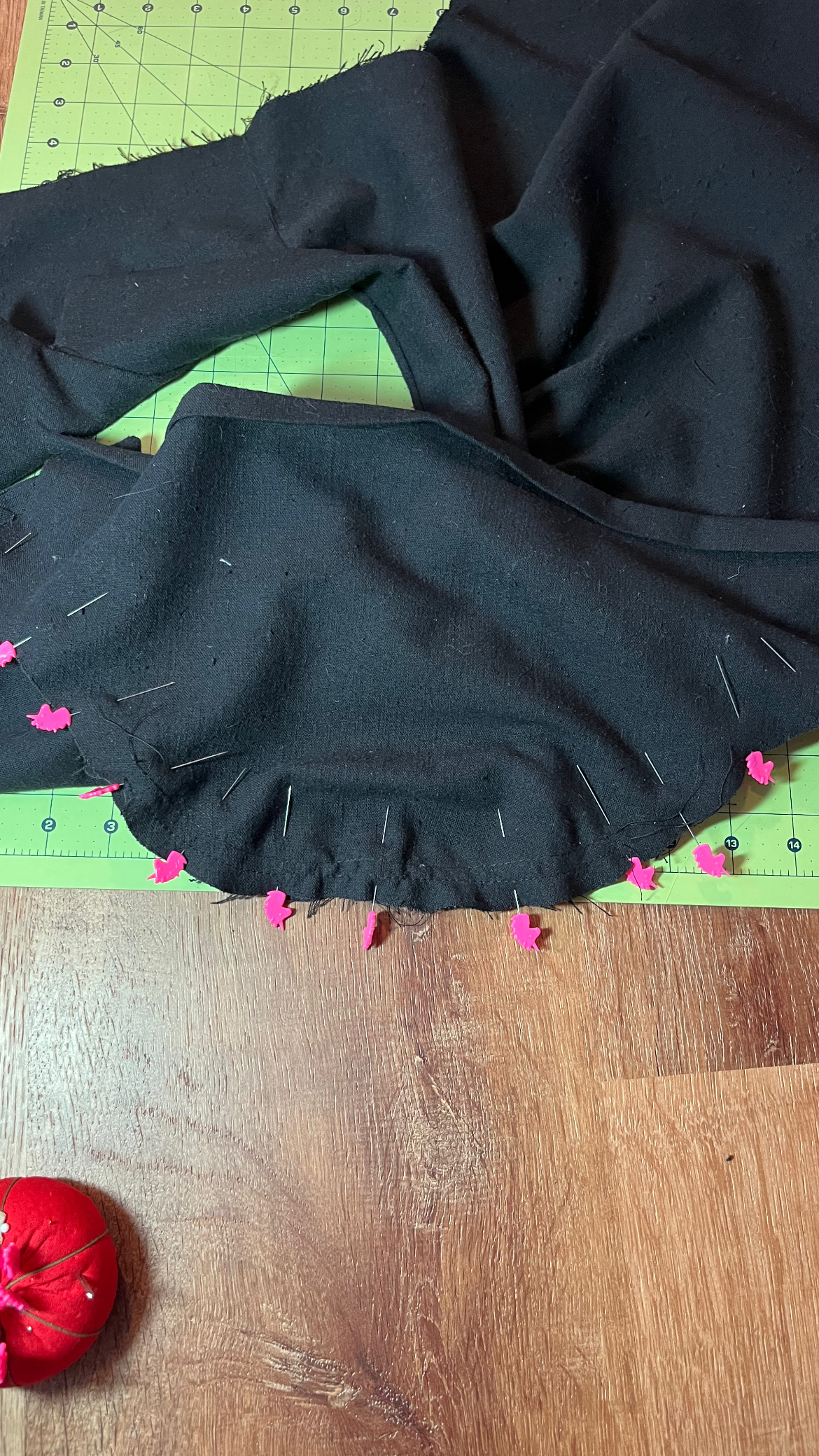
You can see two puckers at the collar near the shoulder here; there is one more near the center back seam

Everything really went well except for the collar and hem (more on that below). I got two puckers sewing it in and I still haven’t fixed it. I think I will…eventually. When I showed the almost finished product to the gal working at Sew Inviting she was so sweet and was like “the puckers just look like a design feature” (bless her). I also used a cute Cotton and Ochre sewing label I picked up at the equally cute Open Studio Sewing shop this summer but I totally put it in wrong. I’m VERY happy, however, that I have a label in as it’s not super obvious which is the front and which is the back, even if it doesn’t look the nicest!

Twin Needle Time!

Sewing the hem using a twin needle to get two parallel lines of stitching

The Nico pullover is the first pattern I’ve made that suggests sewing with a twin needle. My machine came with one when I bought it a year ago and now I finally got to use one! I wasn’t sure if the one I had was good for stretch so I went ahead and bought a new twin needle. With my track record of breaking needles lately I figured having an extra would be a good idea anyways.

Thank god for Babylock’s YouTube videos, they are short and sweet and save me from having to go hunting in my manual for what I need to learn (but OK the manual comes in handy too). I probably would not have thought to “tell” my machine that I was using a twin needle had I not watched that video. Threading the twin needle was a breeze too.

I tested out using the twin needle on some of the scraps and the stitching looked a little loose so for the first time ever with my machine I changed the tension. I went from a 4 up to a 6. It looks great! It’s a little tricky sewing the hem with a twin needle as there are a few places I didn’t catch the hem. You have to sew it from the front! I’m leaving it for now and hoping for the best that the stitches hold through multiple wears and washes.

Project Cost Breakdown

  • Pattern: $12.80 on sale
  • Fabric: $2.50 (ish)
  • Label: $1.25 (A pack of 8 cost $10)
  • New twin needle: $9.50
  • Thread: I used some navy blue cotton Guttermann in my stash but ran out. A new spool cost me $3.50 from Sew Inviting (where I also got my stretch twin needle)

I printed the pattern at home and tiled it together but I’m not going to breaking down that cost. Overall I’m going to say this sweatshirt tee cost me roughly $17.00. Woo hoo!

Final Thoughts
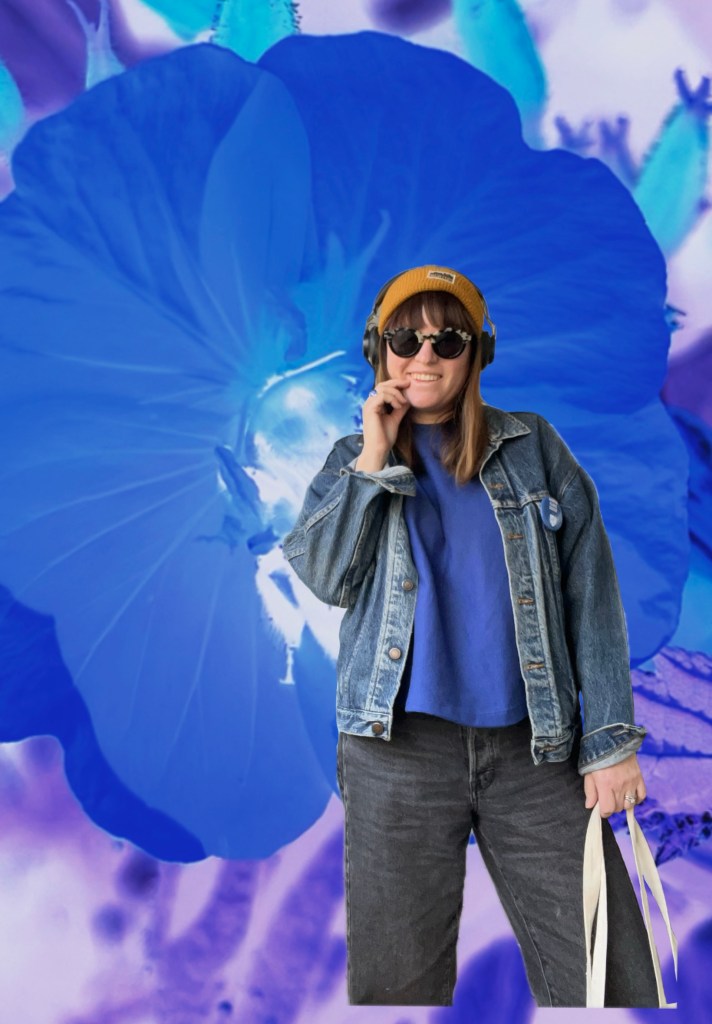
Pretty nice layered under my fave jean jacket

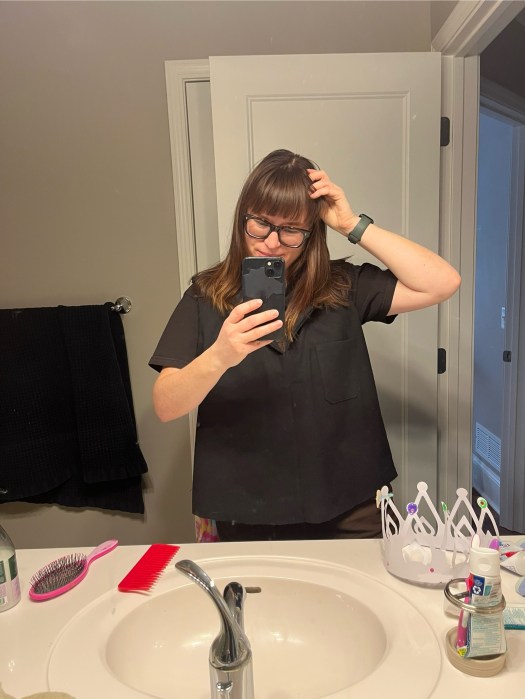
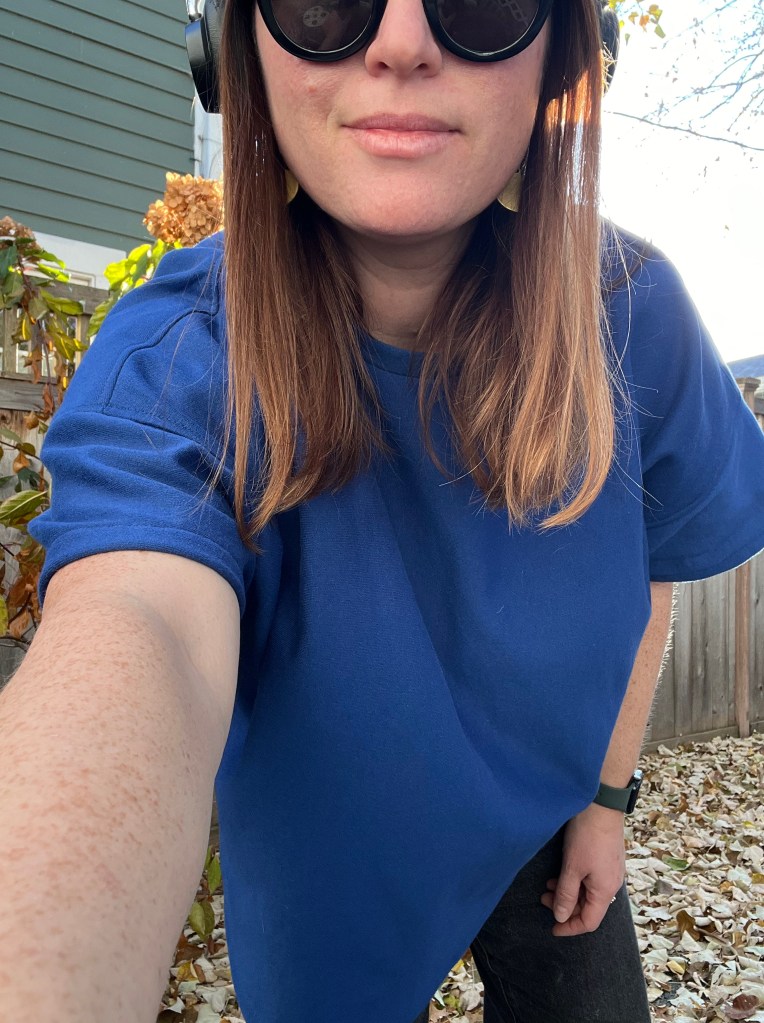
This sweatshirt tee is verrrry boxy. It’s comfy but I felt a little unsure about it when I finished it. I asked a few friends what they thought and the positive feedback gave me the push I needed to give it a go wearing it. I have since worn it several times now and I do like it! I finished this make in November before it got frigid (hi from a 6°F early December day). I took photos on a warm but not too warm sunny day and it was actually pretty perfect to wear on its own then. Lately, however, I have been layering long sleeved turtlenecks underneath it.
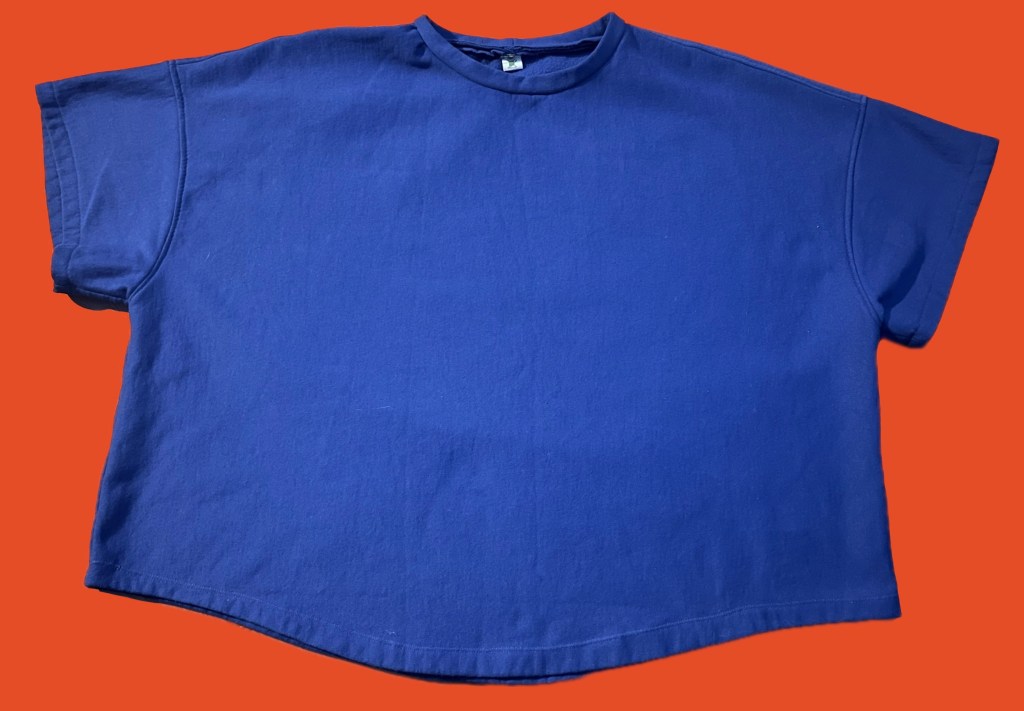
She’s a wide, boxy one!

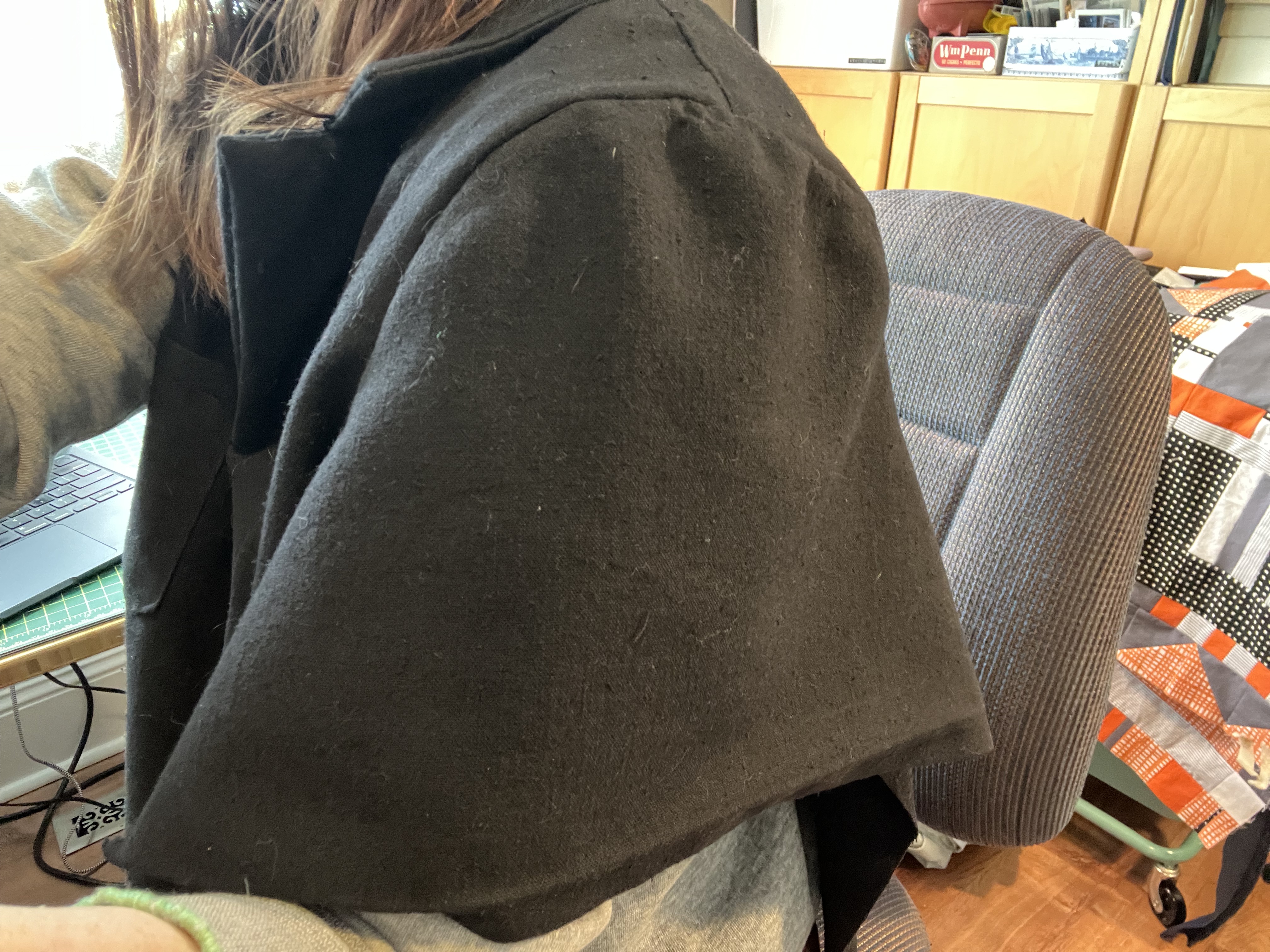
If I make another sweatshirt I’d like to go down a size or even two more sizes, and I’d like to make the long sleeved version. I measured at a size 10 but went down one size to a size 8. A tee made out of jersey in this size would feel too big I think. I didn’t make any mods (it’s drafted for someone 5’ 5,” which is how tall I am) and I do like the cropped but not too cropped length. If I hold my arms straight out you can see straight in the sleeve to my bra which I don’t love; maybe going down a few sizes would fix that.

Lastly the instructions for this pattern are really great. They were clear and easy to follow as a new-to-knits sewist. Maybe it was the low stretch percentage of the material, but if you are like me and scared of knits, give it a try with sweatshirt fleece. It was easy and fun! And if you’re looking for a relaxed sweatshirt or tee or a quick sew to help get you back into the sewing groove I really can’t recommend this pattern enough!

Thanks for reading! xx
Ticking The Box On A Boxy Button Up: Sewing The Common Stitch Bellbird Button Up
Common Stitch Bellbird Button Up, Short sleeved view

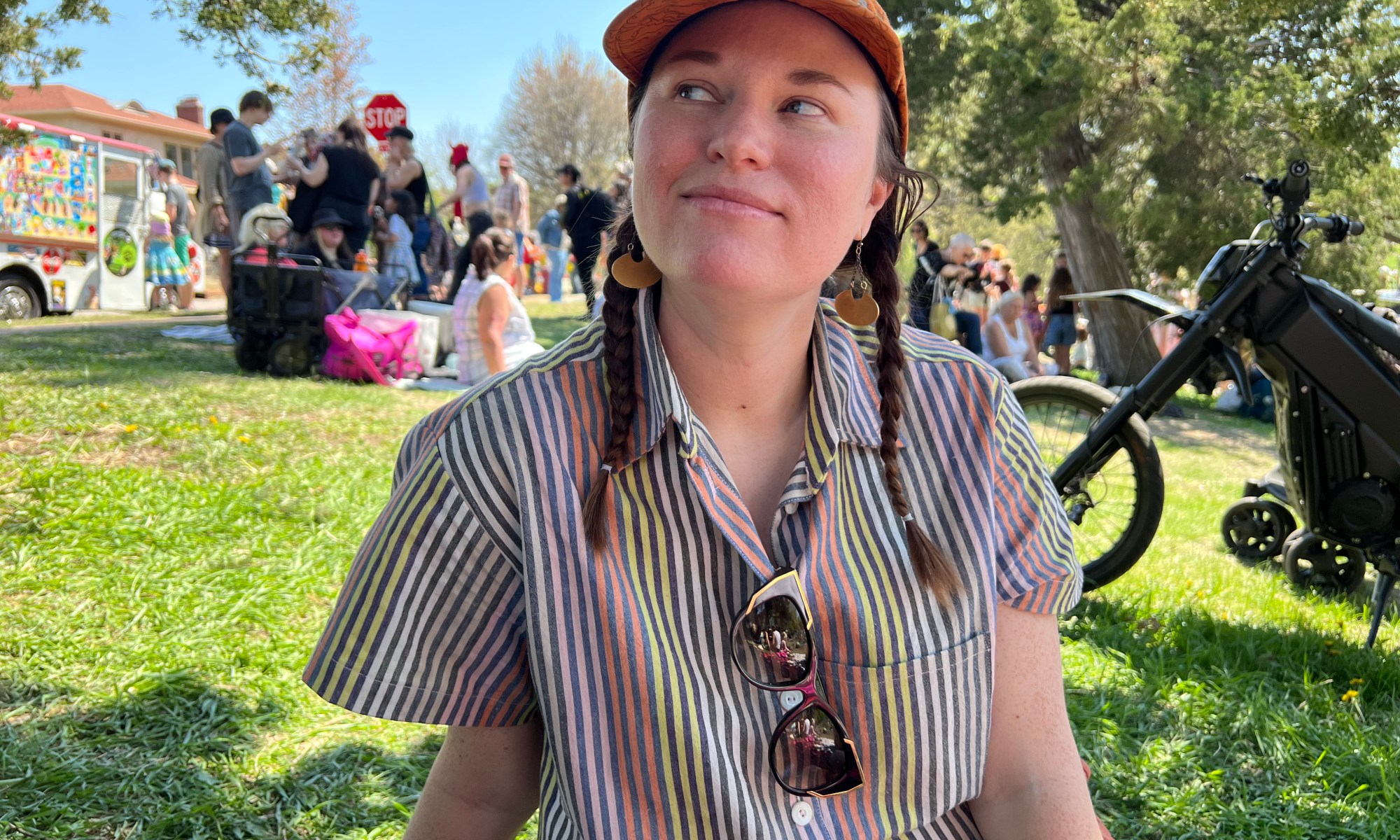
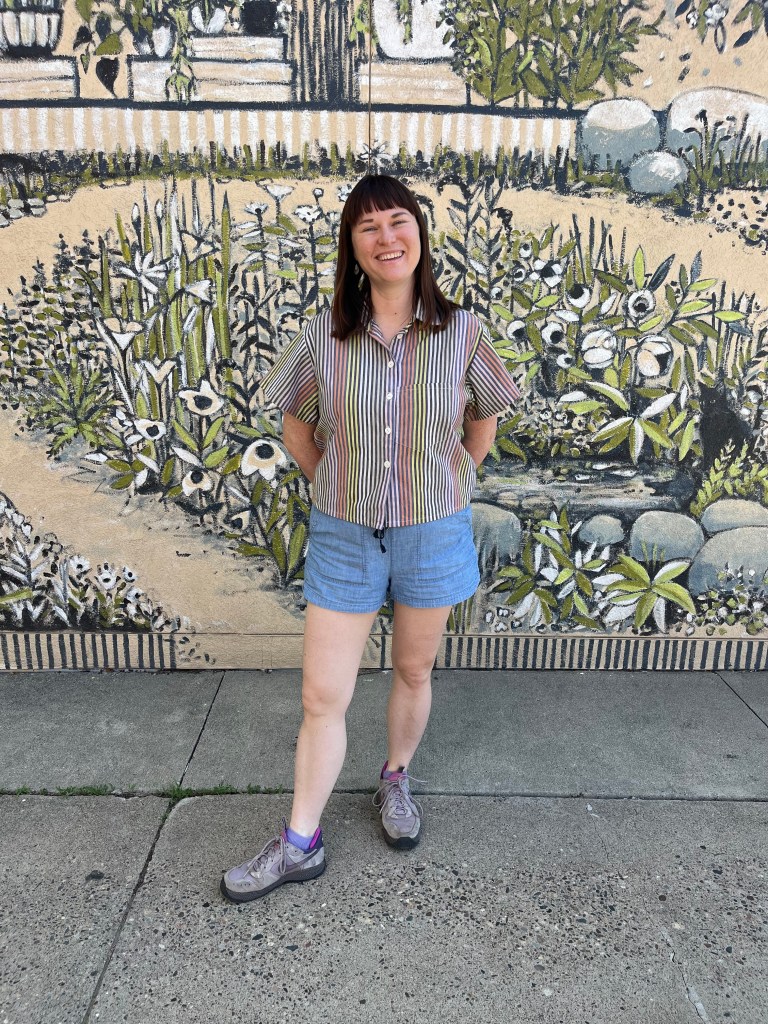
Well, after making Eric his own short sleeved button up shirt I got jealous and decided it was time to make my own. After looking at so many patterns of different button ups (been on my mind since Oct 2024!) I landed on the Bellbird Button Up by Australian pattern company Common Stitch. Really all it took was seeing two great Bellbird button ups on Instagram to seal the deal for me! This one by Bethany of @soberseamstress (she’s also the owner of Fluid Plus Drape) and this one by Emily of @ermthewormsews. Aren’t they both great? I hadn’t heard of this pattern company before seeing those two shirts. I liked the cropped sizing and boxy look and thought the box pleat on the back was a nice detail too. Before I get into allll the details, here’s the cost breakdown of my shirt:

  • Pattern: $6.16 (Normally $12.21 but I had a 10% off shop coupon ($1.22) and used $4.83 from the remainder of an Etsy gift card)
  • Fabric: $21 for 1.5 yards
  • Buttons: $2.00
  • Pattern Printing: $4.97

Total spent: $34.13

(A pink cotton Gutermann thread and weft Interfacing were already in my stash, I’m not going to include those in the total pricing.)

Roughly $35 for materials really isn’t bad in my book! This shirt is going to get a ton of wear.

The Fabric & Buttons

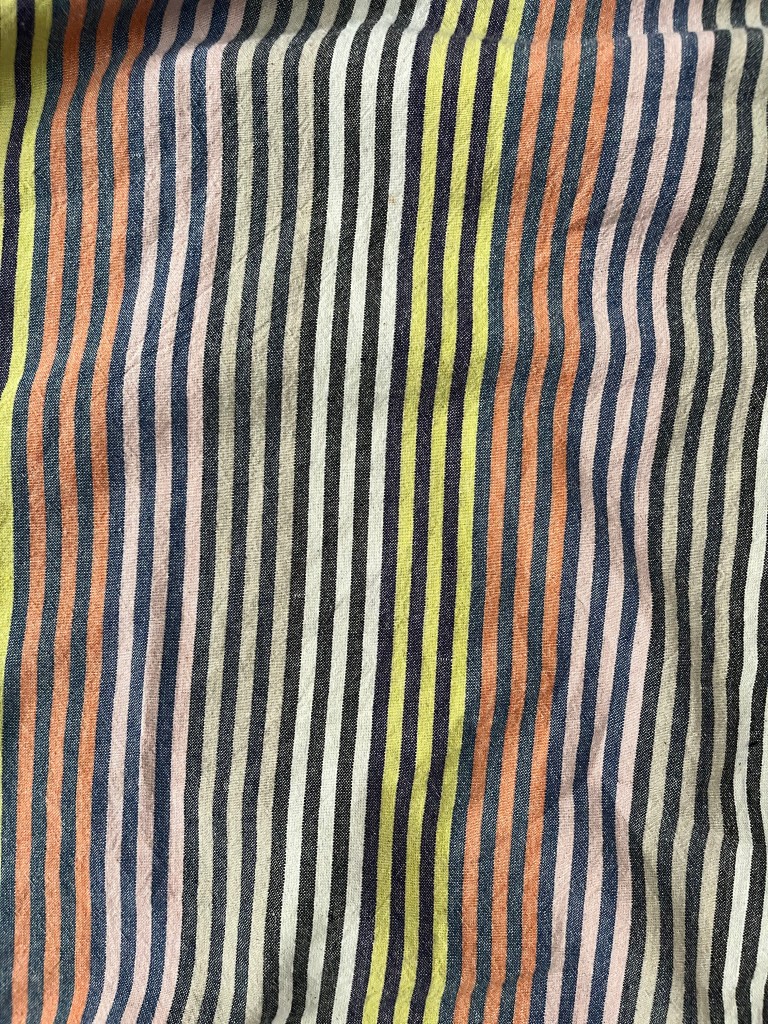
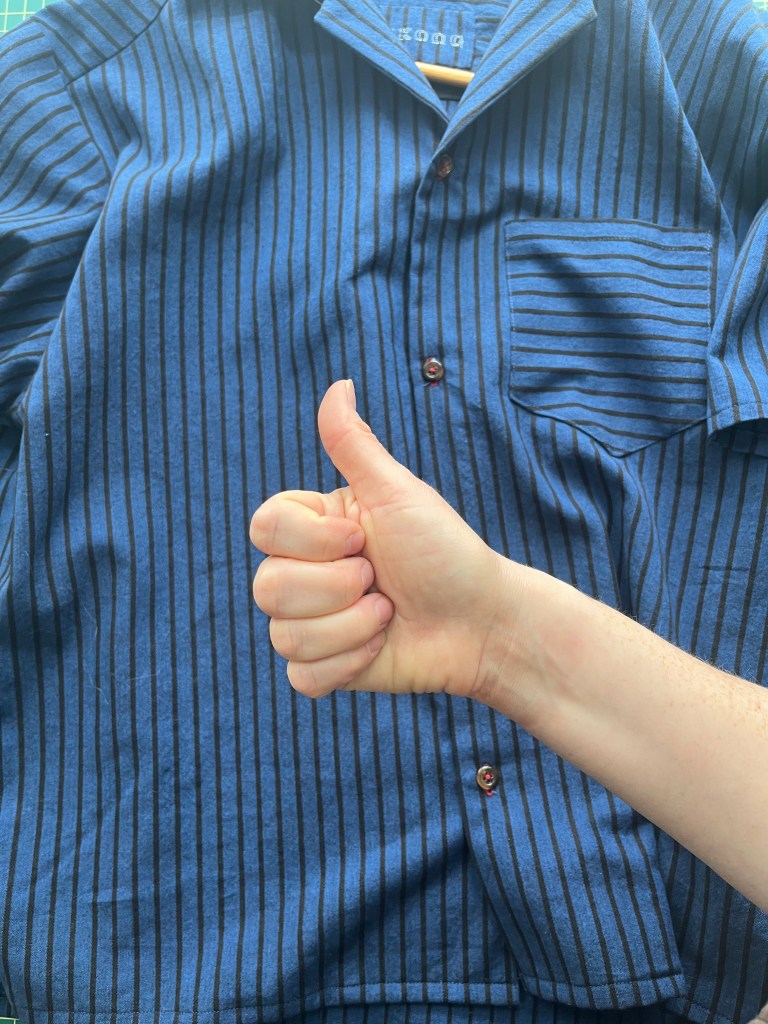
Diamond Textiles Cabana Stripes Sunburst fabric, a lovely shot cotton

Back in February I purchased 2.5 yards of this Cabana Stripes Sunburst fabric by Diamond Textiles from Seams Like Quilting in Spooner, WI. I purchased it without a plan and after staring at in my sewing space for months I decided I finally needed to use it, and use it NOW. It’s a medium weight, yarn dyed shot cotton. It feels sturdy, durable but not rough. I really love it and am glad I used it for a shirt since I don’t have something like it in my closet already.

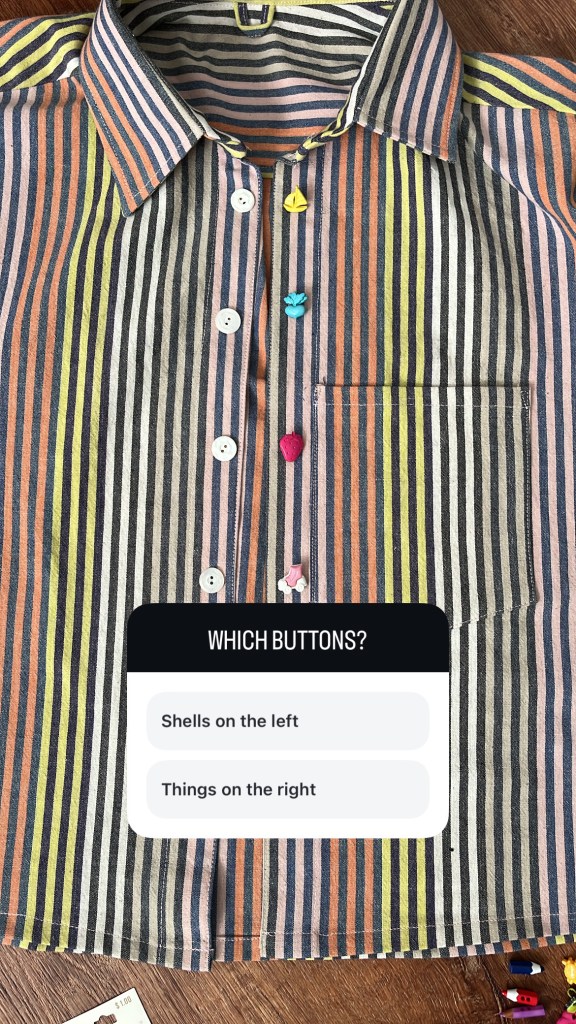
I really went back and forth on what buttons to use. Part of me wanted to go simple and traditional with these shell buttons I thrifted the same weekend I bought my fabric. Part of me also really wanted to use some of my ridiculous buttons I got from the Textile Center garage sale. After doing a poll on Instagram (where the results were really split) my husband tipped the scales over to the white buttons made from shells. I also honestly haven’t sewn a shank button before and that little extra work on looking up a how to (lol I’m sure it’s super easy) also had a hand in me going with the shells (I just wanted to finish the dang shirt!). I like the white ones but I don’t know, do you think I should’ve gone with the fun option?

Things To Consider

Since Common Stitch is an Australian pattern company, their measurements are in metric. I want to emphasize it is not a big deal to do the conversion from metric to imperial, but you do have to do the math when figuring out sizing and how much fabric. The seam allowances are in cm and mm.

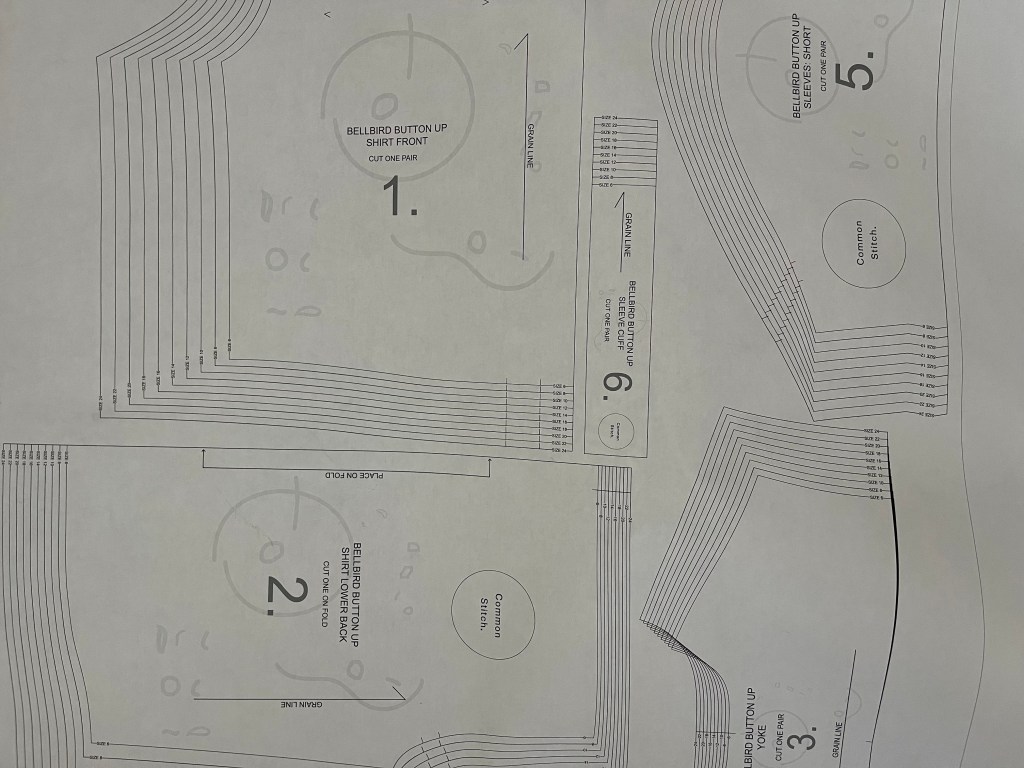
I ran into a problem with printing the pattern as it’s formatted for A4 printer paper which is slightly narrower and slightly longer than US letter. You can’t just do “print to fit” as that will throw off the sizing. I think I could’ve gotten around this using US legal printer paper but instead opted to have my pattern printed at Sewing Lounge over in St. Paul (which, HOT TIP: it’s the cheapest spot I’ve found in the Twin Cities for large format A0/copy shop pattern printing at $3/page! The turn around was incredibly fast too ). 1 Another thing to consider is that when I opened the pattern in Acrobat I found that they didn’t layer their sizes so I couldn’t “turn off” printing the sizes I didn’t want. You’ll have to print all the size lines.

I guess it was nice not taping a bunch of sheets together. I used my Swedish tracing paper to trace off the size I wanted to use in case I make this again in a different size

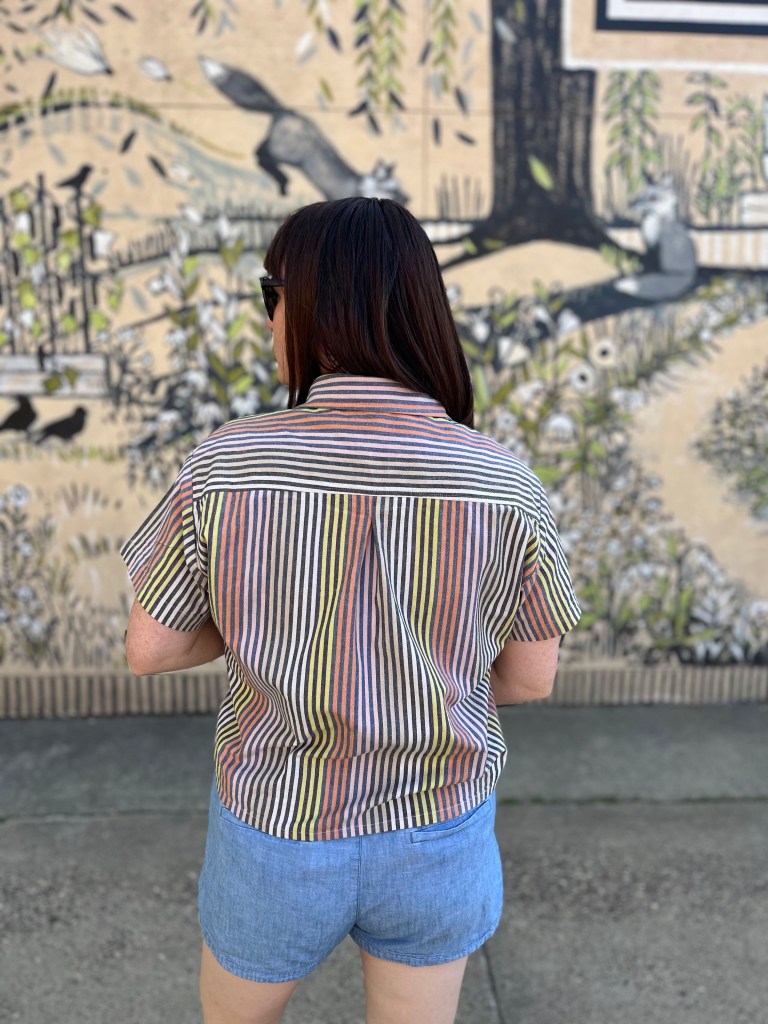
This pattern has a lot of ease; it’s meant to be a boxy top. I made an Aus size 14 (roughly a US 10) even though my measurements had me at a 16 for the bust, 18 for the waist and 14 for the hips. I’m so happy I didn’t go any higher for the size and next time I would make a 14 again or maybe even size down to a 12. When I hold out my arms you can see straight through those arm holes and see my bra, ope! However, I really do LOVE the length of this shirt, it’s perfect for me. The pattern also doesn’t have a lengthen/shorten line so I figure if you wanted to change that you would do so just at the bottom hemline? There is also an option to make this pattern with long sleeves, but it doesn’t have a traditional placket for the long sleeves.

Me? Issues? Always

On That Collar Stand

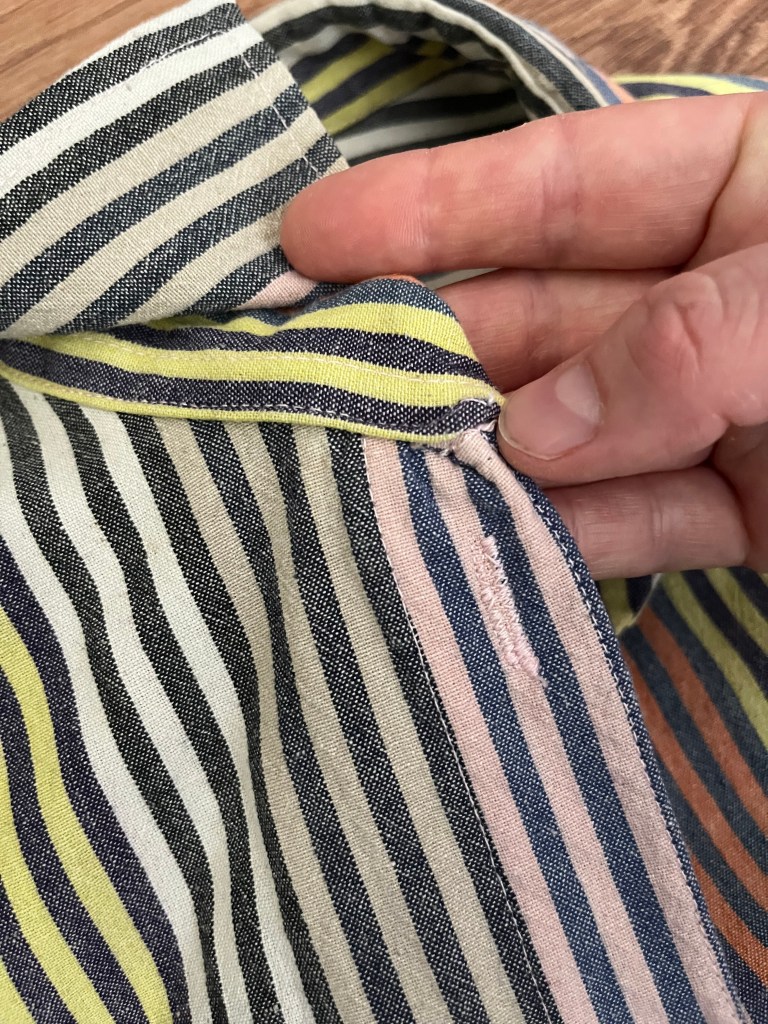
It just looks a little rumpled while I’m wearing it but here you can clearly see the collar stand isn’t sewn to the top of the placket perfectly and the button hole isn’t finished.

As this was my first go with a collar stand, I didn’t do the best job sewing it to the placket and just kind of had to do my best to jam it all in there. You’d have to be looking closely to notice, but I know and it does bother me some. I could try to fix it but I think I’ll just learn from my mistake and do a better job next time. I’m pretty sure this was my error and not the pattern. As it is so super thick up there I couldn’t use my buttonhole foot to make my top buttonhole. I left it as is, sewed the button on and figured I won’t really ever want to button that button. I didn’t even bother to sew a button and buttonhole on the collar stand. I may still fix the unfinished buttonhole but just haven’t attempted yet.

Pocket: Change?

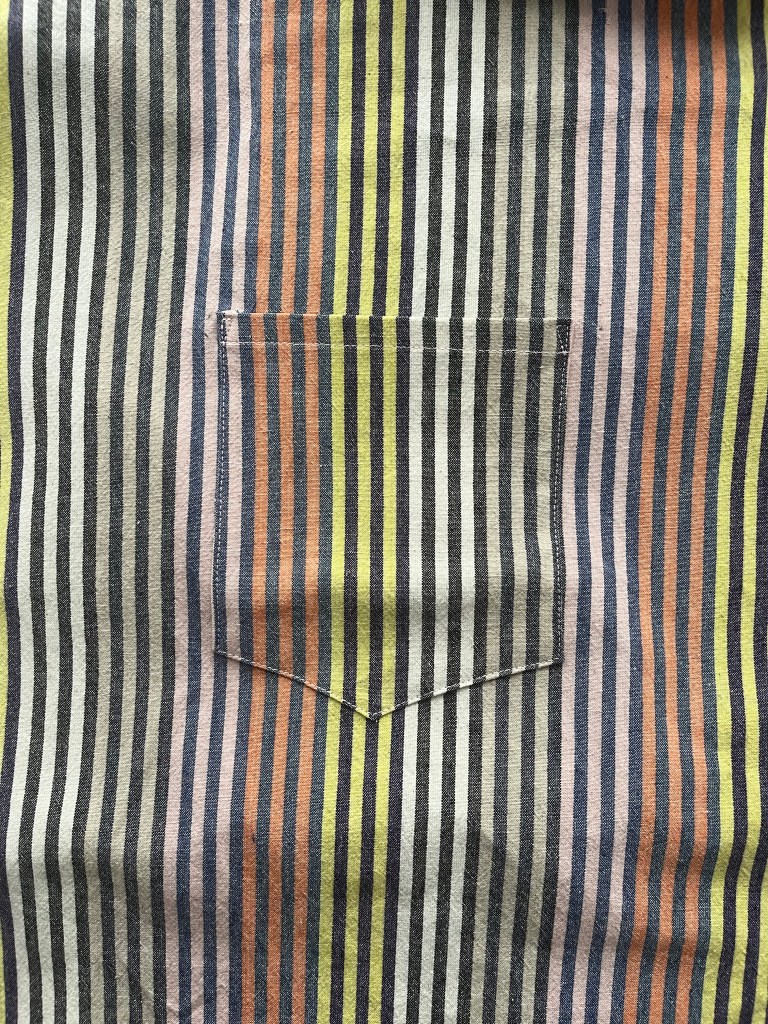
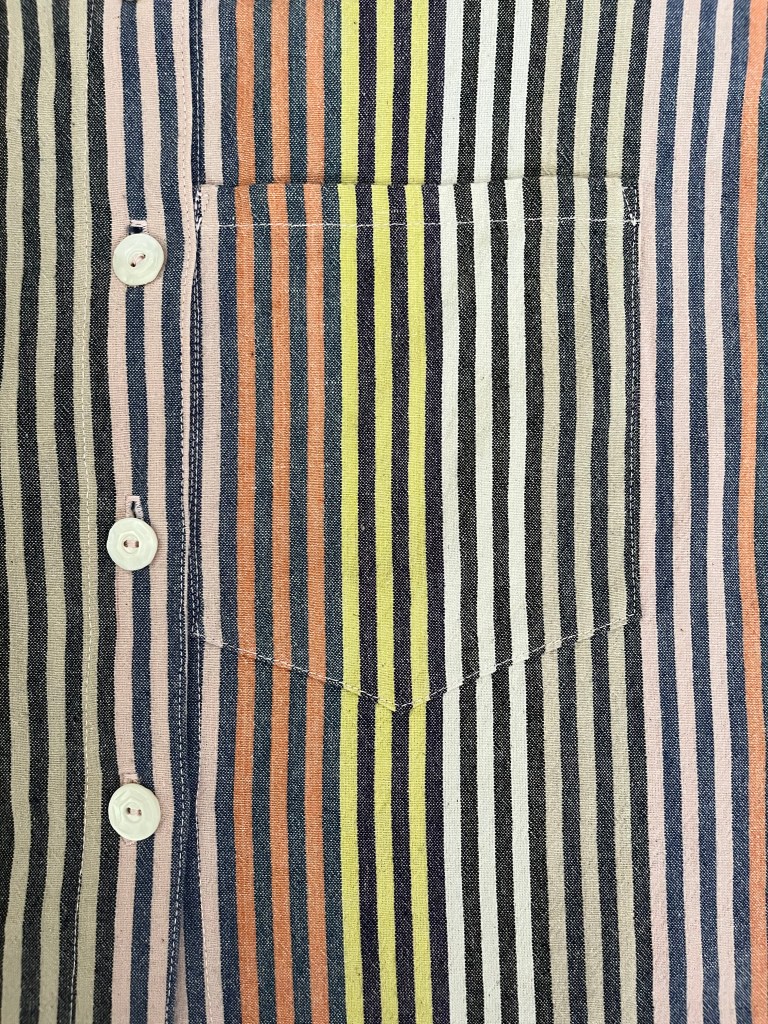
Here’s a word of caution: don’t do what I did and attach the pocket first thing. I really wanted to pattern match the stripes and in previous shirts I’ve made with pockets they have you attach the pocket first thing. This pattern doesn’t have you do that and I quickly found out why–you have to fold over and sew down the length of the front to make a placket and that could interfere with the pocket. I should’ve read through all the instructions before starting, this could’ve been avoided. Look how dumb it is that I put my pocket so close to the placket! Ugh. Do I seam rip it and ruin my beautiful pattern matching though? I also honestly think the pocket should also be moved up. Maybe for the next one I don’t even add a pocket.

Details! The Best Part Of Sewing Your Own Clothes

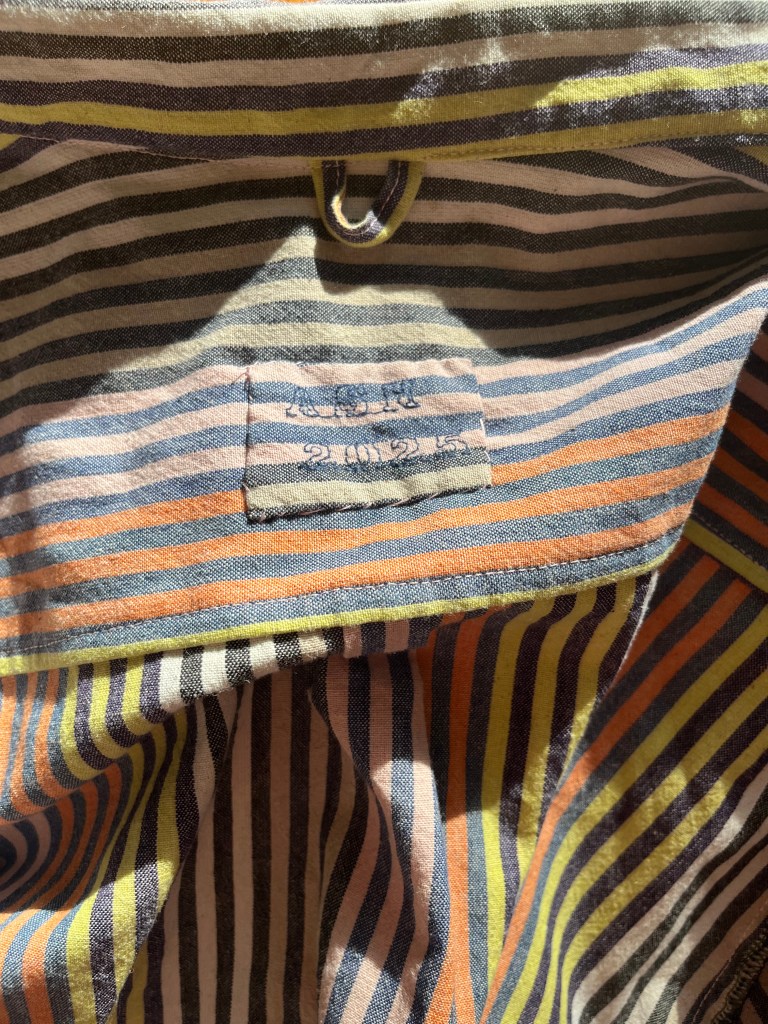
I couldn’t make a custom label for Eric’s shirt and not make one for myself, right? I like all of the woven “Made In 2025” labels that you can buy but I’m hesitant to buy those–what if I don’t use them and then they’re obsolete?! Using my machine to make a custom one is the perfect solution. I once again just whip stitched this to the yoke; I opted not to sew interfacing to the back of the label this time and it seems fine without it.

I also almost always like a little hanging loop on a shirt. I took a small scrap and made one and sewed it down before sewing the collar in. Worked great!

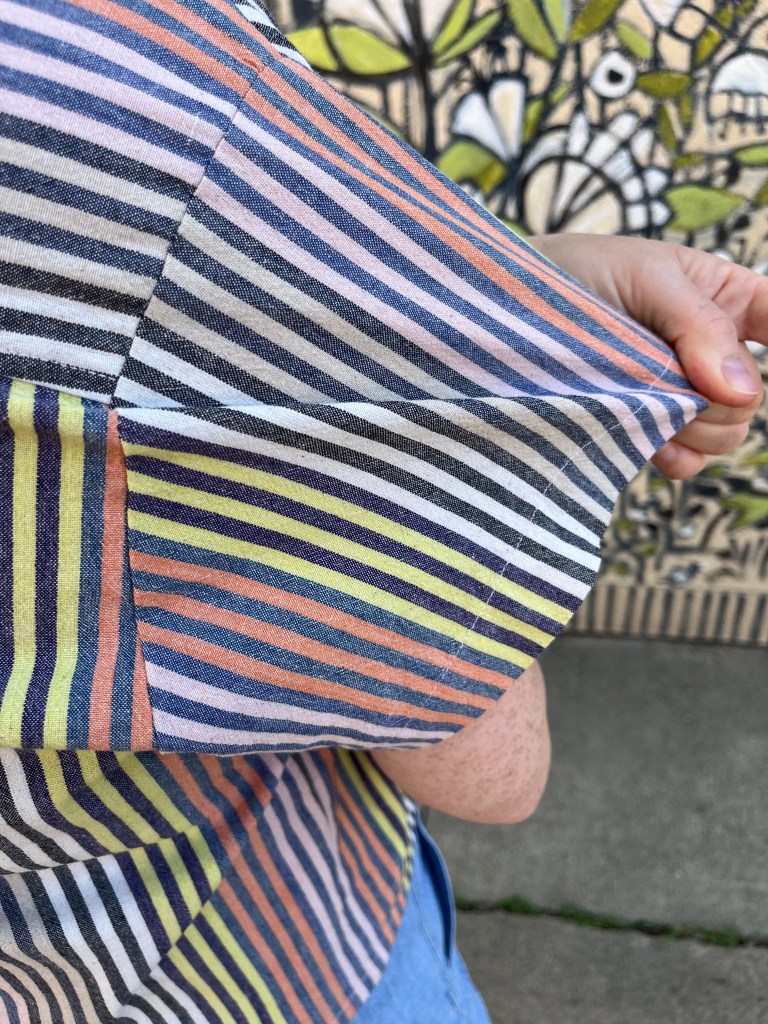
Look At how the stripes on the back yoke almost perfectly line up with the stripes on the sleeve! Wish I could say that was intentional but I just lucked out. (No, they are not lined up at all on the other sleeve lol)

Lastly, isn’t the box pleat cute? I had never made one before and this turned out great. It was so easy but it’s also such a nice detail.

Final Thoughts

I love this shirt, despite the flaws and I’m proud to have it in my closet! I’ve only had it for a little over a week, have already spilled ketchup on it (and got it out) and have worn it probably 4 times. I I’m nearly positive I’ll make it again and will pay closer attention to the details of where I went wrong like the collar stand and pocket. I’d like to have one out of a drapier fabric, like a linen, to see what the sleeves do because with this shot cotton they stick out a little more. Now that I’ve got a couple short sleeve button ups done I think it’s time I consider making a long sleeve button up! Maybe the Closet Core Jenna?

As always, if you got this far thanks for coming along!

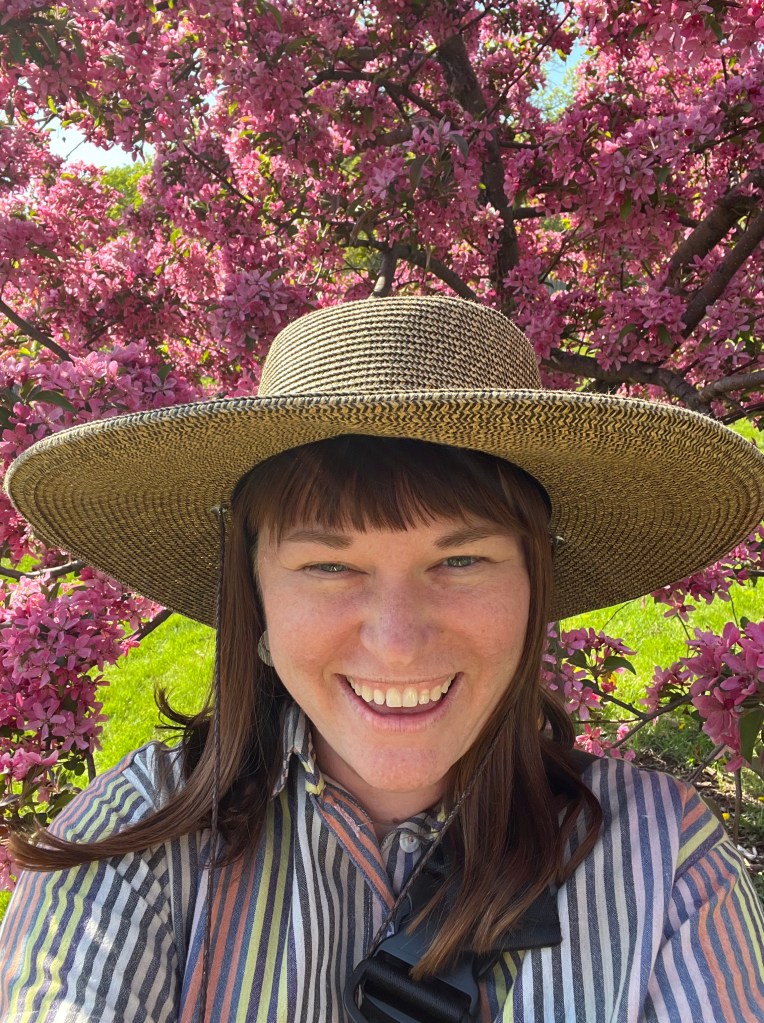
Mom hat: on! Moms love spring blooms and easy breezy shirts!!!

  1. The Sewing Lounge has some incredibly nice linens, hemps, poplins, sandwashed linen and other lovely high quality fabric, mostly for garment sewing. She (Maggy, the shop owner) doesn’t do online sales but you can get a nice feel for what she carries by looking at the site. I walked out of there with 2 yards of a super soft white sandwashed cotton with my printed pattern! ↩︎

Giddy Up, It’s My First Button Up!

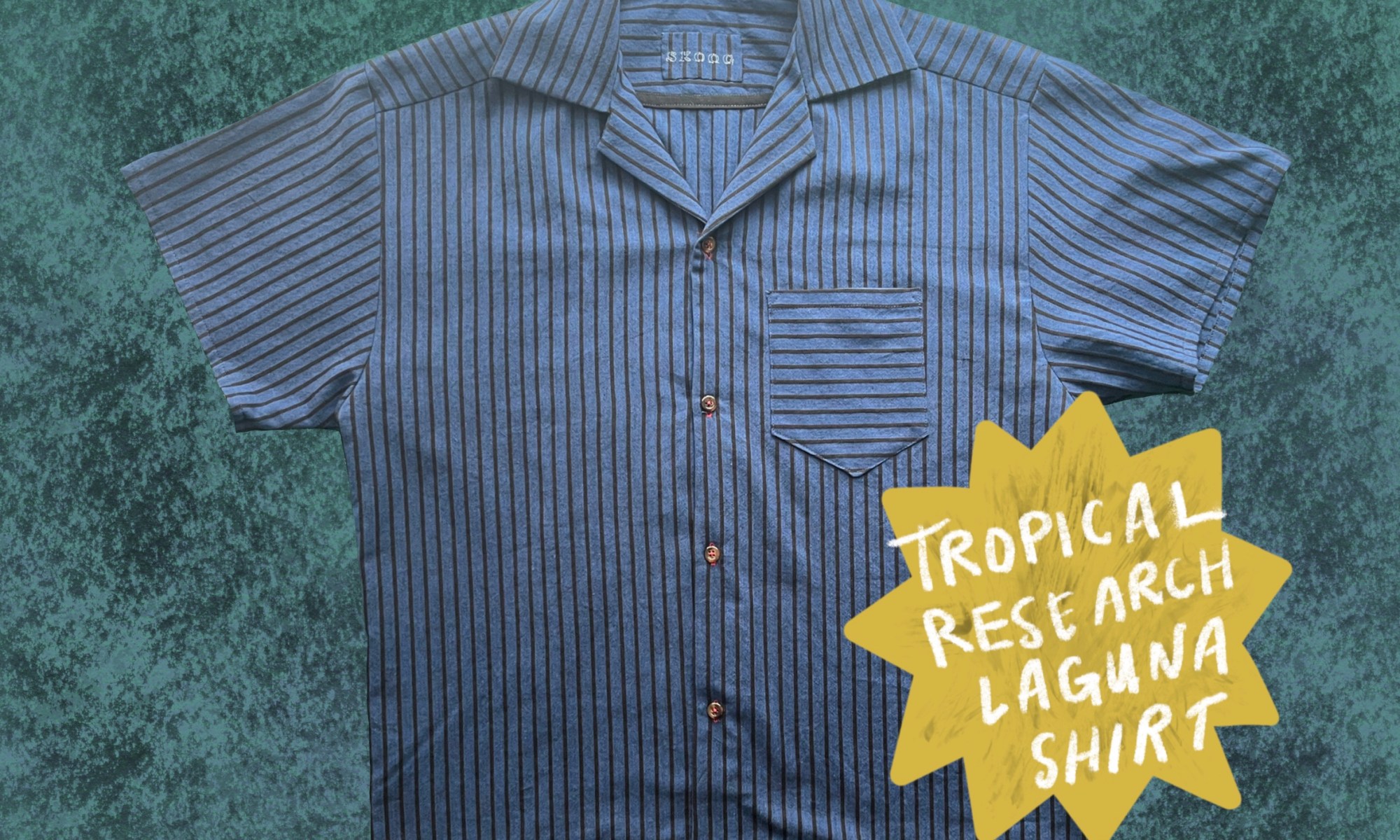
Sewing The Tropical Research Laguna Shirt

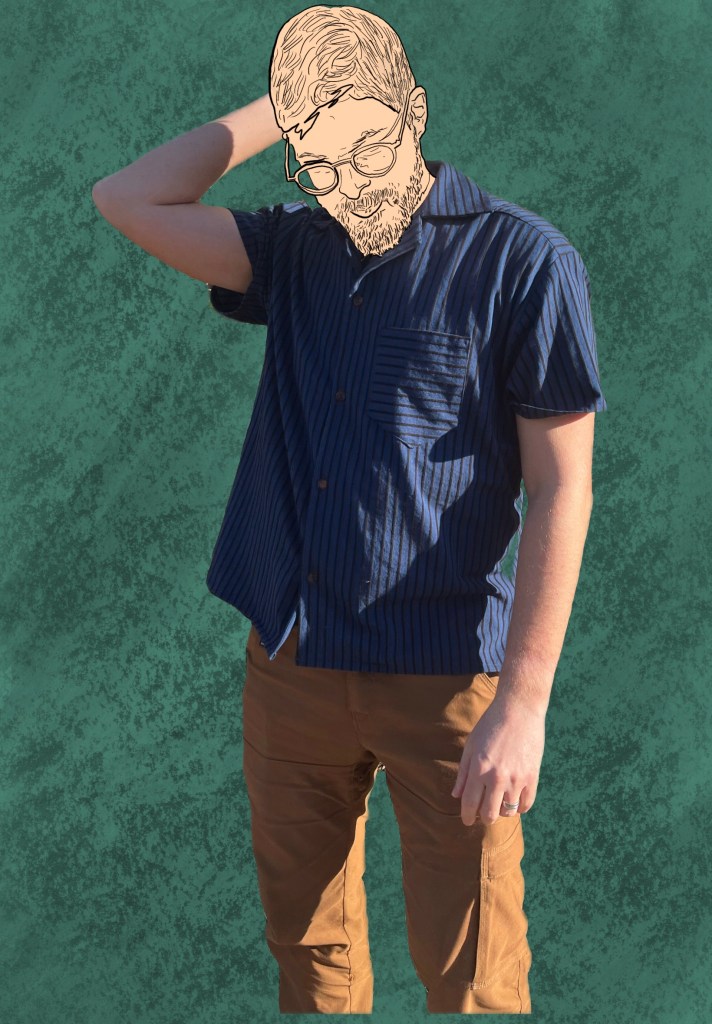
I feel like I say this now with every new make of mine but I’m going to say it again: I truly cannot believe I made this! It’s been a goal of mine for some time to sew a button up shirt and I did it. It looks great, it feels great, it fits great. Let’s get into it!

The Pattern; Written Instructions and Sew Along Video

After conquering the Donny Shirt I knew I could tackle a button up, it was time, but which pattern would be best? I personally like a camp collar and after deciding I’d make a shirt for my husband Eric as a gift I landed on the Tropical Research Laguna Shirt, a pattern by Tobias Konrath. It’s a PDF and projector pattern that can be purchased for immediate download from Etsy. Eric agreed that the shirt looked like something he’d wear and something he could really use in his wardrobe for the spring and summer.

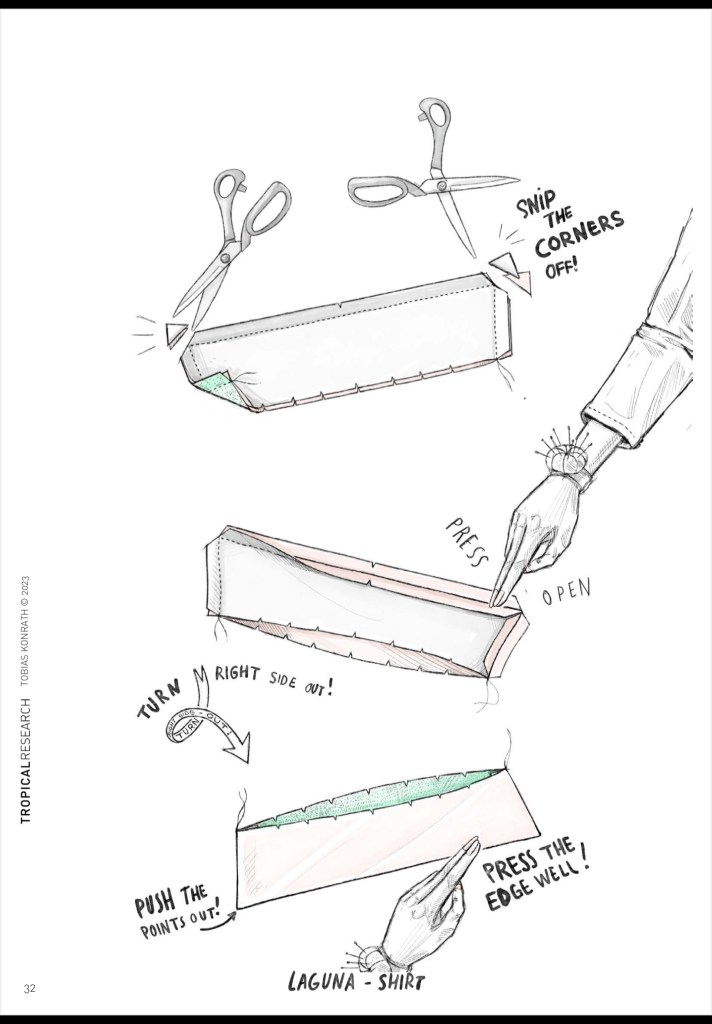
What really drew me into the Laguna Shirt pattern were Tobias’ illustrations, they were really clear and he has a fun style of doing them. Of course I was also incredibly happy to find that he has a full YouTube sew along video for the shirt as well! I watched it a few times but I’m finding I’m feeling more confident these days and don’t need to rely on sew along videos quite as much.

I will say, however, regarding the video, I do have a few gripes:

  • Most of the process is sped up. I get that nobody wants to watch an hour(s)+ long sew along but there were a couple points I was wishing the speed was normal.
  • I also noticed a couple spots in which his construction technique was different than the written instructions.
    • 1) In the video he sewed the bias binding to the facing before sewing it into the shirt (it’s the opposite of this in the written instructions). In this instance I went with the video’s instuctions and no regrets!
    • 2) I was walking downstairs to make a smoothie at 7:24am the day after finishing the shirt when I suddenly remembered something he did to the collar in the video (cutting little triangles out) that was not in the written instructions and it made me think if I had done the video instructions the collar might lay a little nicer. Wish I had caught this!
    • 3) He sews the sleeves into the shirt and then brings the whole shirt over to the serger to finish the edges, whereas in the written instructions he states to finish the edges first, then set the sleeves in. I really went back and forth on this and decided to set one sleeve in first and see how it went. I was worried about not being able to find my notches if I finished the edges first. It was a good call and again, no regrets doing it the video way.

Fabric and Notions

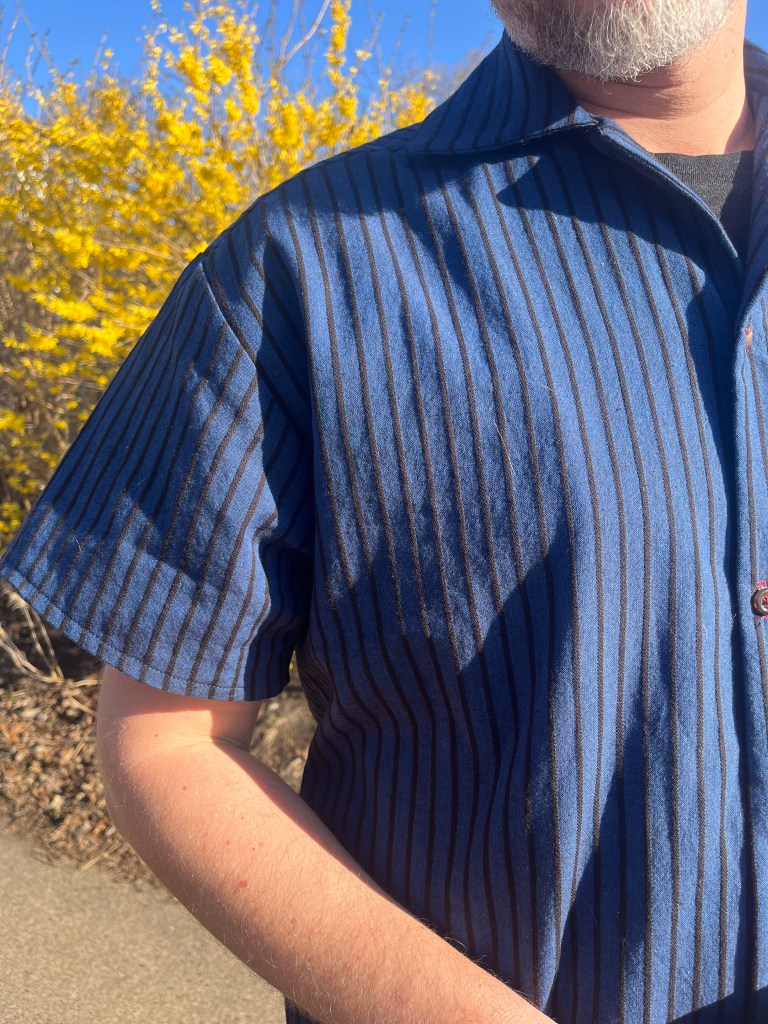
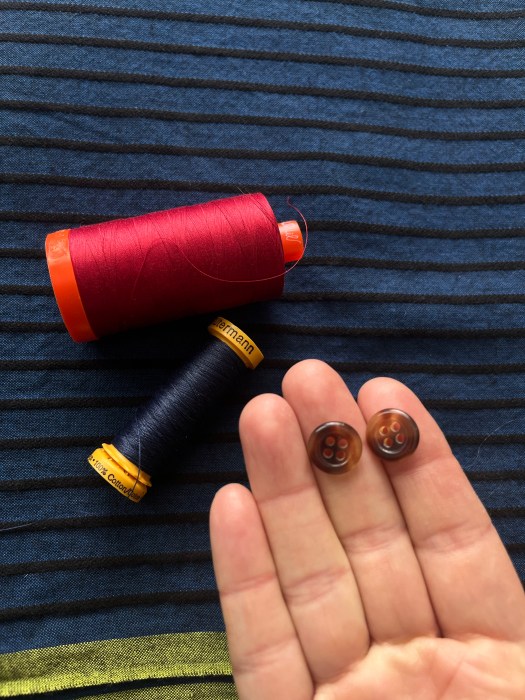
Since I wanted Eric to really like his shirt I took him to the fabric store and had him choose the fabric. We went to Lakes Makerie in south Minneapolis because they have a nicely curated selection of fabric and lots that work well for garments. It took him about an hour to nail down the fabric and buttons but we both had so much fun. In the end he selected a Ruby Star Society warp and weft woven yarn dyed cotton in a black and navy stripe (I believe it’s called Apron Stripe) from the Oh Lucky Lucky collection. I cannot find it on the website so here’s a link to an online shop with it currently in stock. WE LOVE THIS FABRIC. It is so so soft and has such a nice drape.

Ruby Star Society fabric, French buttons, Aurifil and Guttermann thread

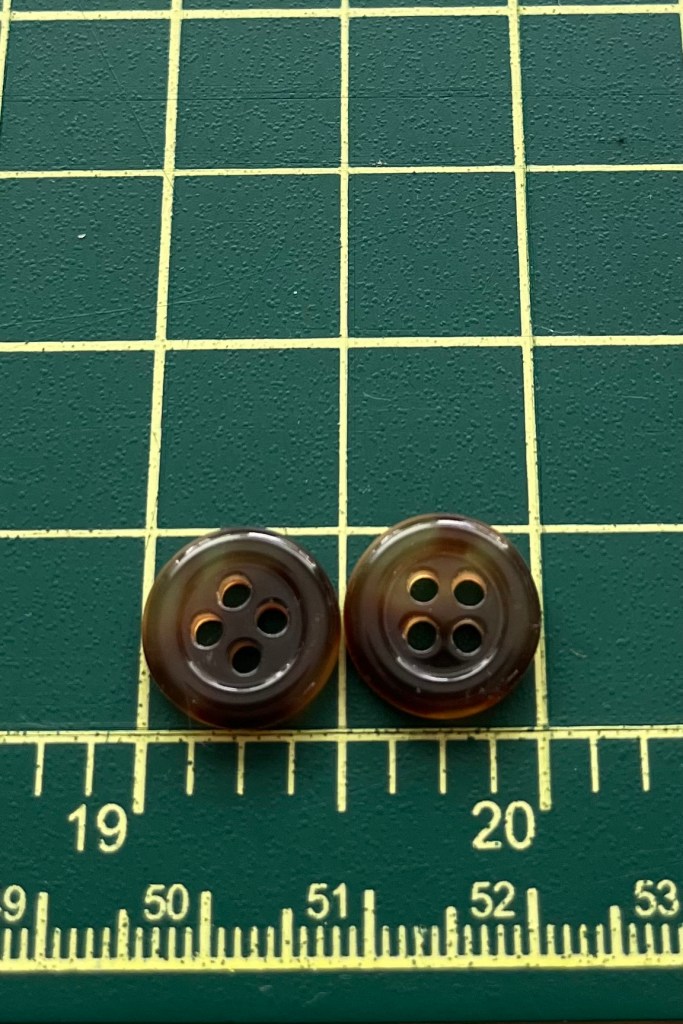
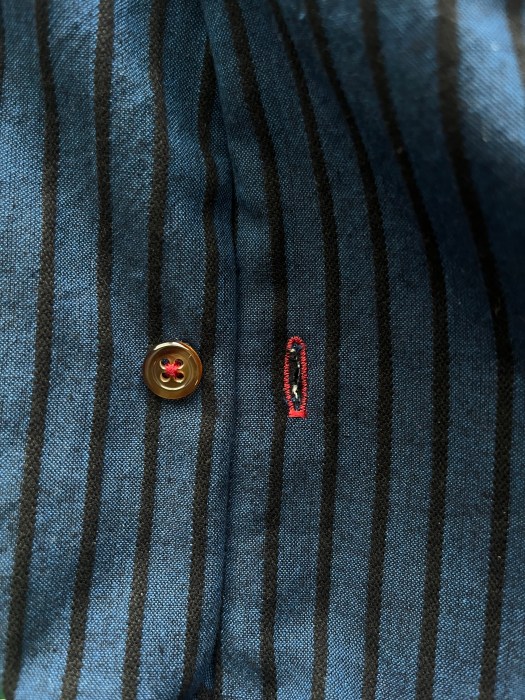
For buttons he chose some tortoise shell French buttons, which, I also cannot find on the site for the life of me. I tried steering him towards something green because the selvedge of the fabric is green and really pops but he loved the brown ones and wanted the buttonholes to be red. Fine! It’s his shirt haha. For what it’s worth the red buttonholes are a fun touch.

Project Breakdown

What did all of the major materials cost? Let’s break it down:

Pattern: Free

(Normally, $14. 22 but there was a 20% off coupon so I used $11.37 of an Etsy gift card!)

Fabric: $12.99/yrd, $39 for 3 yards (I bought too much because I accidentally bought enough to make long sleeves instead of short sleeves oops)

Buttons: $9 (That’s $1.50/button and while I only needed 4 I bought 2 extra as a just in case)

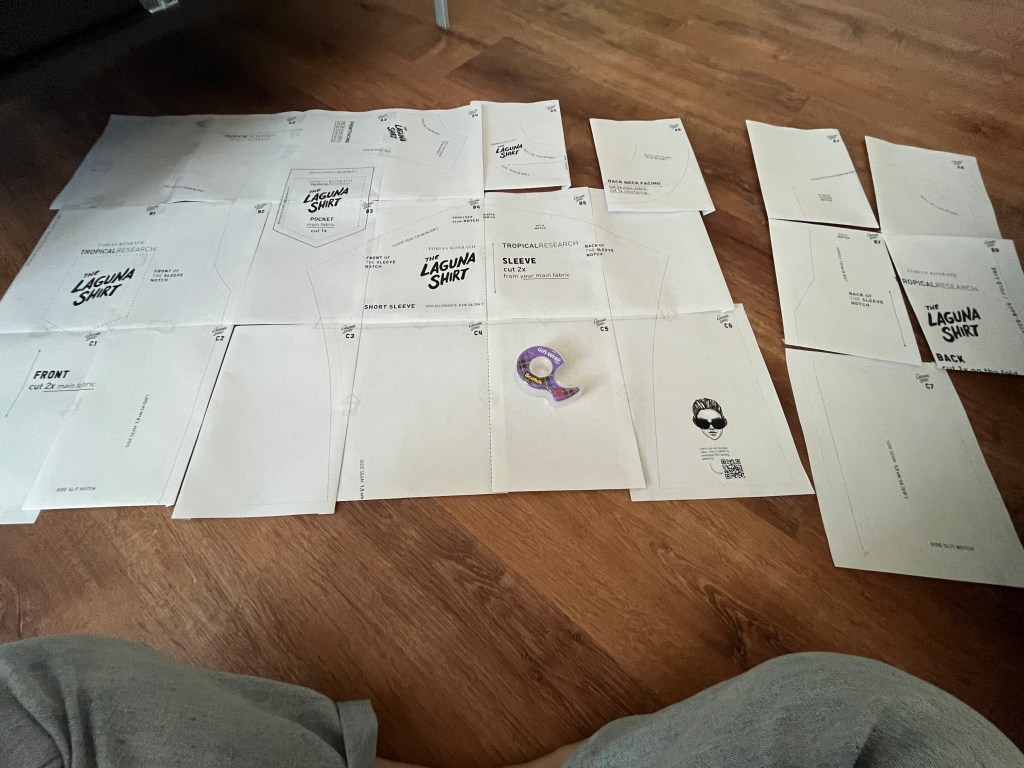
I already had cotton navy colored thread (Guttermann) at home and cotton red Aurifil for sewing the buttons and buttonholes. I also opted to not make my own bias binding for the facing and used some black polyester Wrights double fold that I probably bought at Joann’s (RIP). I interfaced the collar and the facing and already had that on hand too. I opted to print the PDF pattern at home and tile that sucker together with tape which I have a love/hate relationship with doing.

Modifications

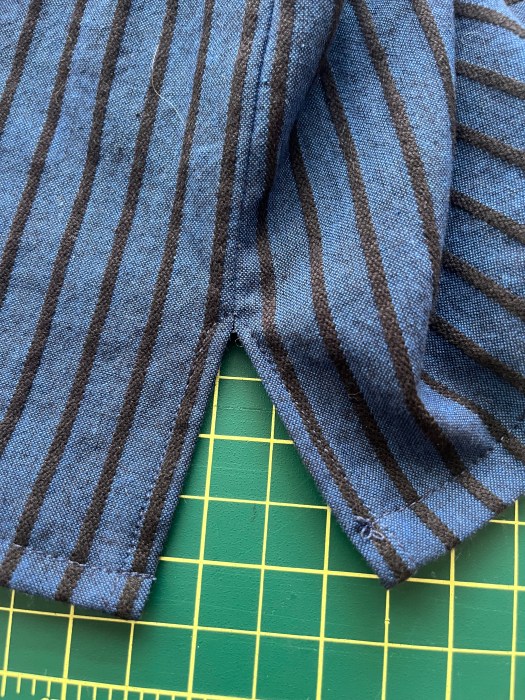
After measuring Eric we went with a size large. I almost went straight with the pattern without any mods but when I took a closer look at the #tslagunashirt hashtag on Instagram it really looked to me like the back hem was an awful lot longer than the front. I like a high/low hem combo but this seemed like way too much longer, so with Eric’s blessing I chopped it way down and just kind of winged it. Honestly I shouldn’t have chopped so much off because it ended up the same length as the front (WHOOPS don’t wing it!!). We didn’t intend for that but he’s fine with it! Looks like I took almost 3 inches off; next time I would take maybe 1.75 inches off instead.

Every Day We’re Learning

I’ve made a collared, sleeved shirt before. I’ve done buttonholes before. I’ve put a pocket on before. Did I really learn new stuff? Yes!

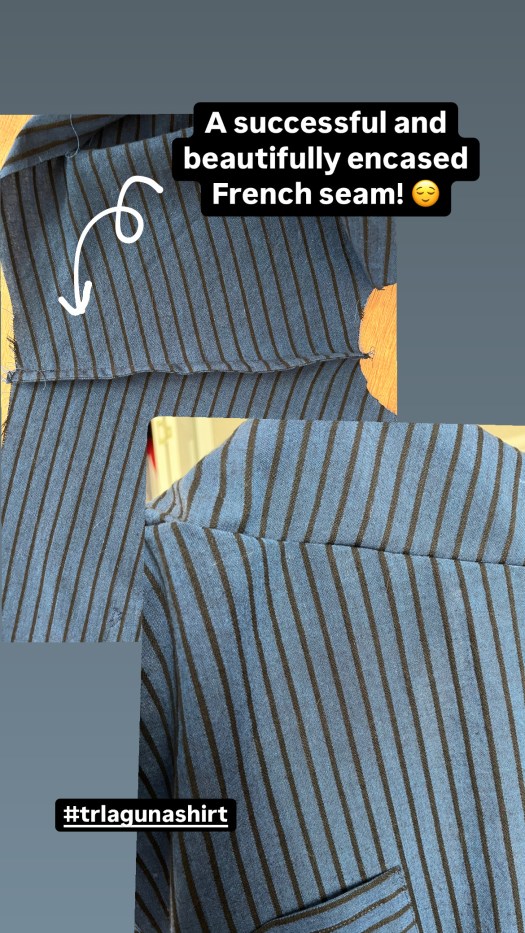
  • French seams: Tobias has you do the shoulder seams as French seams, which I loved and turned out beautifully. I love the clean finish!
  • Bias bound facing: New to me! I really like how it looks, despite my sewing off of the binding in a few spots (but thankfully that’s all internal and not noticeable when the shirt is worn).
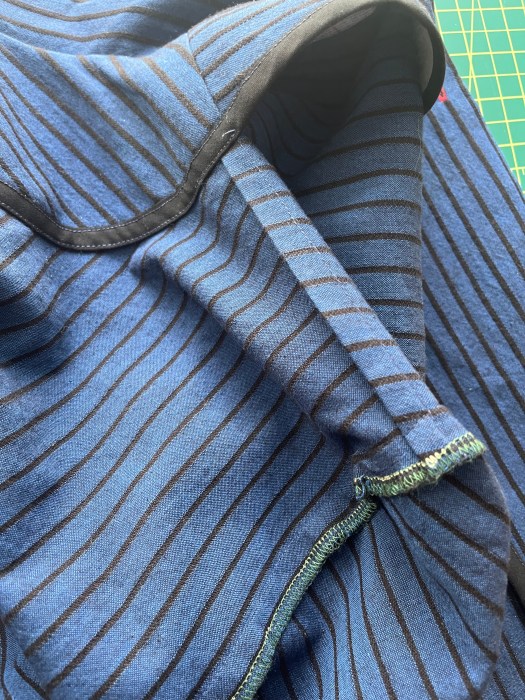
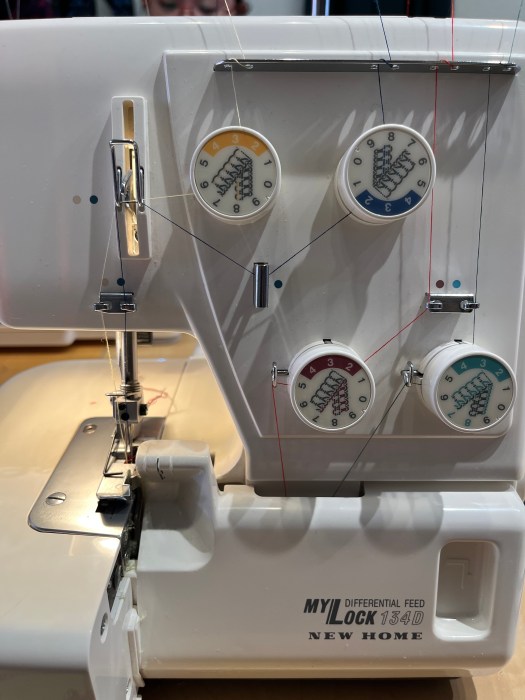
  • Serged seams: I have my aunt’s Janome serger and for the first time I finally used it! I didn’t serge them perfectly but I think (hope) that the seams will hold up better than if I had only done a zig zag stitch to finish them. And because I forgot to finish the lower edge of the arm seams at the serger I ended up finishing those with a zig zag so I have 4 different seam finishes in this garment which I think is neat.
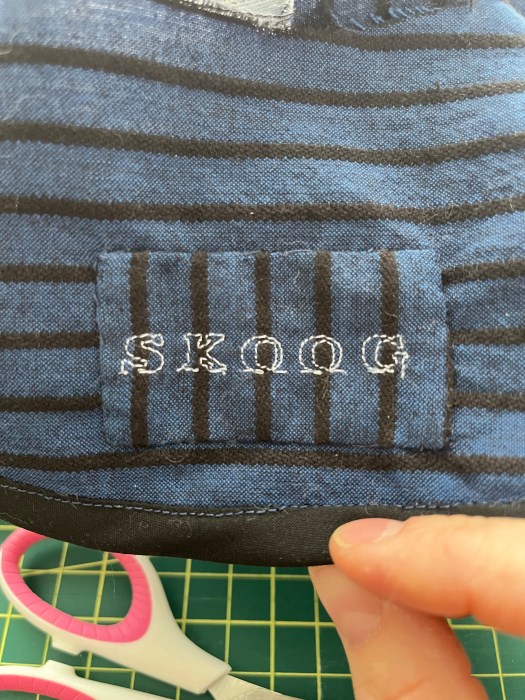
  • Sewn in custom garment label: I really wanted to set in a label into the collar but only have these woven ones that have quilt blocks on them. I realized I could use the alphabet stitch setting on my machine and easily make a sort of embroidered one for him! Skoog is his nickname. I hand sewed the label into the facing so you don’t see the stitches on the back of the shirt.
  • Split hem: Easy to do and I love the look!
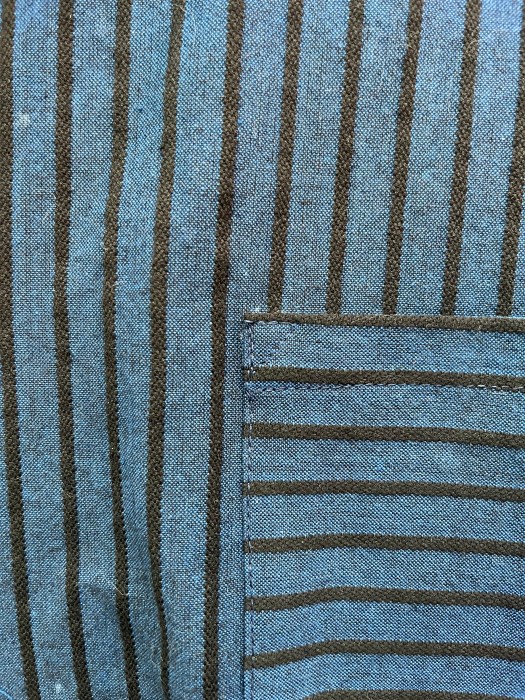
  • Reinforced pocket corner: I almost skipped this as it seemed unnecessary but I really like the look of the little triangles in the corners of the pocket.

Final Thoughts

I wish I had done the topstitching along the shoulders. It was optional so I skipped it, but I think it would’ve looked nice.

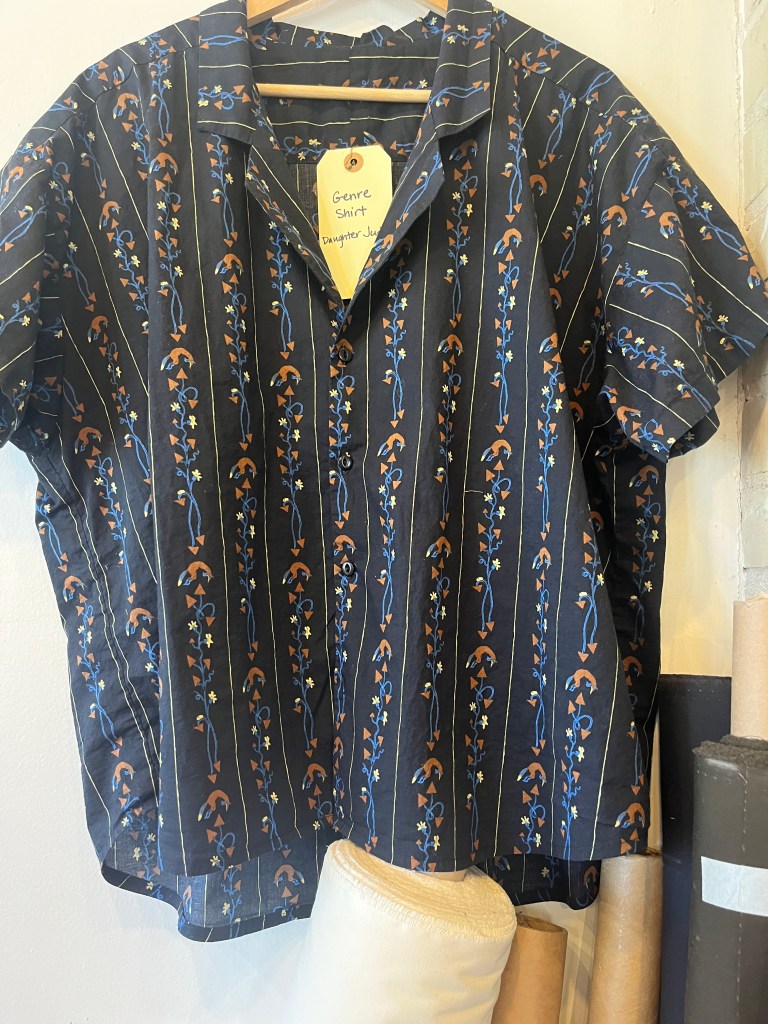
The Genra shirt hanging out at Lakes Makerie

I feel like I’m chasing my white whale when it comes to button downs for myself. I’ve looked at sooo many patterns! The Laguna Shirt is billed as a unisex pattern and I like this shirt for Eric but it feels like it might be just too boxy for my liking. We both noted that the sleeves stick out just a little more than we’re used to seeing him wear, but change is good! For my button up, I’m leaning towards using the Daughter Judy Genra shirt pattern which I already own (nice camp collar but has a rounded hem) or the Closet Core Jenna (not a camp collar, curved hemline and straight hemline options; I like the loop detail in the back). Also intrigued by Helen’s Closet Cameron Button Up and the Gilbert Top (though I’ve read a lot of mixed reviews on the Gilbert!). I’ll be making my own button up soon enough!

If you stuck with this and read this far THANK YOU. Truly. Phew!

McCall’s 2566: An Easy Sew Spring Dress For Kids

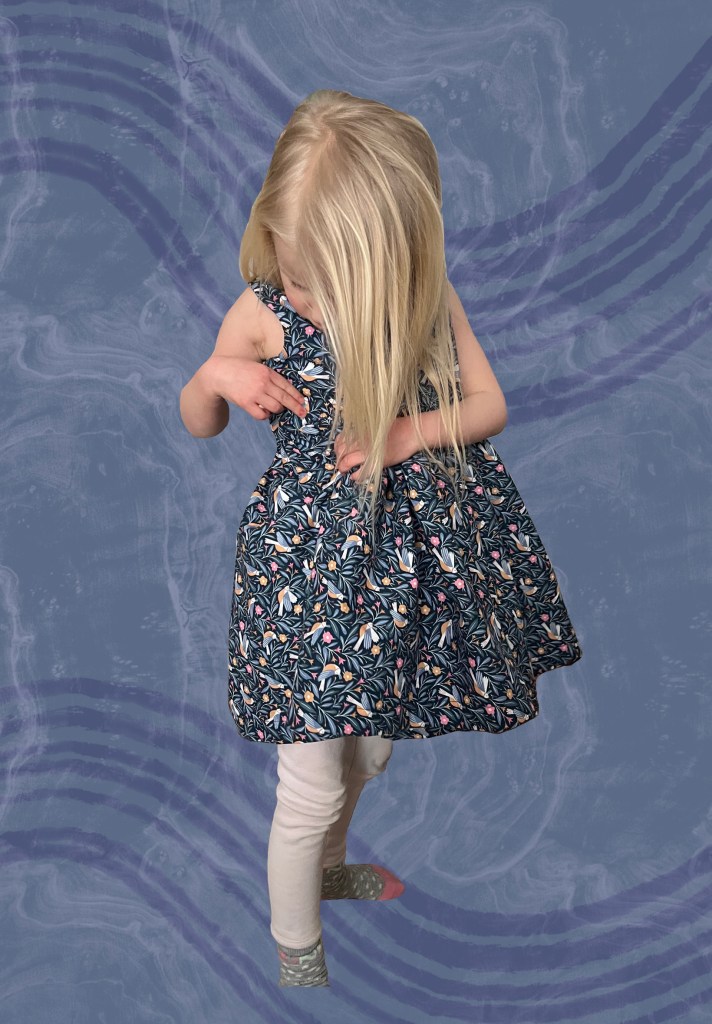
It’s March, it’s spring, and I’ve got a newish project hot-ish off my machine (Ok I finished this March 6th and today is March 21st)! It’s the first garment I’ve made for someone else and it’s for my preschooler. Here are the details:

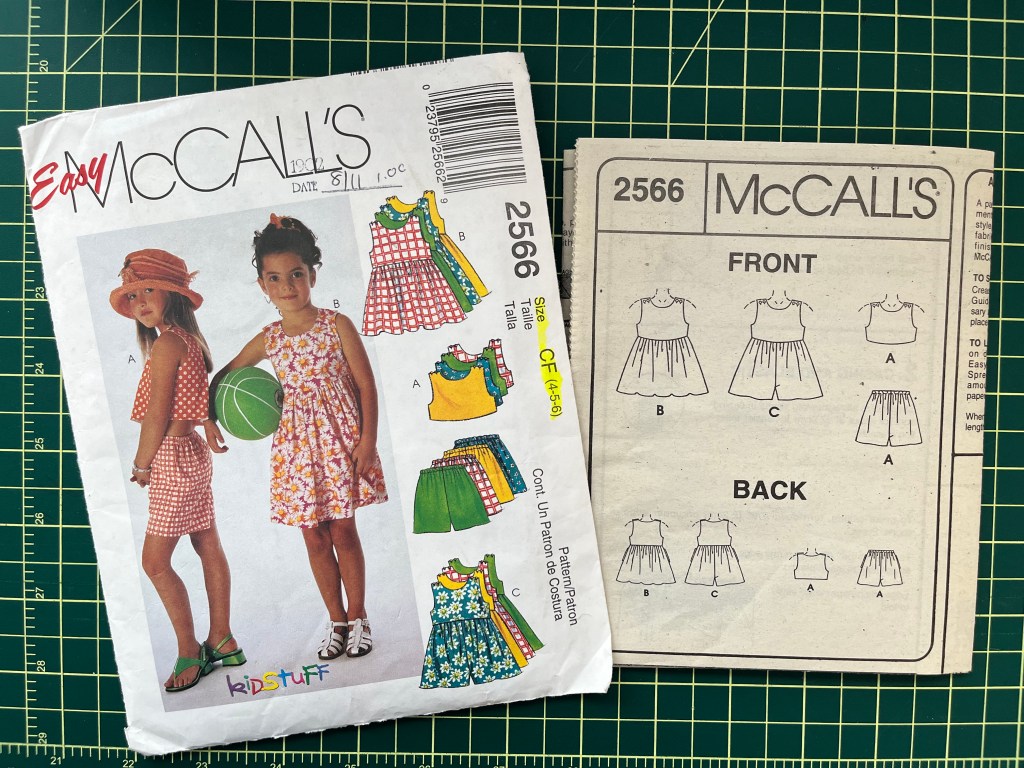
  • Pattern: McCall’s 2566, size 6
  • Fabric: A cotton by Cloud9 Fabrics: The Easy Life–Sing Me A Song
  • Buttons: Thrifted vintage pearl buttons
  • Thread: Cotton Aurifil, unknown light blue from SR Harris

Mods: The only modification I made to the pattern is instead of hand sewing the hem like the instructions state, I decided I didn’t mind having visible stitching so I sewed up the hem with my machine using a navy thread.

I’ve just begun dipping my toe in garment sewing and knew sewing something for my daughter to wear was on the horizon. There are so many cute kid clothes patterns, I only wish she were younger so I could sew whatever I want for her haha. Sewing for a kid her age is risky. She has way more autonomy now and a whole lot more opinions on the style and color of her clothes. She’s also prone to change her mind so it’s hard knowing if what she likes today she’ll continue to like tomorrow.

The Fabric

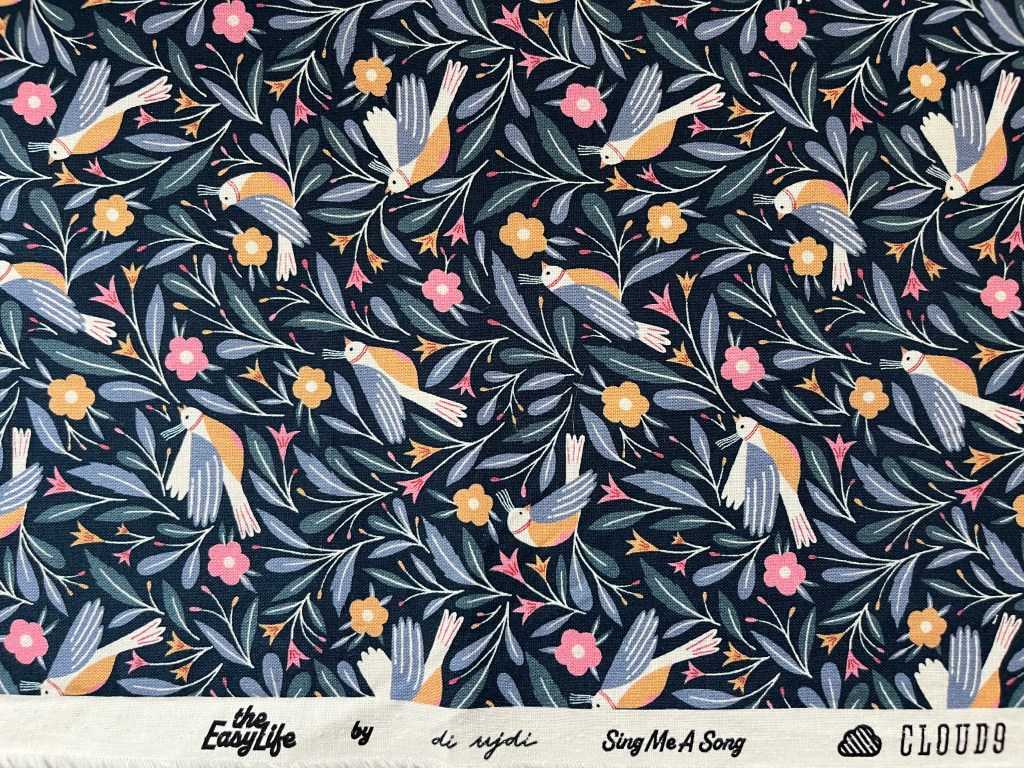
With all that being said, I had her pick out the fabric. She surprised me with her choice of fabric considering the dominant color is blue and she is more of a pink and purple gal. I asked several times if she was SURE but she’s 5 and was sure…that she wanted to be done looking. Fair enough. It was $14/yrd and I bought 2 yards. It’s also a quilting cotton which I was a little hesitant to use for a garment but figured she likely won’t care as much about what it feels like on her body as I would.

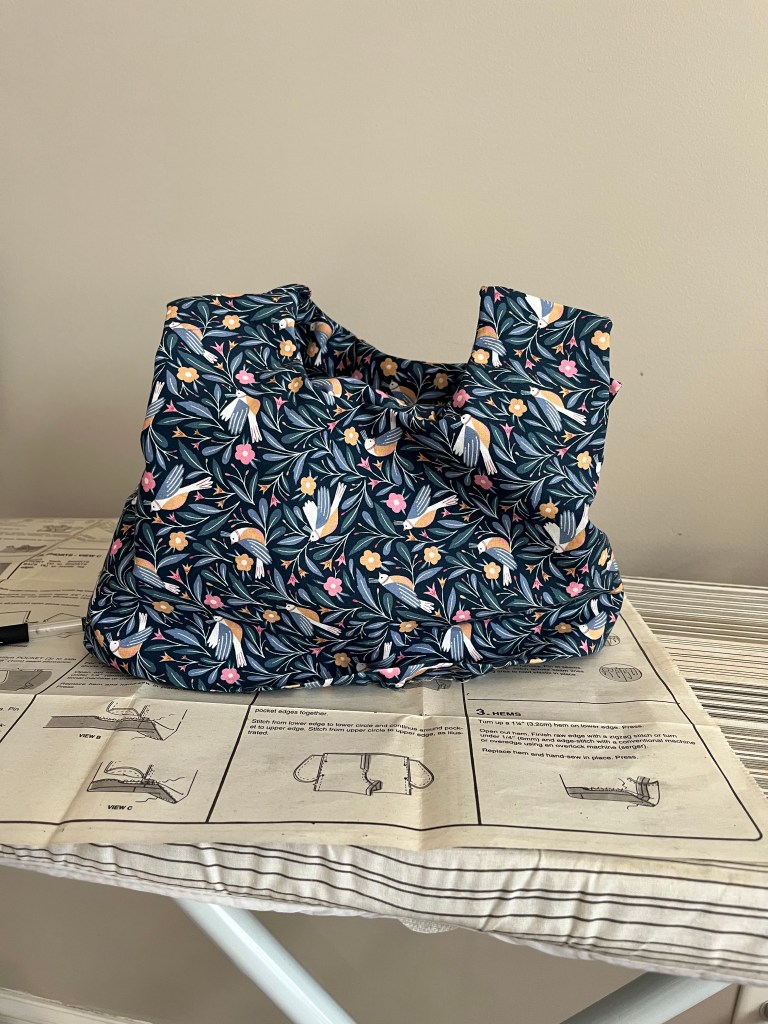
The image features a close up of fabric printed with blue birds with a tan belly on a dark blue background. There are pink and tan flowers and blue leaves. The text on the selvedge of the fabric reads The Easy Life by di ujdi Sing Me A Song Cloud9.
Sing Me A Song from the collection The Easy Life, fabric designed by Nina Cvijovic, AKA Di Ujdi for Cloud9

I bought the fabric at Seams Like Quilting, a new-ish, well stocked quilt shop in the small town of Spooner, WI. I have been meaning to shop there for a while but whenever I pass through Spooner it’s usually later at night so it’s closed and I don’t get a chance. I loved stopping in there, they had a really extensive selection of quilting cottons from manufacturers I like (Art Gallery, Ruby Star Society, Cloud9, Riley Blake) and I got a few yards of fabric from a company I’ve never heard of (Diamond Textiles) for me too. What should I make with this shot cotton Cabana Stripes sunburst fabric, do you think?

Pattern and Buttons

I haven’t spent a whole lot of time looking at clothing patterns for children but did take notice of the Made By Rae geranium dress pattern. A couple people I know have made it and it looks cute! However, I already had this McCall’s pattern in my stash and as it only goes up to a size 6 it really was now or never to use it. I either found this snooping in my mom’s sewing stuff or I bought it at the Textile Center’s garage sale so the pattern was free or very cheap (iirc Textile Center has patterns at the sale at $1 for 5 patterns).

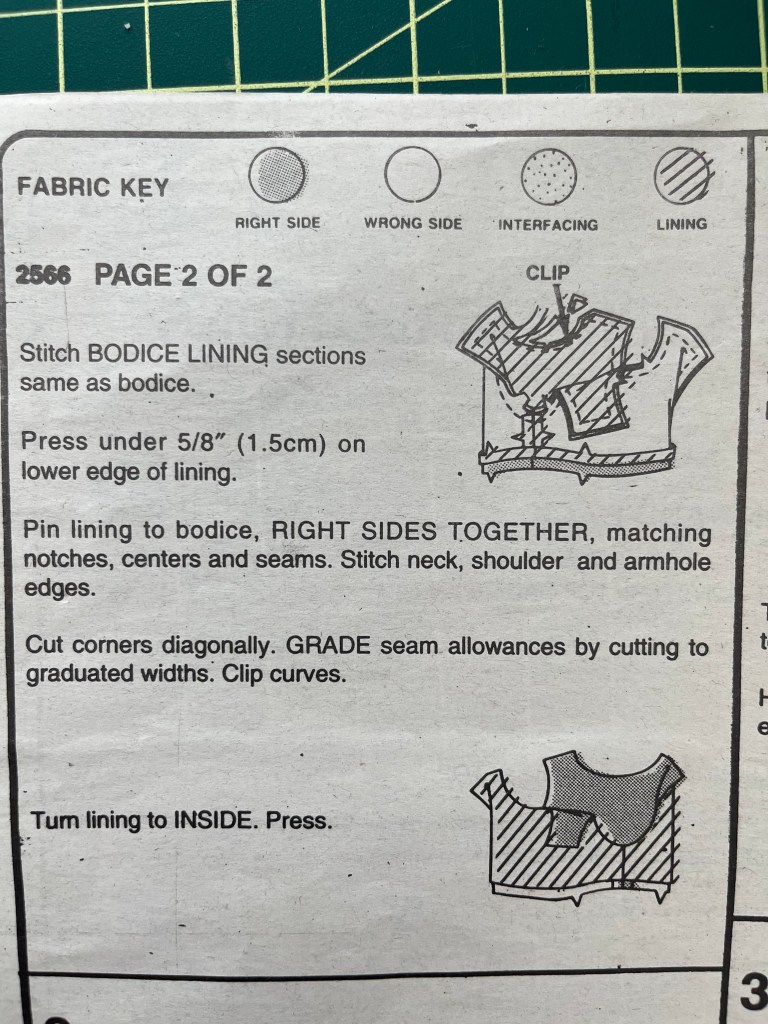
McCall’s 2566 Pattern

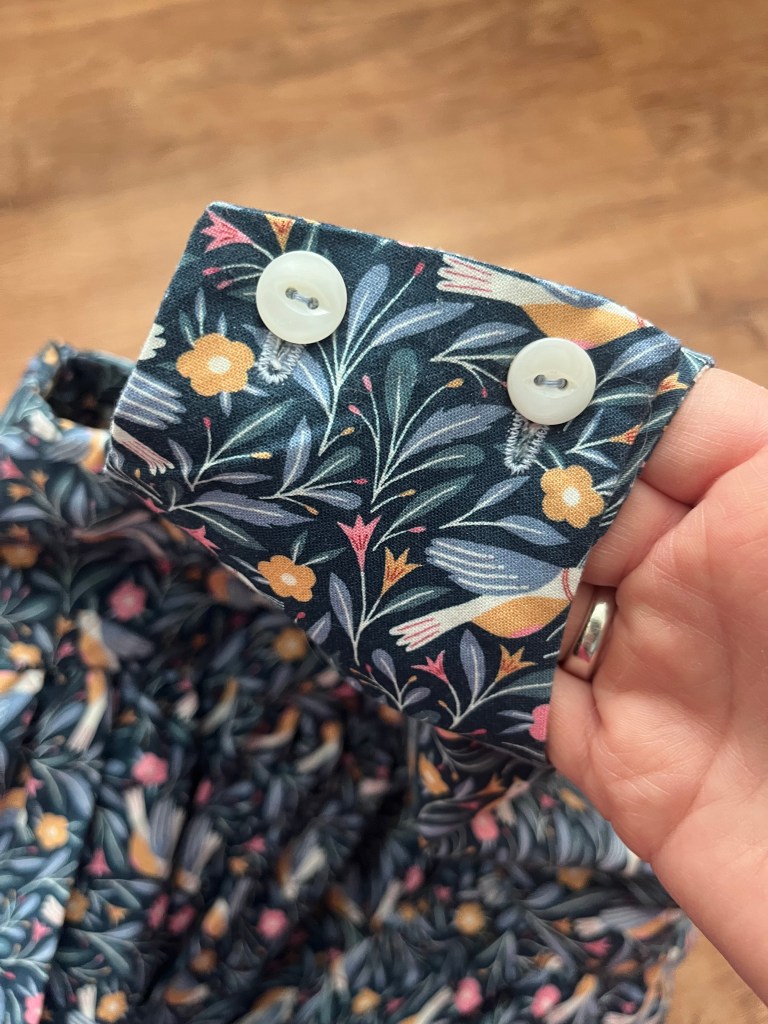
The buttons I used were cute vintage pearl ones from the 50’s or 60’s that I thrifted at my favorite thrift store, Encore Resale Store in Bayfield, WI. They were a buck for five buttons! To be honest, when she’s done with this dress I will probably replace them with some white or blue plastic ones as I love these buttons and want them for one of my own garments.

cute thrifted vintage pearl buttons for the shoulders

Pattern Gripes

This was my first time using a pattern from a “Big Four” pattern company (i.e., McCall’s, Simplicity, Vogue, & Butterick). Compared with the pattern for The Donny shirt that I just made, these instructions were terrible. I hated the illustrations, they were confusing. The instructions were vague, or lacking. The flow of the instructions sucks too. Never once did it tell me to finish the seams or now would be the ideal time to finish these seams. A lot of information just seems to be assumed and having used indie sewing patterns before this I’m used to better instructions with more hand holding. If you’re a seasoned sewist there are things that you do that you just know how to do and when to do them but I’m not there yet. What didn’t kill me made me stronger, I guess.

New Skills

With all my gripes about the pattern instructions being said, McCall’s 2566 is overall pretty easy to make. You’re cutting a front bodice and back bodice (two of each as the bodice is lined), pocket bags and two rectangles for the skirt. This pattern also marked some firsts for me:

  • First buttons & buttonholes
  • First skirt/dress
  • First in seam pockets
  • First garment I made for someone else

That’s a pretty decent list! I’m especially glad I tackled buttons/buttonholes as my next work in progress garment is a button up shirt.

Mistakes Were (Always Are) Made

I mistakenly sewed the pockets towards the back of the dress at first and almost left them that way. She’s not much of a “stand with hands in pockets” kind of gal and is more of a “put random things in her pockets because she has pockets” kind of gal. In the end, however, I wanted it to be correct so I seam ripped and resewed them so they laid correctly.

This was my first time using the buttonhole foot on my machine and while I did practice on scrap fabric, I had to seam rip one buttonhole as it ended up too close to the edge of the fabric. It might’ve been functional but I thought it looked bad.

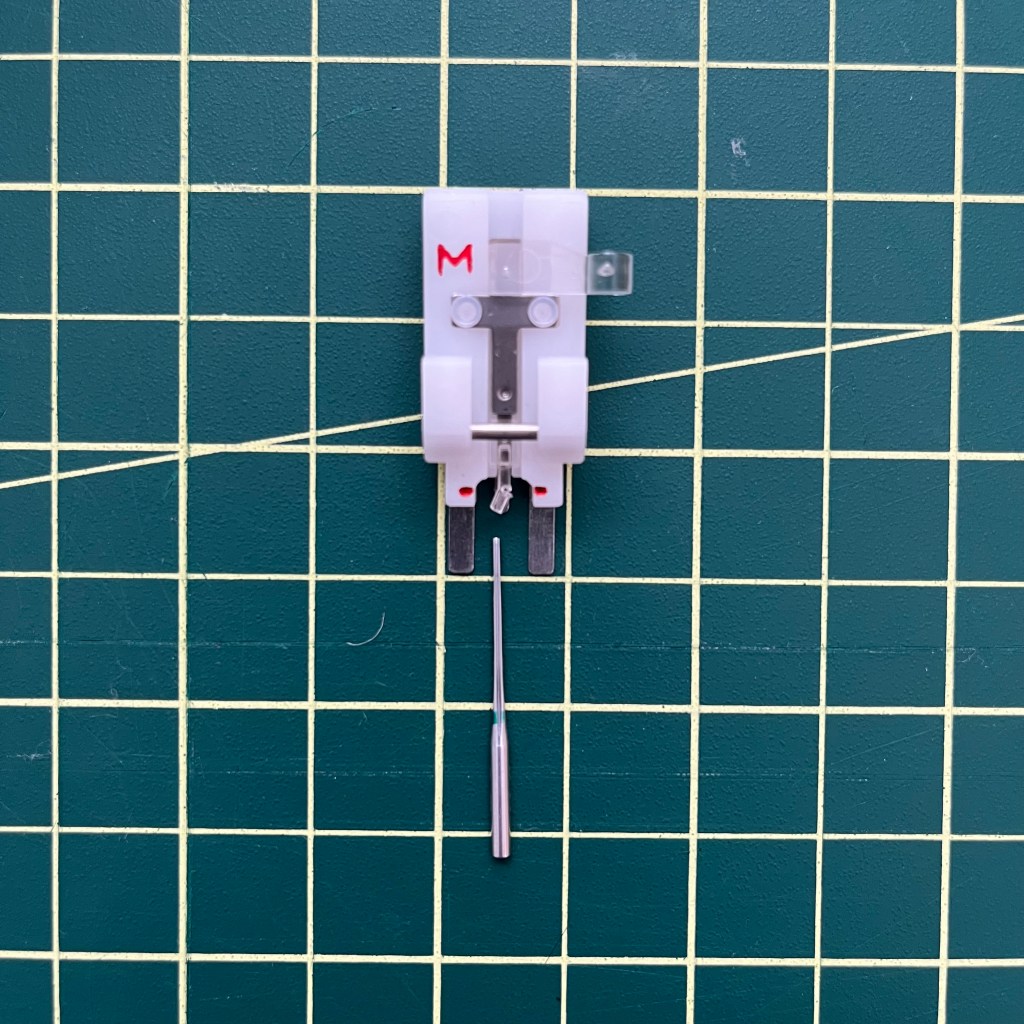
A photo of a white sewing presser foot for sewing a button onto a garment on a gridded green cutting mat. A small plastic piece on the foot is broken, as is the tip of a sewing machine needle sitting next to the foot.
I hit the little plastic piece in between the red dots with my needle and it broke the needle and damaged the plastic

When trying to sew the 3rd button on using my button foot for my machine I made an error and I broke a needle and damaged the button foot. I took apart my machine, looking FOREVER for that needle tip and still haven’t found it! I called the dealer and they suggested:

1) to never use the button foot that comes with the machine (lol) and instead always hand sew buttons on because of exactly this problem (breaking a needle) and

2) didn’t think it was critical I take it in for service to find the needle tip.

I was happy to hear point number 2 as I didn’t really want to take my machine in and have it out of commission for two weeks while they hunted for a needle tip that may or may not even be there.

Final Thoughts

In the end I’m glad I made this pattern. I’m really glad I made a size 6; even though she’s really petite this looks like the right size for her. The pattern was simple, so a good introduction to using a “big four” pattern. It was easy enough that I didn’t abandon it halfway through. Now I know, though, that I’d still prefer to make patterns from indie pattern makers who have excellent instructions and YouTube sew alongs. I’ll happily pay $10-$20 for more hand holding through the process until I’ve got more garment sewing experience under my belt!

The real test, however, is will my daughter wear it? She has tried it on and it fits her well; she has already worn it to school twice. Only time will tell if it becomes a favorite! I hope to do more sewing for her since this did come together relatively quickly and sewing kids clothes can be really fun. I hope she loves to wear it this spring!

It has pockets!!!!!

Crafting The Donny Shirt, A Belated Pt 2

You know when you go camping how exciting that experience starts out? You’re in the fresh air, everything is green, you’re living close to nature and you can’t believe you don’t do this more often. Then the reality of you situation sets in: everything you do in the woods is 10-80% harder. Going to the bathroom. Making food. Cleaning up after cooking–you get the idea. Then you go home and you reflect back on that experience: it was fun and I’m glad I went and I’m a better person for it and now I’m glad to be home where I have a special, nice room for going to the bathroom and fire starts in my kitchen for cooking at the push of a knob.

That’s a little bit how I think I feel about making clothes. I start off so excited and full of possibility but then reality sets in: I have to read the instructions and follow them and do the hard work of actually making the thing and learning something new. And now that my shirt is done (yes DONE!!!) I can reflect back on how I’m glad I made it and I feel like I’m a better person for having done it. I have a new found appreciation for how our clothes get made and all the work that goes into crafting them.

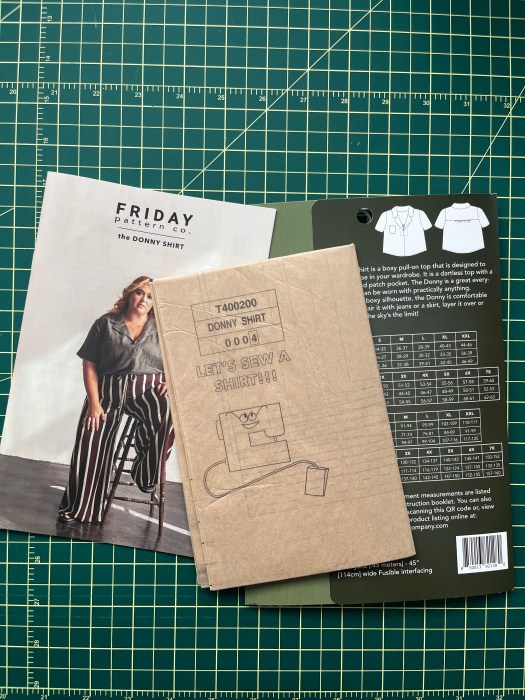
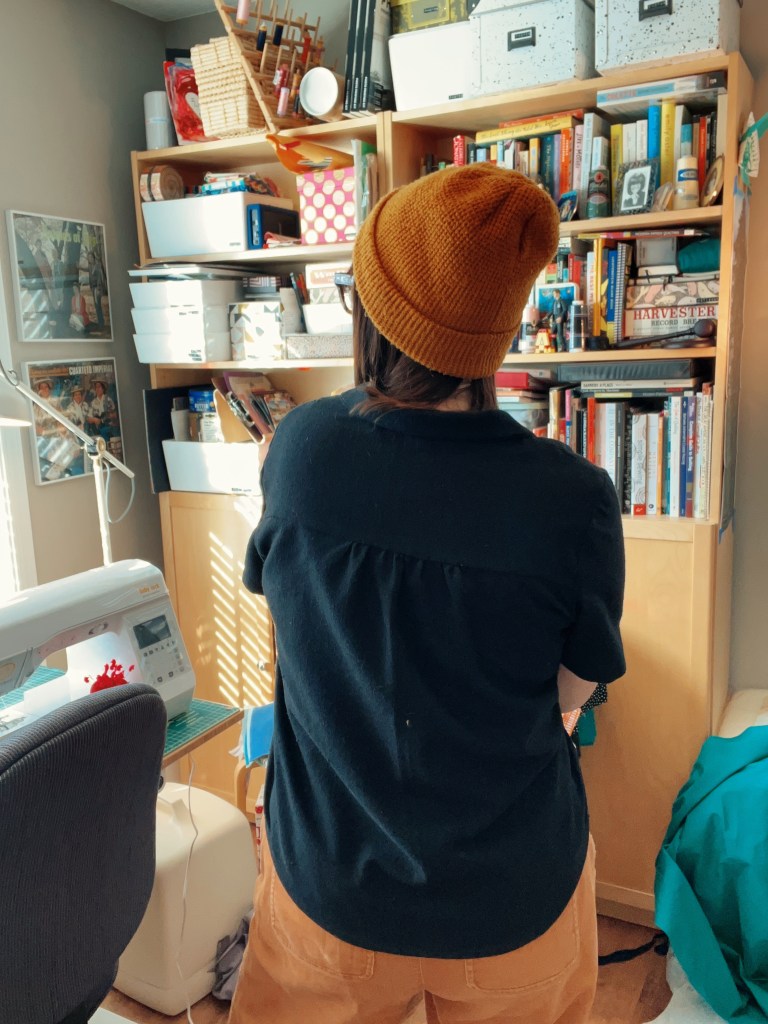
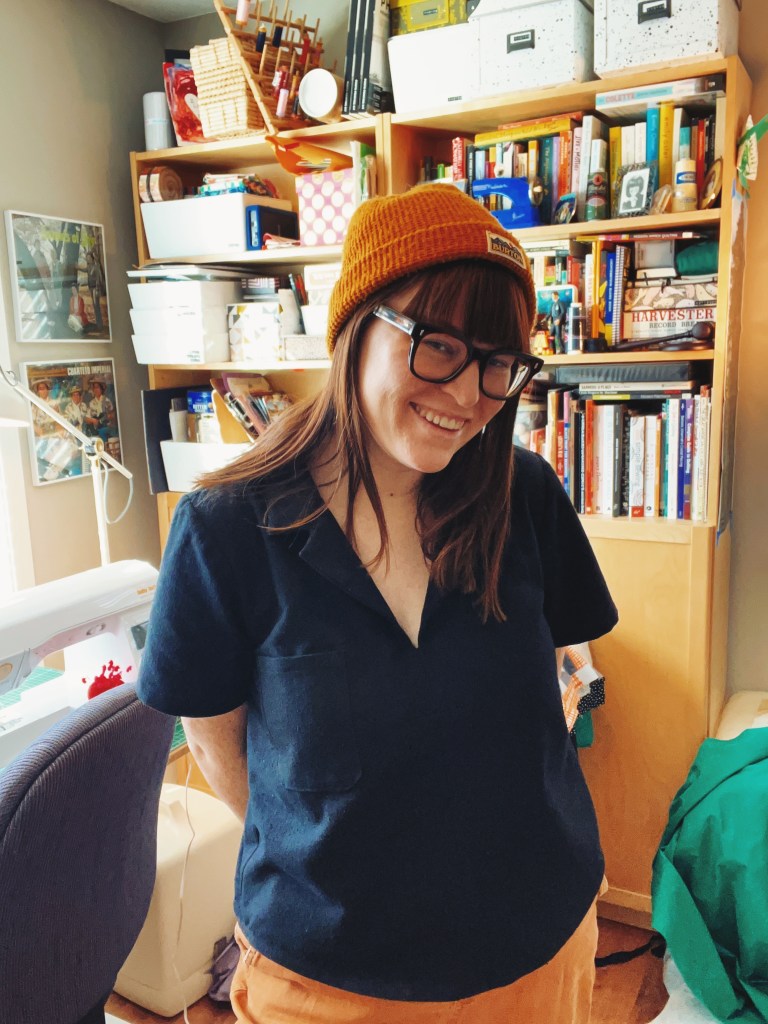
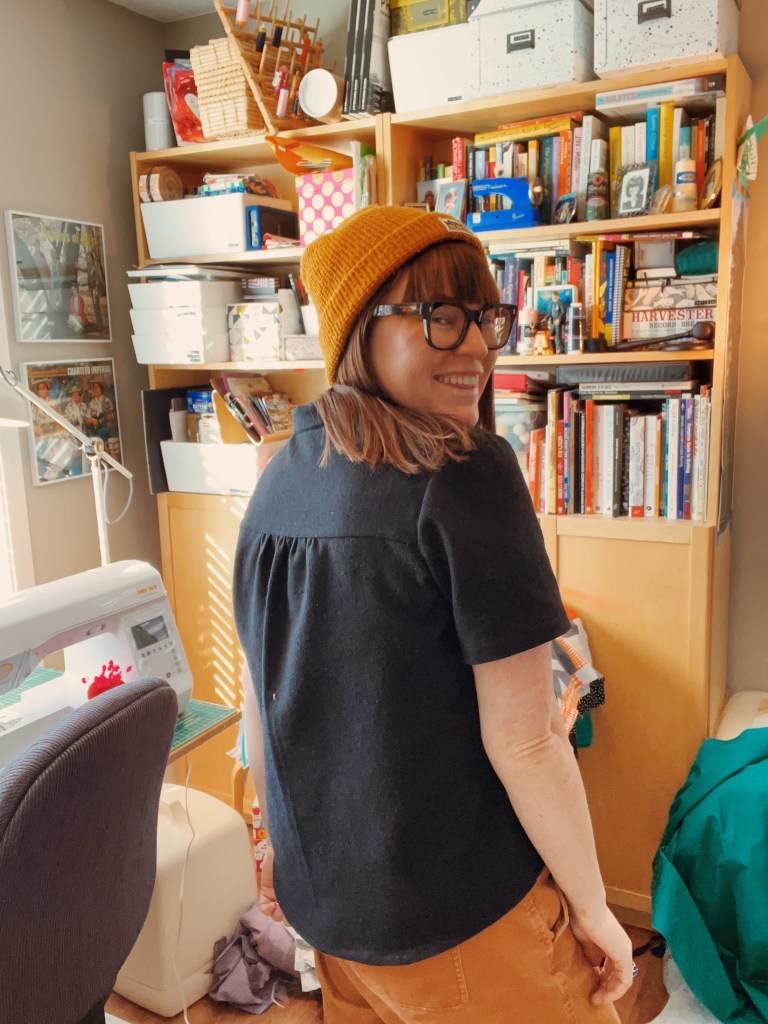
Pattern: The Donny Shirt by Friday Pattern Company (size range from 32″-60″ chest) I made a size L

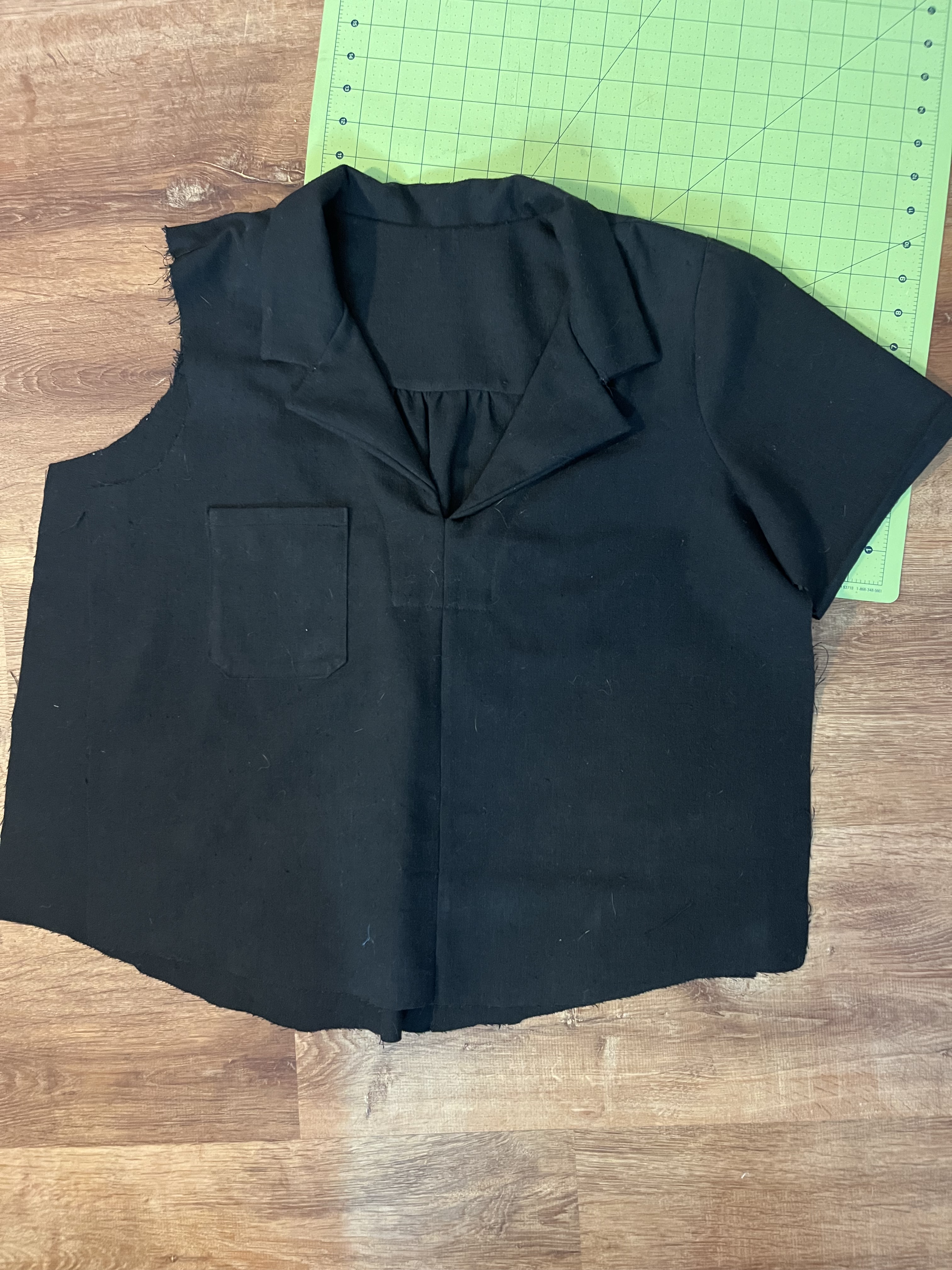
Fabric: Black linen (I think?) from the Textile Center’s garage sale. It came from the linen section but people make their best guesses when shelving fabric so it could be a blend. Not sheer, has a very lovely drape.

Notions used: Black Guttermann thread, Weft Interfacing

Modifications: Added 1.5″ length to the body

If you’ve been following along you may remember I selected this pattern in the fall of 2024 as one I wanted to make in a community education sewing class (here’s a post I wrote about getting started). I missed two of the six classes, once due to sickness and another for not having childcare. I spent most of my time in the class meticulously tracing and cutting out my pattern and cutting out my fabric. That’s it! Never got around to doing a single stitch. Sometimes I sign up for these classes as motivation to get started and while I technically started I didn’t get as far as I could/should have. I don’t think it was a total waste of time and money as I did get some valuable information out of the class and was able to start my project but I should’ve gotten a little further.

Project cost breakdown:

  • Pattern: $20, Paper pattern purchased at Lakes Makerie
  • Fabric: Let’s say $2? I got a grocery bag full of fabric at a sale and cannot remember how much the bag was ($5-15 range)
  • Thread: $3.50 from Joann’s
  • Weft Interfacing: $1. I got a 1 yard precut (plenty leftover for more projects) for $8.
  • Swedish Tracing Paper: $3. I spent About $20 for a roll, also from Lakes Makerie (but I can’t find it on their site currently).

Total: About $29.50

I would pay $50-$75 (maybe even more?) for a nice black linen shirt like this as a wardrobe staple, so $30ish all in feels good to me. The pattern will over time also pay for itself as I definitely plan to make more. I can make more in different sizes since I traced it rather than cutting out the original.

It’s important to remember too that for me, anyways, the bottom line isn’t to always save money. Mostly it’s just fun, and that’s good enough of a reason! The act of making, getting to be creative, use my hands and learn a new skill are also all prime motivators for me.

Pattern Selection and Modifications

The Donny Shirt at Lakes Makerie

I went to Lakes Makerie to buy the pattern and they happened to have an already made Donny shirt on display in the store. They graciously let me try it on–it was a medium and while it fit I wanted a little more ease. This was such a great bonus, to be able to try on before I sewed! I feel so lucky to have a good shop in my city that is so focused on garment sewing and lets their customers try on a made garment.

Based on the made shirt I tried on and reading about other’s experiences on Instagram making the Donny, I decided to lengthen the body by 1.5″. I don’t have a particularly long torso but I don’t like a super cropped shirt. It ended up being a good decision! I’m very happy with the length.

Working With The Fabric

I really hate to take the added step of prewashing my fabric (hassle) but I didn’t know what kind of life this fabric had before it came to me and you gotta prewash so your made garment doesn’t shrink after the first wash. I did it, I prewashed. I made the absolute boneheaded mistake, however, of prewashing it with a load of laundry and no color catchers. DON’T DO THIS, IT WAS SO DUMB OF ME because of course the color ran and stained a bunch of clothes. Going forward I think I need to wash this shirt separately from everything else because how will I know if it’s going to bleed again? I mean, if you have any tips please reach out (can I soak it in something?) because I do hate to have clothes that are fussy to wash.

If you’ve ever sewn with a woven or linen you know that they are more prone to fraying and this fabric was no different. I don’t love that but it wasn’t a deal breaker, I still love to work with linen because of how soft the fabric is.

This was my first time making a black garment and I will say, it was pretty tricky at times to see everything and I don’t think my eyes had anything to do with it. I utilized daylight, an Ottlite, my overhead light, the built-in light on the sewing machine and two lamps just so I could see what the heck I was doing. On the plus side, sewing black thread on black fabric is very forgiving. Can you see any of my crooked stitches? No? Me neither. I think the most challenging part of sewing the black fabric was when I was finishing some of the inside seams with a zigzag stitch and really couldn’t tell if I was doing a good job or not. They’re not pretty but hopefully they’ll prevent the seams from fraying further.

Sewing With Real Fear: Setting The Sleeves

I’m getting better, but there’s almost always something with every sewing project that incites some fear into me. For The Donny shirt it was setting in the sleeve. Having never done this, I was afraid. I was told it was tricky and that’s all my little brain needed to hear for me to go oh no this is hard RUN AWAY. What if I screw it up?? I really have to work against my own brain here to tell myself there’s nothing to be afraid of, you’re not like, sewing a wedding dress for someone who is getting married tomorrow (but oh great, now I will probably have that happen in a dream). You are literally making a shirt for yourself from cheap fabric FOR FUN. THIS IS FUN. So I did it and ya know what? I didn’t even have to seam rip the sleeve, I did a great job. I did accidentally create a crease while doing the zigzag stitch finishing of the sleeve but I just did a little seam ripping and tried again. IT WAS FINE!!! And I am very brave.

Fun Bits: I Love To Learn

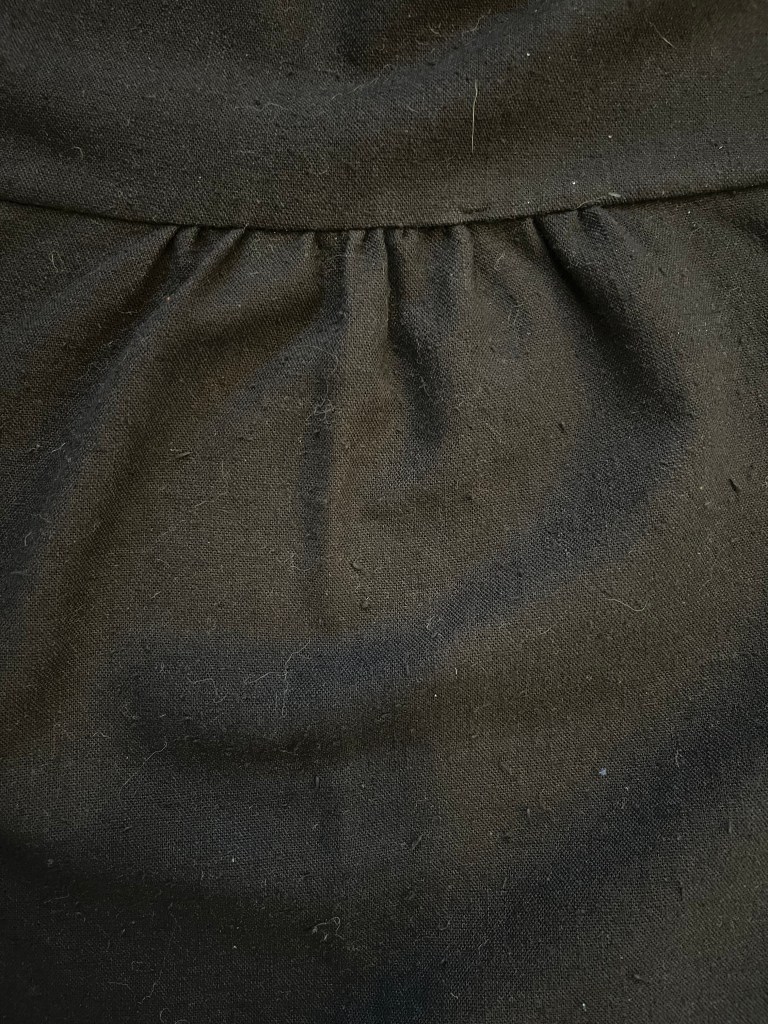
Aside from learning how to set a sleeve I also did gathers for the back of the shirt. My mom happened to be in town while I was at that step so she assisted (mostly just checked my work, thanks ma) and that was nice to have her there for that new skill. I really liked pulling on those threads to make the cute gathered back at the back yoke!

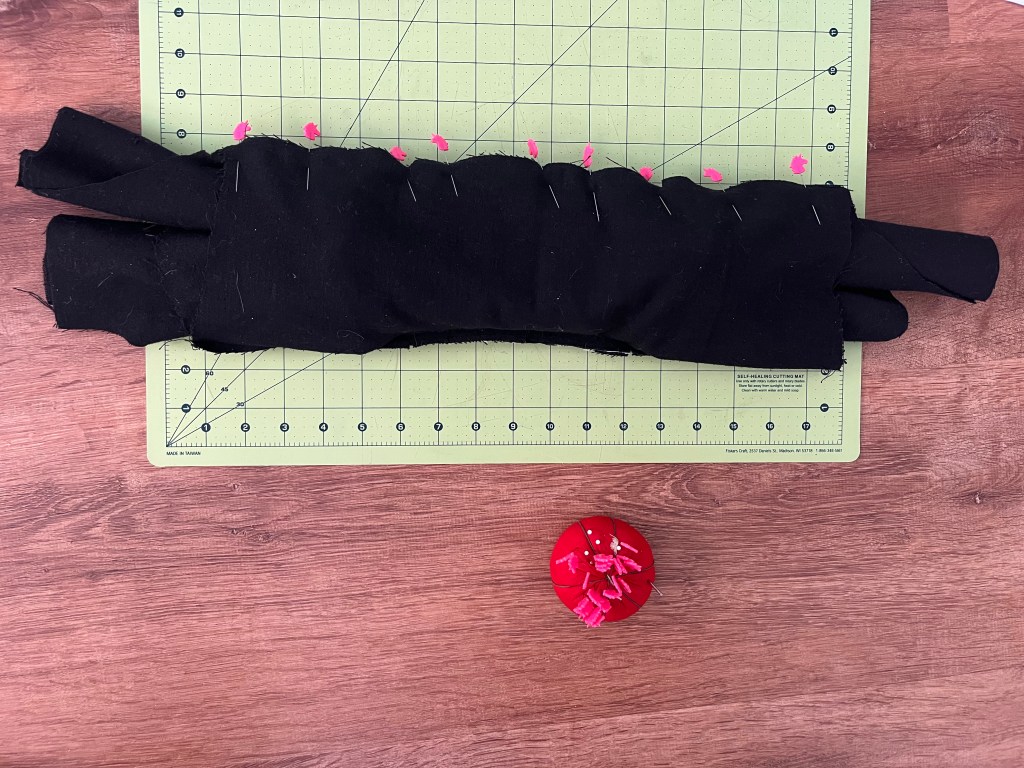
The other fun new thing was doing the “burrito method” for sewing the two back yoke pieces together. This is where the YouTube sew along really came in handy and the pattern instructions even calls out the fact that you might want to watch the video on how to do this step. It looks totally confusing and weird but encases the back seam of the yoke really nicely. It’s fun to learn!

Future Donnys

As I already said, I’m glad that I selected a large and lengthened the body, that was the right move. I’m not 100% sold on the low V and right now, at the end of January it feels a little chilly to wear it. For my next Donny I’d likely modify the V so it doesn’t go so low (I think Francesca of Made By Francesca has done this for her Donny’s but I can’t find a post on it right now).

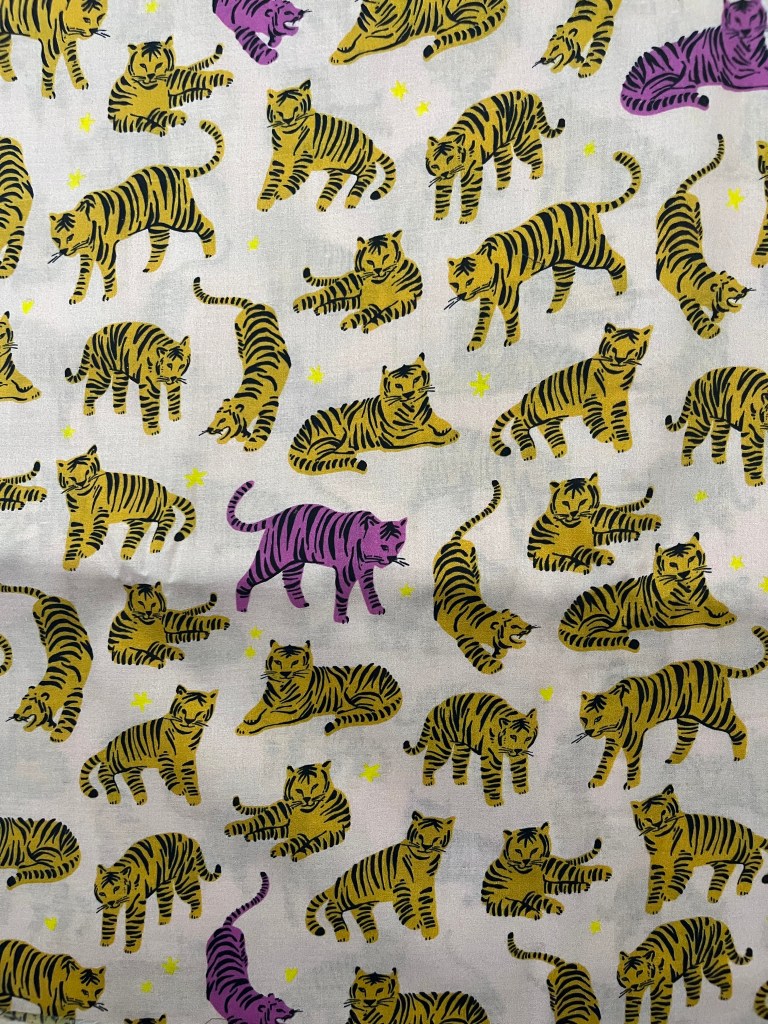
As for fabric, I’d like to make one in a print and I’d like to try out double gauze, I think that in particular would look really nice as a Donny shirt and I don’t have any double gauze shirts! I also have 3 yards of a cute tiger fabric from SR Harris that I intended to use for pajamas but a Donny shirt as a summertime PJ shirt would be p. cute.

Wild and Free Tigers by Hello! Lucky for Robert Kaufman Fabric

I finished the exposed inside seams with a zigzag stitch, as stated earlier, but these seams really would look nice if they were serged. I’d like to face my fear and learn how to use the serger.

Oh, and lastly, let’s talk about that pocket! I 100% wanted to place the pocket on the left. My next Donnys will have a pocket on the left. That’s what I thought I was doing when I was sewing it on. I was SO MAD I did it incorrectly, it really bothers me that I put the pocket on the right. I could move it. I could’ve moved it at the time. It bothers me. I’m not going to move it though hahahaha.

Final Thoughts

If I could turn back time I would probably make a different fabric selection and start with using a print, rather than a solid. That would’ve made it easier to follow directions and follow along (and also see what I wrote above specifically about working with black fabric). I’m not mad that I made a black–it’s exactly what I wanted for my closet and will absolutely become a staple.

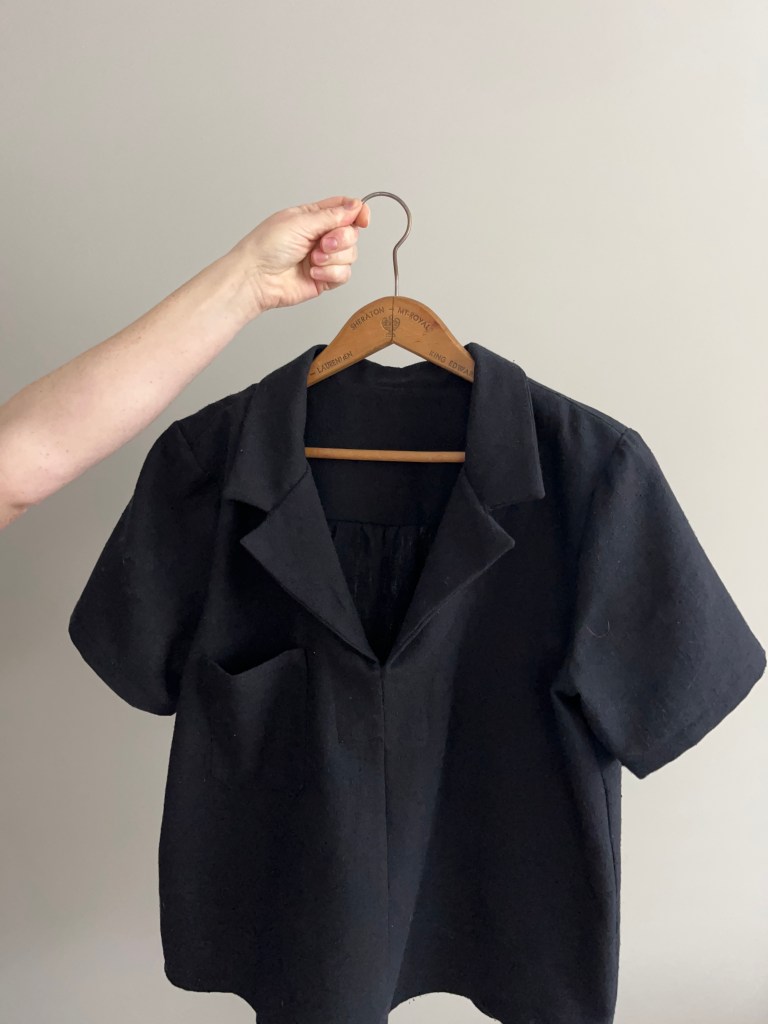
Wooden hanger worthy

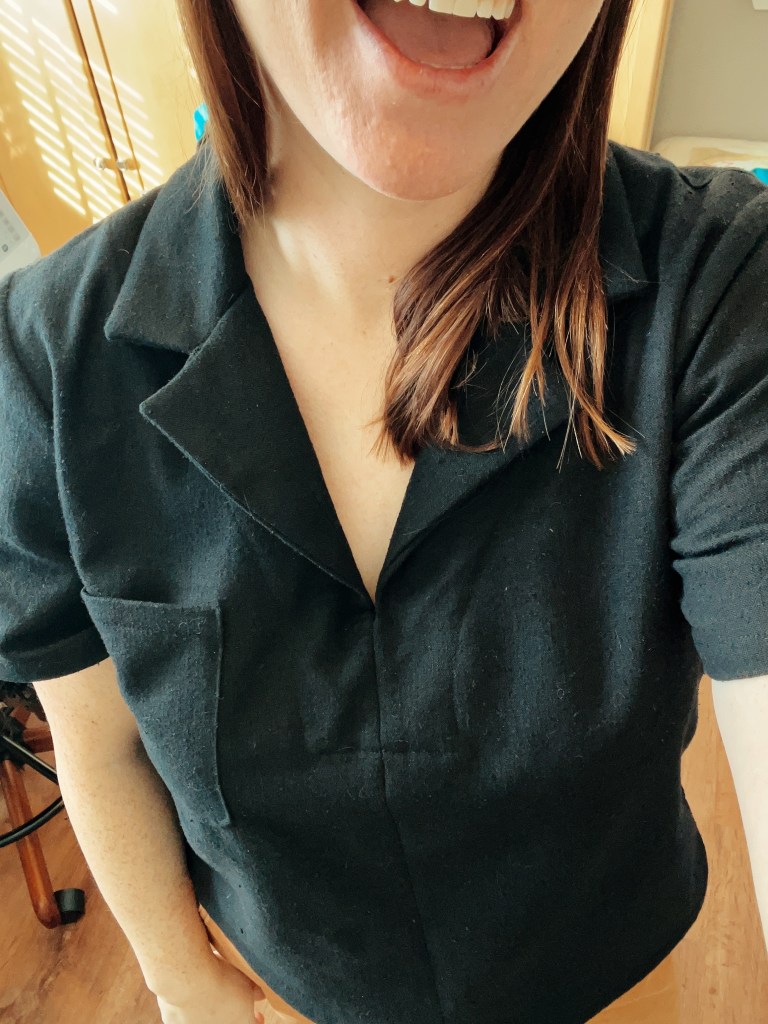
When I finished up the hem and pulled it off of my machine I was in total awe. I really, truly cannot believe I made this shirt! It looks like something I would buy and that’s what’s really blowing my mind. I remember thinking at one point in my life that making clothes seems so challenging. Making clothes that fit well? That you want to wear? It feels like a revelation to have something in my closet that ticks those boxes.

This might be the most ethical garment in my closet? I bought a pattern from an indie pattern designer from a local independently owned shop and I got the fabric secondhand at the Textile Center’s biannual garage sale.1 Please clap!!!! #savetheearth #earthmama #natureishealing

Making this shirt was just the confidence booster I needed to keep going and stretch my skills. I think I’m ready to tackle a button up, or maybe I will finally get at that Tamarack jacket I have all cut out and ready to sew. Thanks, as always, for reading!

Ecstatic!!!
  1. Speaking of that garage sale, if you are in the Twin Cities and sew, knit, crochet, embroider, weave, etc you definitely need to check it out, it is bonkers good and I highly recommend it. People donate fabric, notions, yarn, patterns, embroidery hoops, sewing machines, weaving looms, books, etc etc, anything related to fiber arts and you can get them for a fraction of the cost anywhere else. I got 2 grocery bags full of fabric for $15/bag. Or was it $5? Honestly either is fine with me, proceeds go to the Textile Center which is a nonprofit. I volunteered which helped me to get in early and also get a good overview of what’s on offer. In addition to the fabric I got patterns, an acrylic ruler, pins, bias binding, elastic, rickrack, a tailor’s clapper, patches, two tailor’s hams, snaps, and bias tape makers. I probably got more than this but that’s just what I remember off the top of my head! The next one is in the spring, April 11-13th, 2025. ↩︎

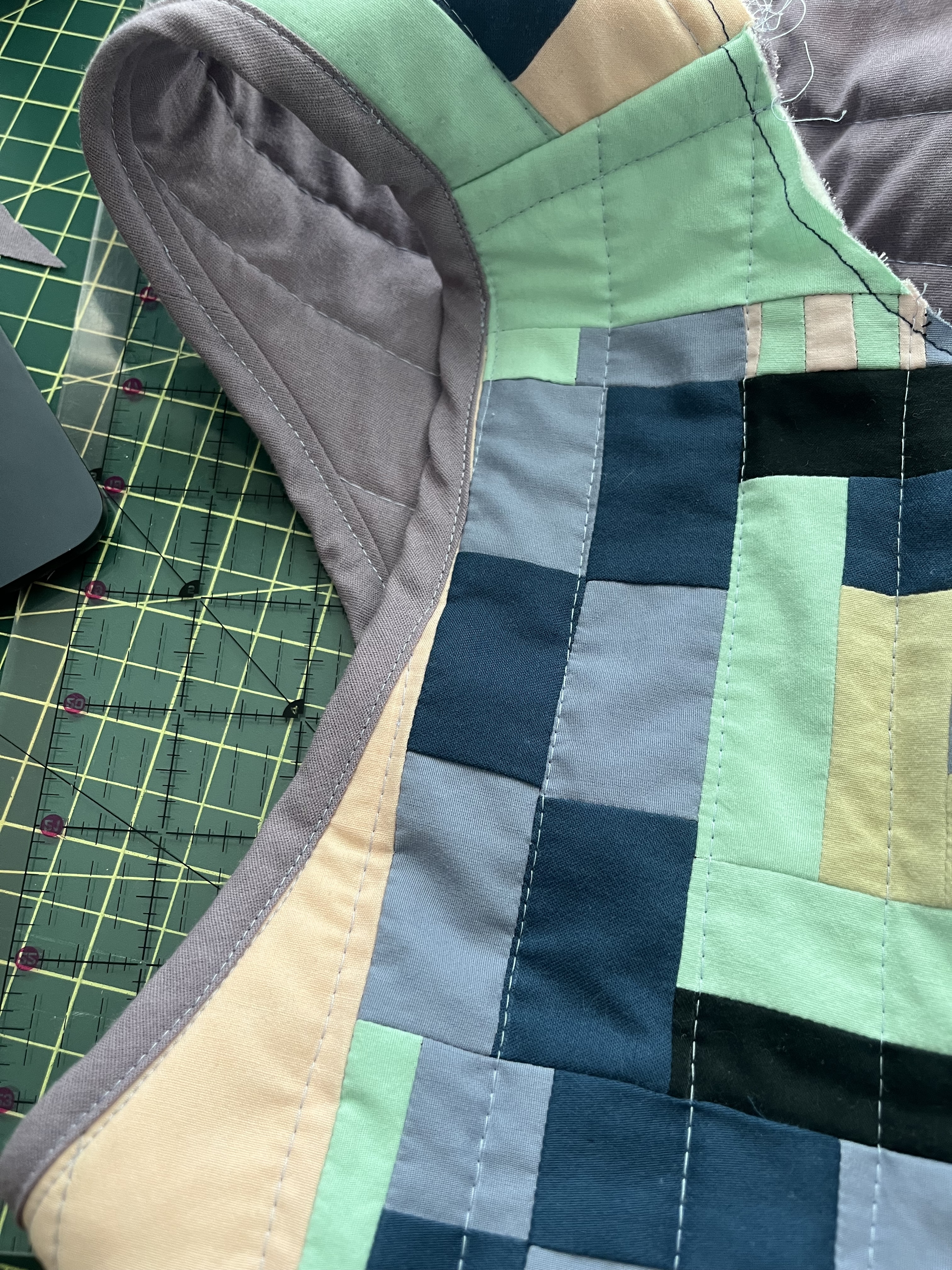
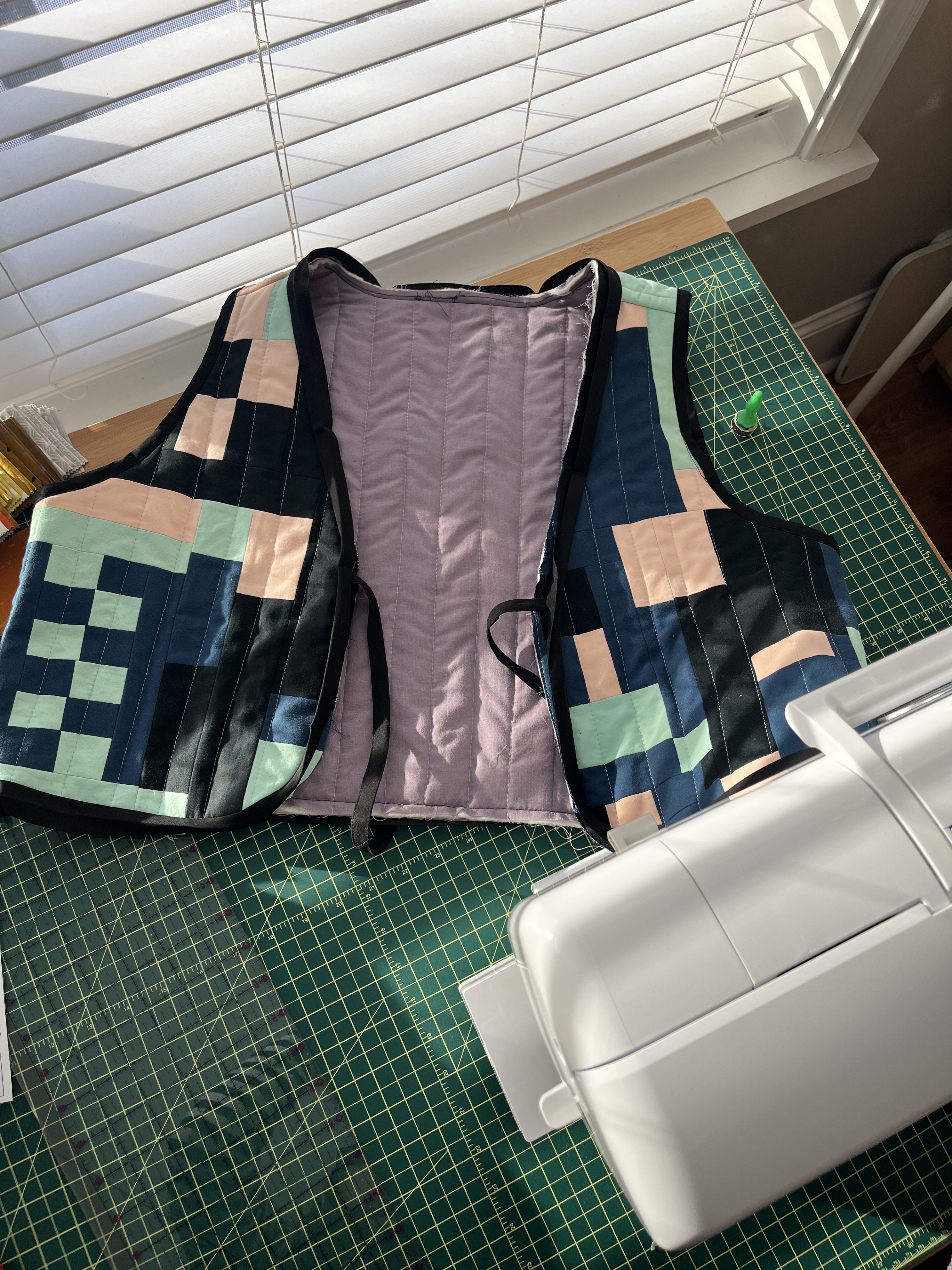
Sewing The Syd Graham Ruby Vest From Scraps

I have a folder full of drafts but this is what I want to write about today and I have some time to do it! Here’s everything I have to say about sewing the Ruby Vest.

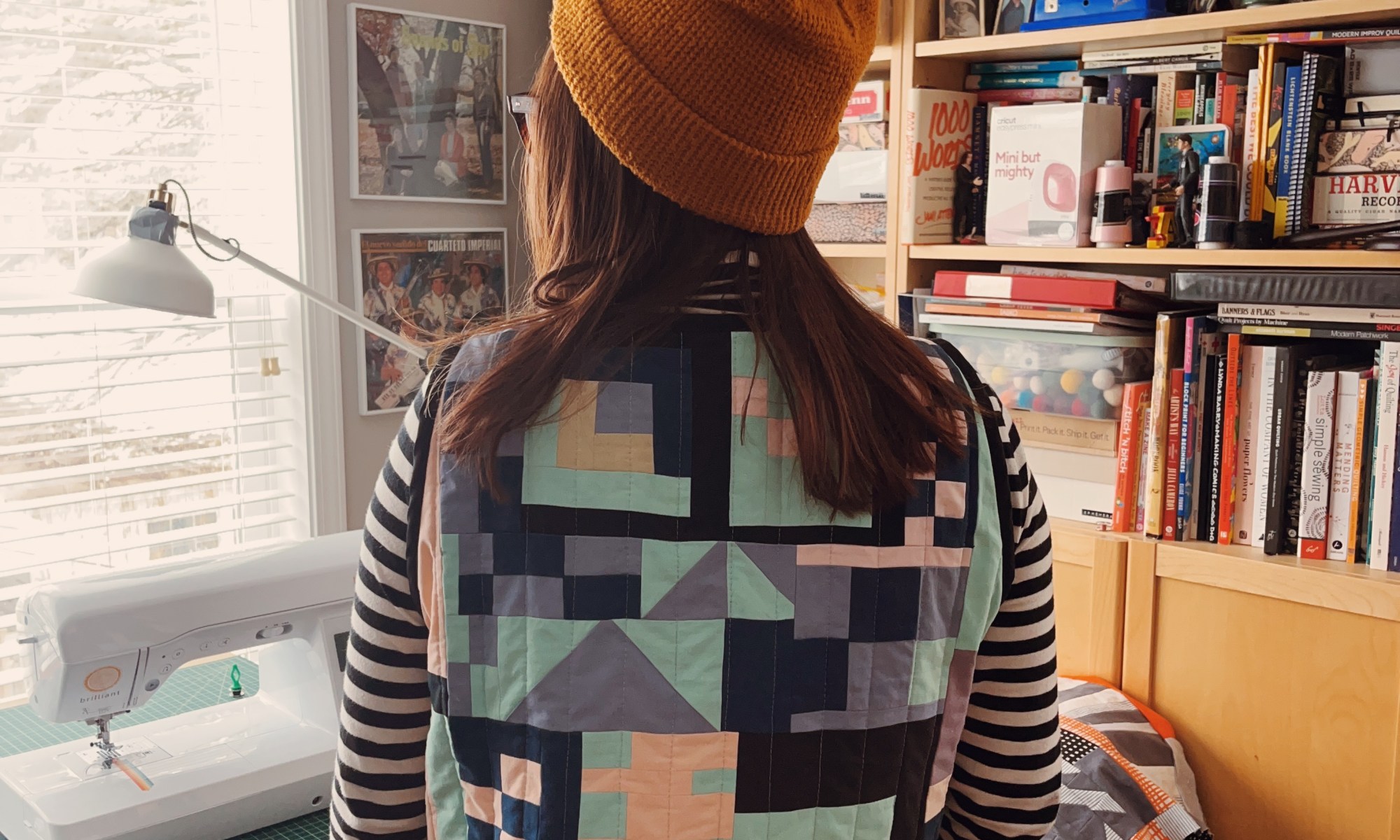
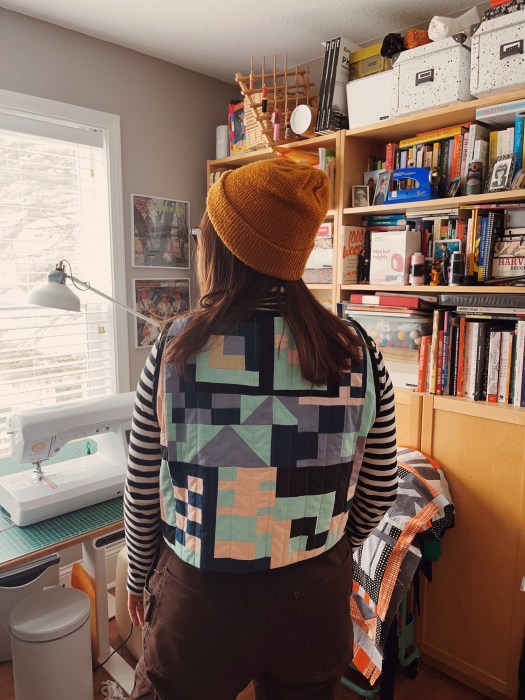
My finished Ruby Vest

The Ruby Vest is a very popular make among home sewists, and for good reason–it’s cute, it’s fast, it’s reversible, it’s customizable, and it’s very beginner friendly. Check out the hashtag #rubyvest on Instagram and you’ll find hundreds of vests and they’re all so cute. I would venture a guess that most people weren’t vest people before making this vest. Now we are. The last time I owned a vest was in high school–an off-white puffy Roxy one that I tried to use in lieu of a coat but ya know that never works. Having a vest to use to accessorize an outfit is much better.

Print The Pattern, Tile It Out, Tape It Up, Cut It Out

Only a few pattern pieces to print and cut out!

This pattern doesn’t come in a physical copy that you can buy from a store, it’s PDF only (or projector files). I am coming around to print-at-home patterns, and one reason why is this pattern allows you to open the PDF in Adobe, turn off the sizes you don’t need (each size is on a different layer, you just turn off the extra layers) and print out ONLY the size you are cutting! This was a revelation for me. It makes cutting the pattern a cinch, I wish all print-at-home patterns had this feature. Until I get a projector, this is the next best thing. If you’re a little confused about what I mean, Syd made a YouTube tutorial on how to print and tape your pattern together and she walks through how to turn off the sizes you don’t need so those don’t print.

Choosing My Materials

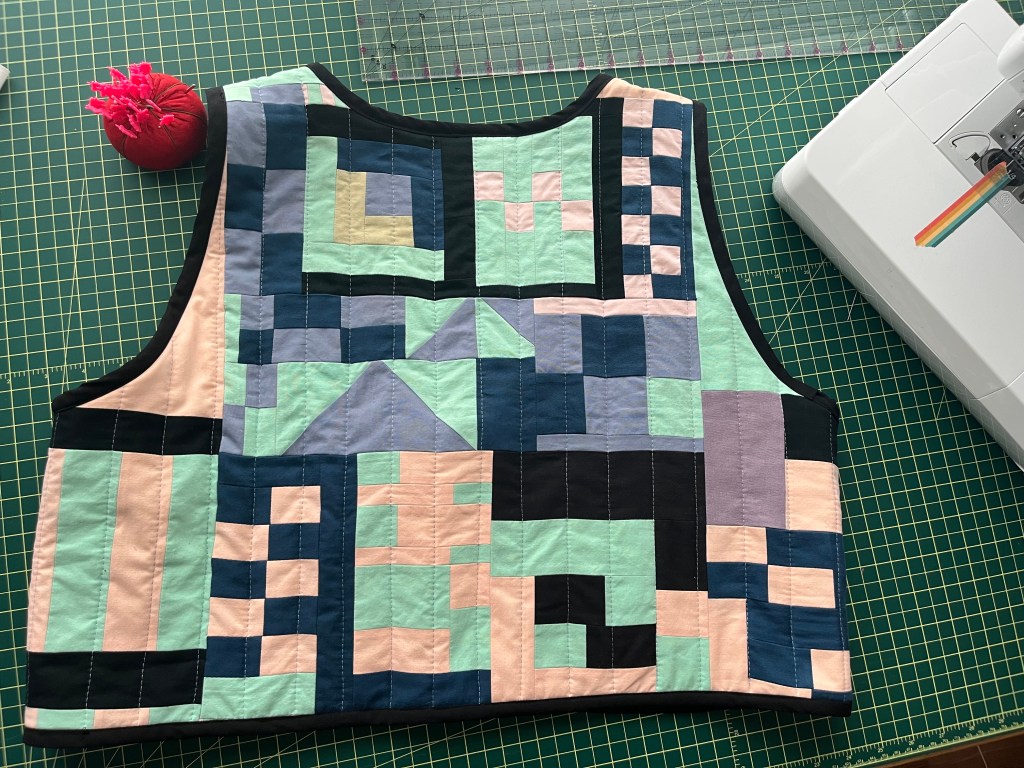
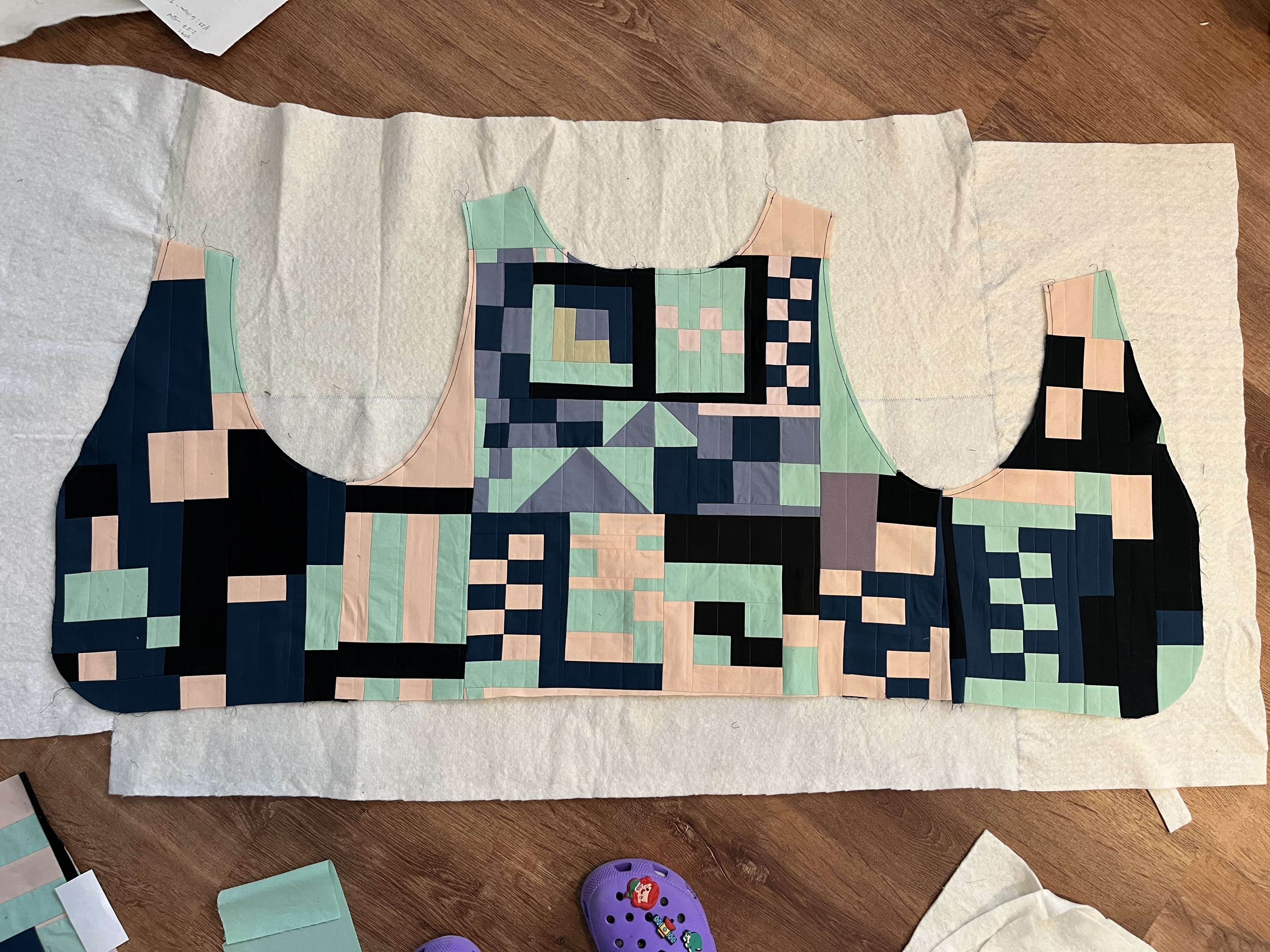
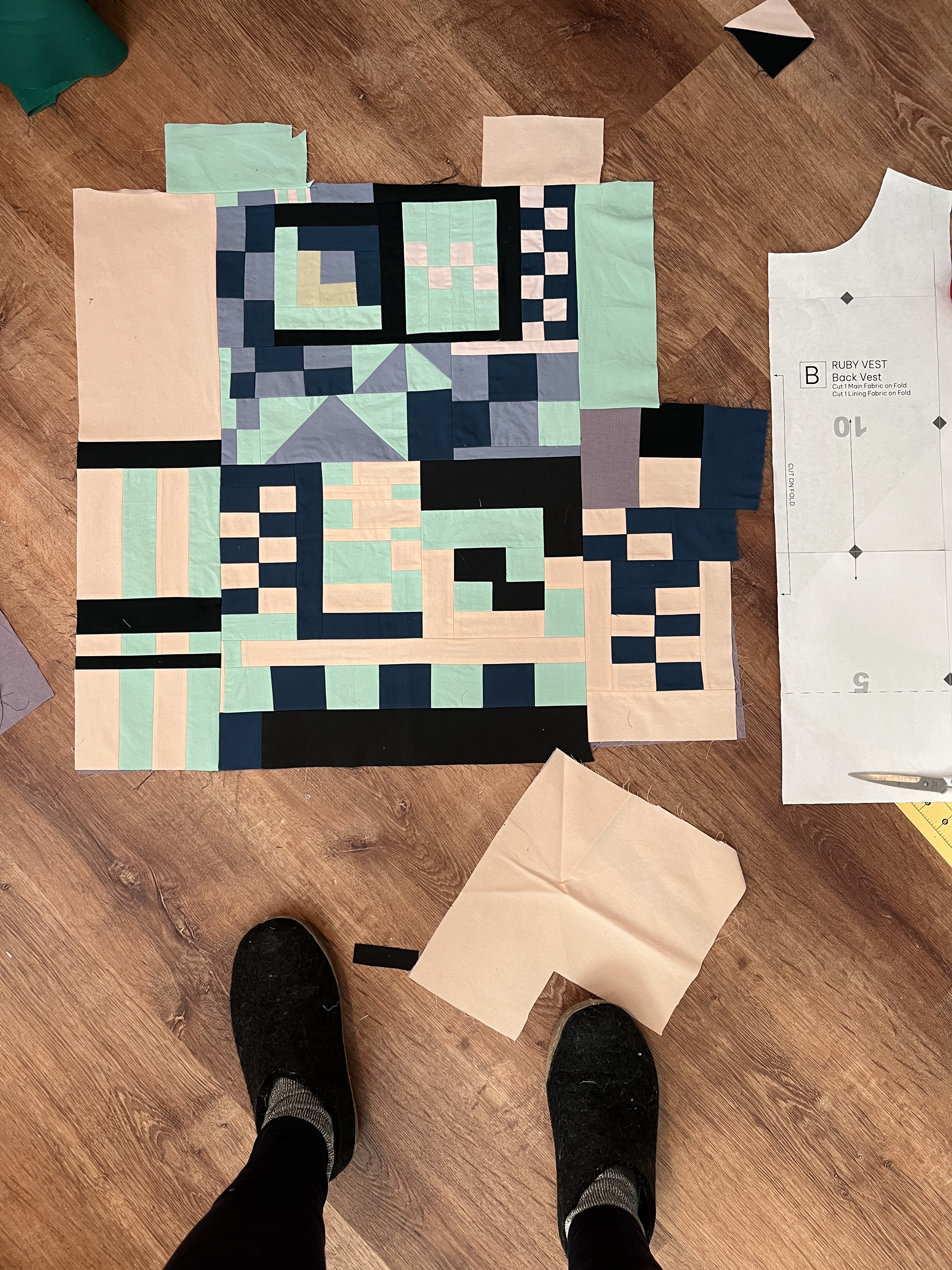
I always have a hard time starting something when it’s a new skill. One thing that helped launch me into this project is I decided to use what I had and not be precious about it. I tried out some of my yardage and couldn’t puzzle out how to cut all of the pieces from what I wanted to use, so then I turned my attention to a panel of improv quilting I did summer of 2024 from some scraps I thrifted. I’m nearly positive these scraps were once sheets. Most seem like cotton, some might be cotton/poly blends. The piece I had started making wasn’t quite big enough for the back so I added on to it. I got lazy with the front panels and mostly just did improv squares but it’s kind of a nice contrast to the busier back. I don’t regret it. When I finished the back piece and held it up to my back I realized the ruby vests I gravitated towards the most were cropped, so I went ahead and hacked off a few inches (hours of work!) and then continued to make the front panel pieces at the cropped length. It was the right move! I like the cropped length so much.

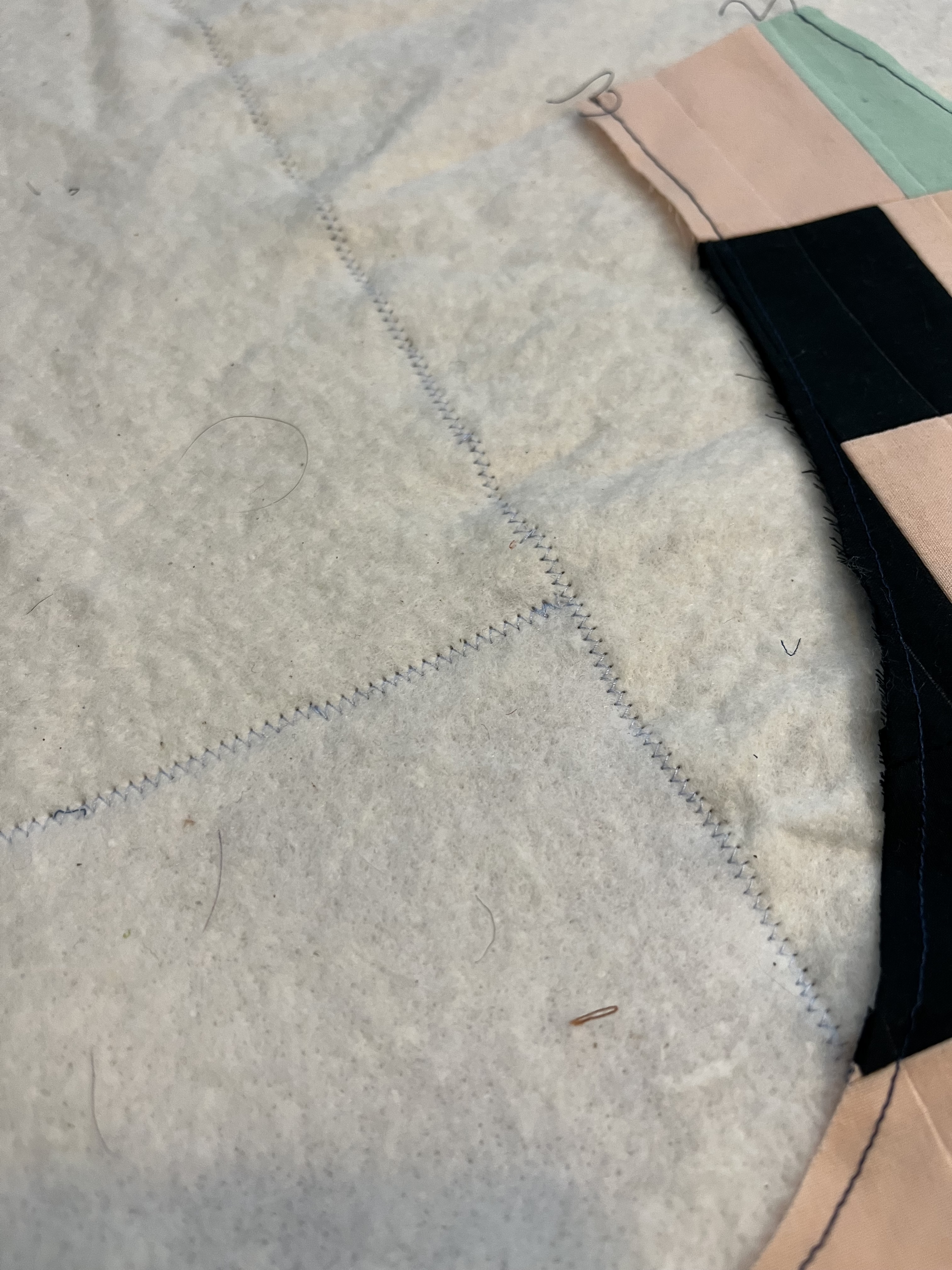
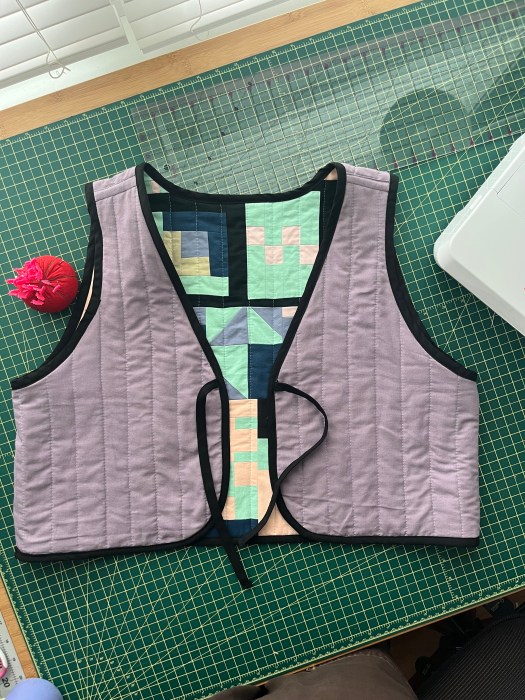
Aside from the thrifted scraps I used for the front main pieced fabric I used a purple thrifted sheet for the interior fabric. I really didn’t want to buy new batting just for this project so I made some frankenbatting by zigzag stitch sewing together some batting scraps from previous quilts. I lined them up so nicely initially but in the end they didn’t butt up to each other super well and came out a little short on one side. It wasn’t a big deal though, I was able to lay the splayed out vest and just cut around what I needed. So happy I could use up what I had!

Quilting It Up

Faint lines from the hera marker and nice, straight quilting lines

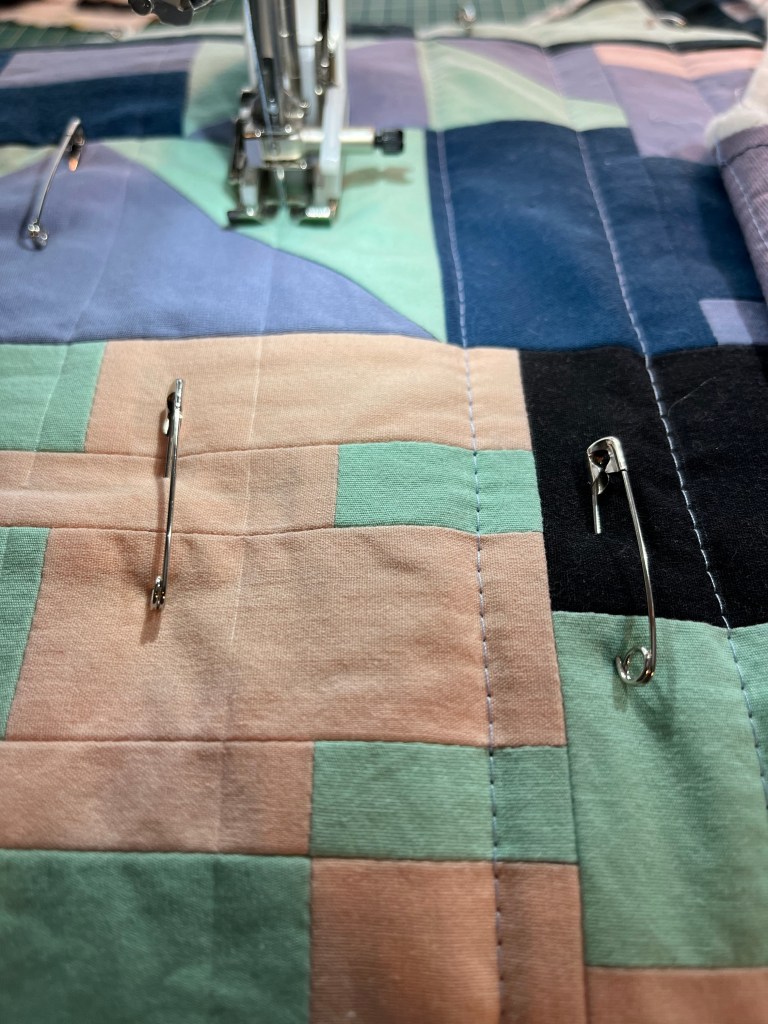
This vest was the first time (I think!) that I used a hera marker to mark my quilting lines! Syd recommends it, I already had one, so I tried it. I didn’t think I’d like using it and in the end I actually really liked it, I could actually see and follow the lines well. I did 1.25″ quilted lines that the pattern suggests. It quilts up so fast.

I am so dang lazy with changing thread color. I had this light blue Aurifil already loaded up that I was using for piecing and just went with it for the quilting. I actually never even held other thread color up to the fabrics, that’s how lazy we’re talking. I think this light blue thread is nice. I was also a little afraid I wouldn’t sew very straight so I didn’t want a thread color that was too high contrast. However, I did a great job quilting it and actually sewed my lines really straight! Like, I am VERY PROUD OF ME.

My only gripe about quilting it is I did break a needle while doing so. I kind of thought it was weird to put pins on both sides of the vest before quilting it. Next time I will take all of them out from the back side after I go crazy pinning the front. Also, it probably was a blessing in disguise? I never know when to change my needle out and well, breaking a needle will help you make that decision to put a new one in. I think I was using the same needle from quilting my last quilt (the Birch Point quilt, which I will eventually have a link to it here when I write about it). Overall–loved quilting it!!

Biased about Bias

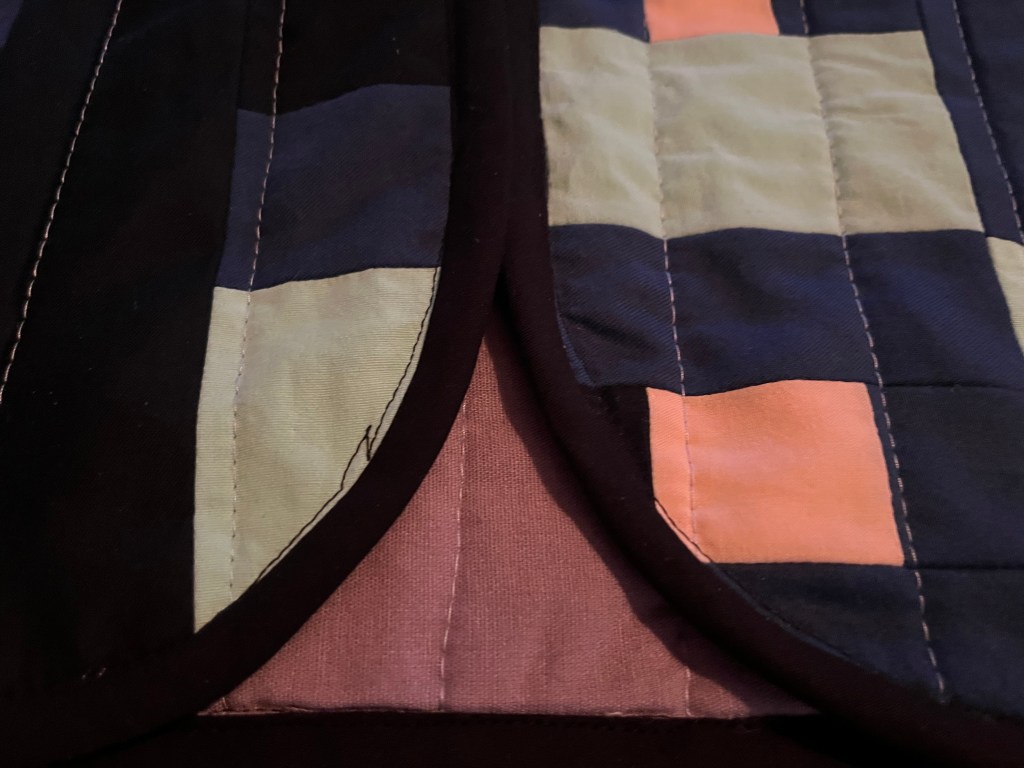
The pattern has you make continuous bias with that magic tube method. I have tried doing this before and failed. This time I DID IT, but I cut it SO badly that the edges were sooo jagged (literally what was I thinking?? I am used to rotary cutting and scissors just isn’t it for me). I tried making the bias tape work and sewed one armhole with it but it was bad, too bad to just leave it so I seam ripped it and decided to just buy black bias. I got Wright’s double fold at, ugh, Joann’s. Honestly though I do like the black for a nice contrast for the solid purple side. It was so easy to work with.

Would you have gone with the purple? I don’t hate it but like the black better

I disliked sewing the arm holes but mostly enjoyed sewing the bias around the perimeter. The curves at the bottom were a nice challenge but oops I screwed both of them up and sewed off of the bias binding. Oh well! I’m not going to fix it!

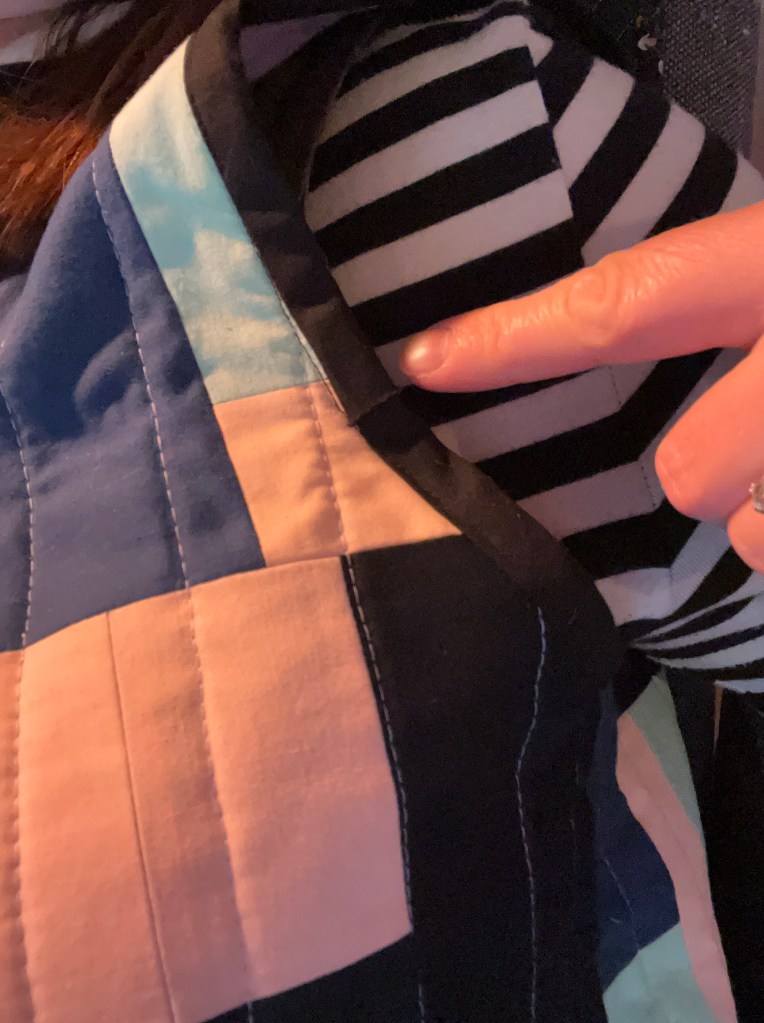
Oh and one more thing about bias–I cannot for the life of me join bias pieces. Ok I have successfully for a quilt binding but every spot on this vest where I joined bias is not very seamless. One day! For one armhole I had the bias join in the front and I do regret that, I should’ve had the bias join in a less obvious place. I don’t regret it enough though to want to seam rip and do it over haha, but it does bother me.

Written Instructions VS YouTube University

The instructions were written well, don’t get me wrong, but I almost exclusively used the YouTube tutorial sew along to make the vest. Praise be that there’s a video for this beginner. It’s one reason I love indie sewing patterns so much! So many have sew along videos or tutorials on tricky parts. They don’t have to do this but it’s such a nice perk. The length of it is perfect (30 minutes). I only have two critiques about the video–when she explains to start sewing the bias on the side of your main fabric first (she says this while she’s already sewing it, wish she had said so when she was pinning the bias on) and when she tries to explain joining the bias (the video could be clearer). Other than that, perfect tutorial. So much work goes into making a video tutorial so really, these are just a couple little nitpicky things!

Cost Breakdown & What’s Next

This vest is really a dream beginner’s project. I’ve seen two fabric shops in my city offer sewing the Ruby Vest as a class (and they are not cheap classes!!) so I guess I’m extra proud I tackled it solo with minimal mistakes. Here’s roughly what I paid for materials to make it:

Cost breakdown:

  • Pattern: $16, but actually free for me with an Etsy gift card (thanks mom!!)
  • Fabric: thrifted sheet (purple) $4? from Saver’s like 2 years ago so this info is lost to time
  • Front fabric scraps: $2?, also thrifted and likely old sheets!
  • Batting: Leftover pieces from previous quilts that I pieced together, so I’m calling this free
  • Bias binding: $2.99/package, used 2 packages

So, around $12 depending how you want to slice it (if you want to include the pattern in my cost breakdown then it was about $28 to make). And I guess the price doesn’t reflect things like thread, needles, and other notions I already have and use for making, like safety pins and Wonder Clips (I need more of these though, I only have 9!).

But $12 for a wacky one-of-a kind vest? Are you kidding me? Sewing is magic.

I am going to take another look at my fabric stash and hopefully make another vest soon, probably not doing any piecing this time around so it should sew up even quicker. We’ll see how this one washes up and if it shrinks in the wash at all. I will likely go down a size or even two as I feel the size I made (12) is just a little too big, though it technically was the right size for my measurements. Better to be too big than too small though, right?

This finished project (here’s an Instagram reel of the making of it) gave me just the boost of confidence I needed to go back to another garment WIP–that Donny shirt I wrote about last fall. Yes, it’s still just sitting in a pile, all cut out. Time to face my fear and sew that puppy up! Syd has a tutorial on finishing edges without using a serger, I might just have to check that out for finishing the edges of my Donny shirt.

Thanks for reading!

Ash

Crafting The Donny Shirt: My Sewing Class Experience (Pt. 1)

I am once again in the hopeful, bright-eyed honeymoon stages of a new project. It’s autumn, it’s October, and this week I started a new community education sewing class called Sewing 2.

The class is 6-1.5 hour weekly sessions for $65. That’s roughly $11/class! What an incredible deal. I think there are 7 or 8 students total with one instructor who has a significant background in sewing. This is my 4th community education class, I think, and already I can tell it’ll be a good one.

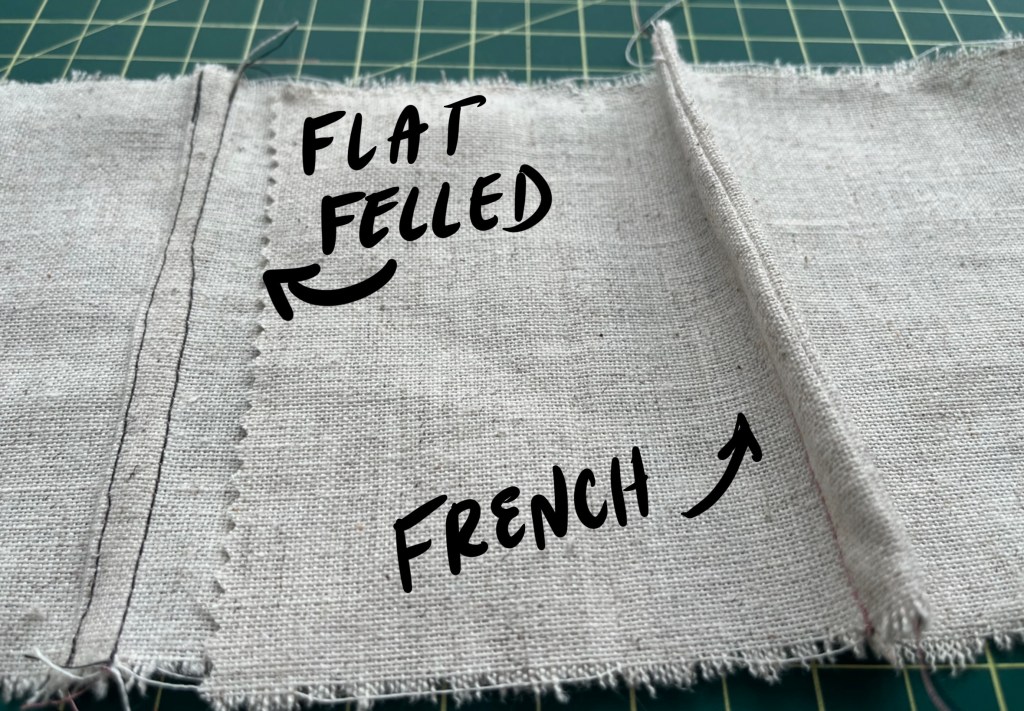
The focus of the class is on seam finishes. I’ve only made one simple garment as an adult and for that I just used the zigzag stitch on my machine to finish the edges. It does the trick but there are so many other seam finishes to learn. The instructor showed us examples of pinked edges, bias tape bound finishes (aka Hong Kong seams), overlocked (aka serged), French, flat-felled, and turn-and-stitch. We then tried our hand at doing our own seam finishes on some scrap muslin fabric. I only tried French and flat-felled but found them to be easier than I anticipated. I’m hoping to do French seams for my garment.

Examples of flat-felled and french seams on a rough muslin fabric

For the next class we are tasked with bringing a pattern and prepared (washed, ironed) fabric. We were given only two directions on this:

  1. When choosing a pattern we should select a shirt pattern that we want to make that has sleeves so we can learn this tricky aspect of sewing.
  2. The fabric should be a woven (so, no knits/anything with stretch).

I’m glad we aren’t all making an instructor-selected pattern. It makes it easier to get excited for the class when I can choose a pattern I’m looking forward to making. This is where my dopamine goes crazy as I look at all the possibilities for a pattern and fabric. I love this part of a project, DUH, it’s absolutely the most fun part. Nothing has gone wrong yet and everything is possible.

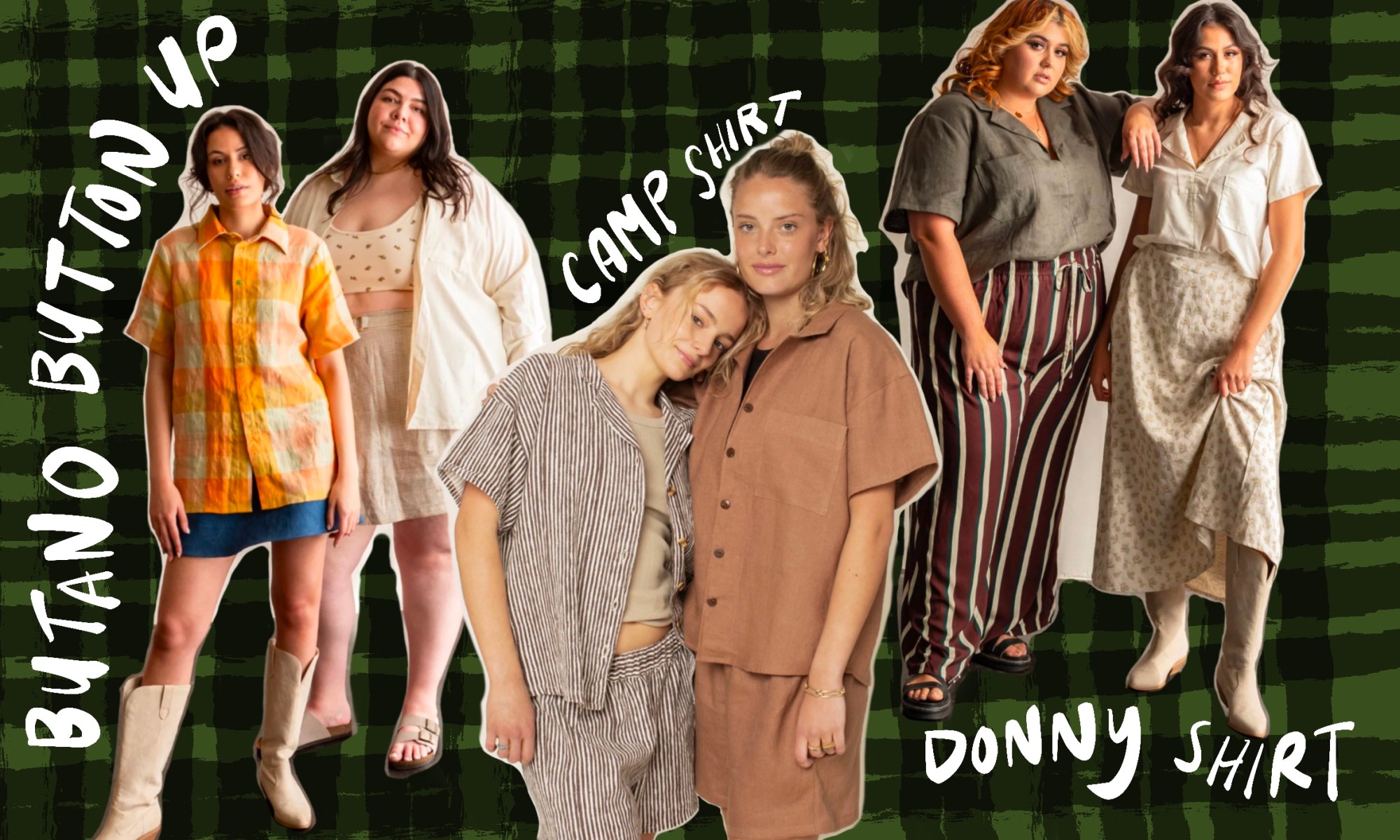
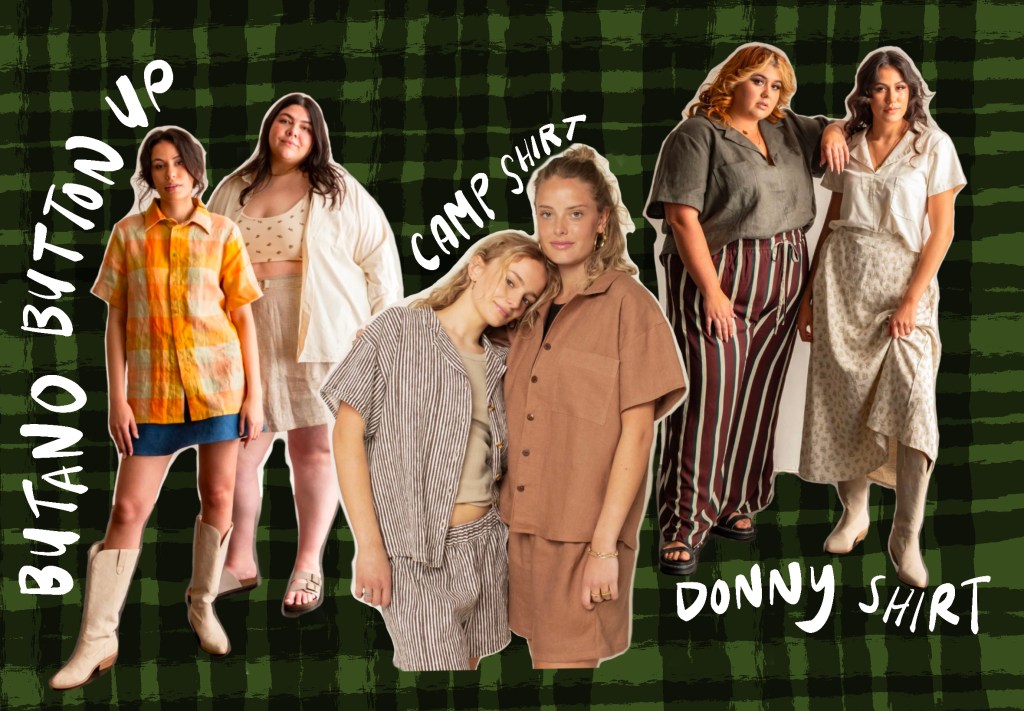
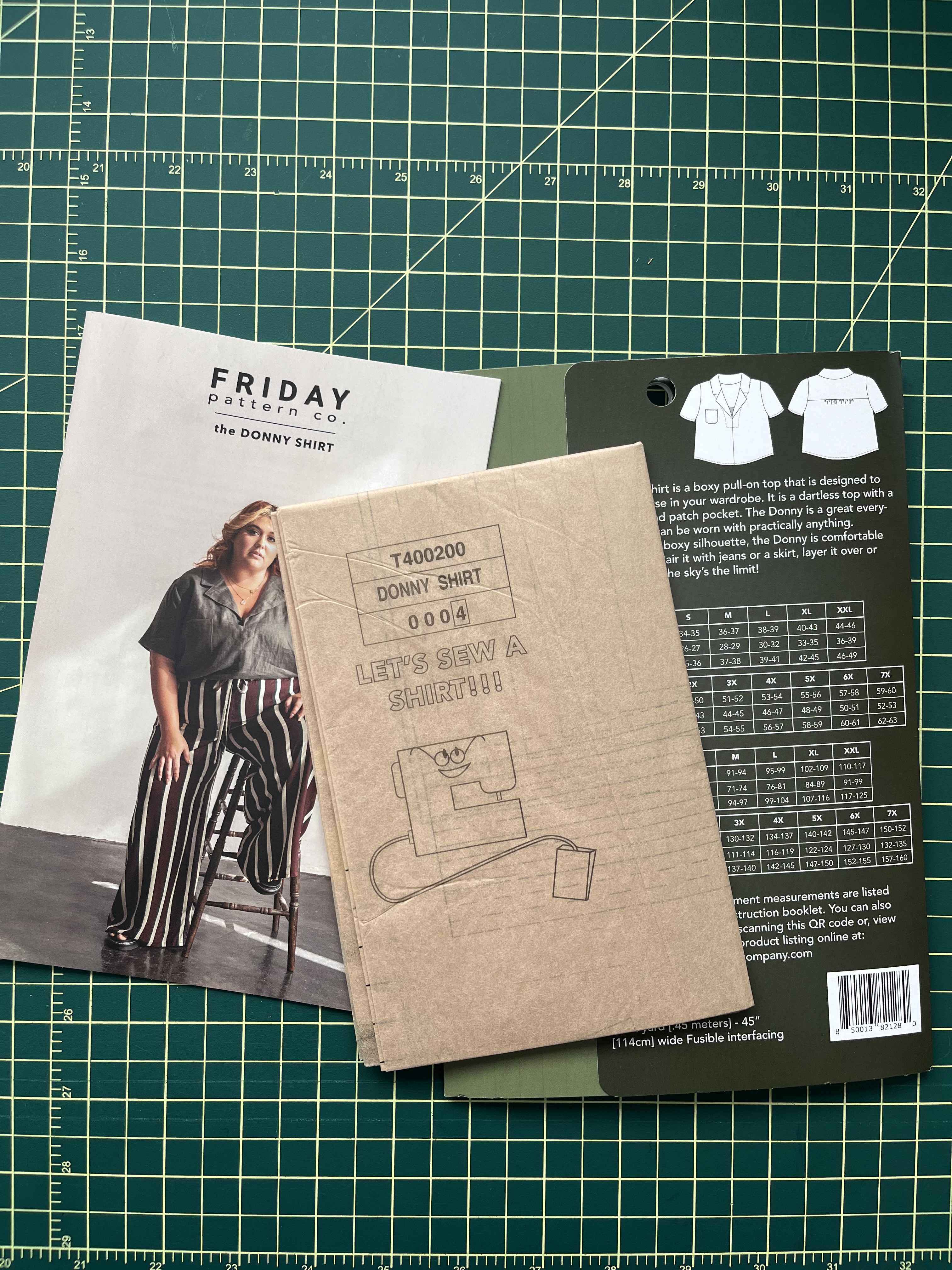
So what patterns have I been considering? Initially I had my sights set on three indie patterns: The Butano button up, The Camp shirt, and the Donny shirt. I found all these patterns simply by being on Instagram looking at home sewist’s accounts and seeing them often. The Butano and The Donny are both by Friday Pattern Co. The Camp shirt is by Wardrobe By Me.

Butano, Camp and Donny Shirts

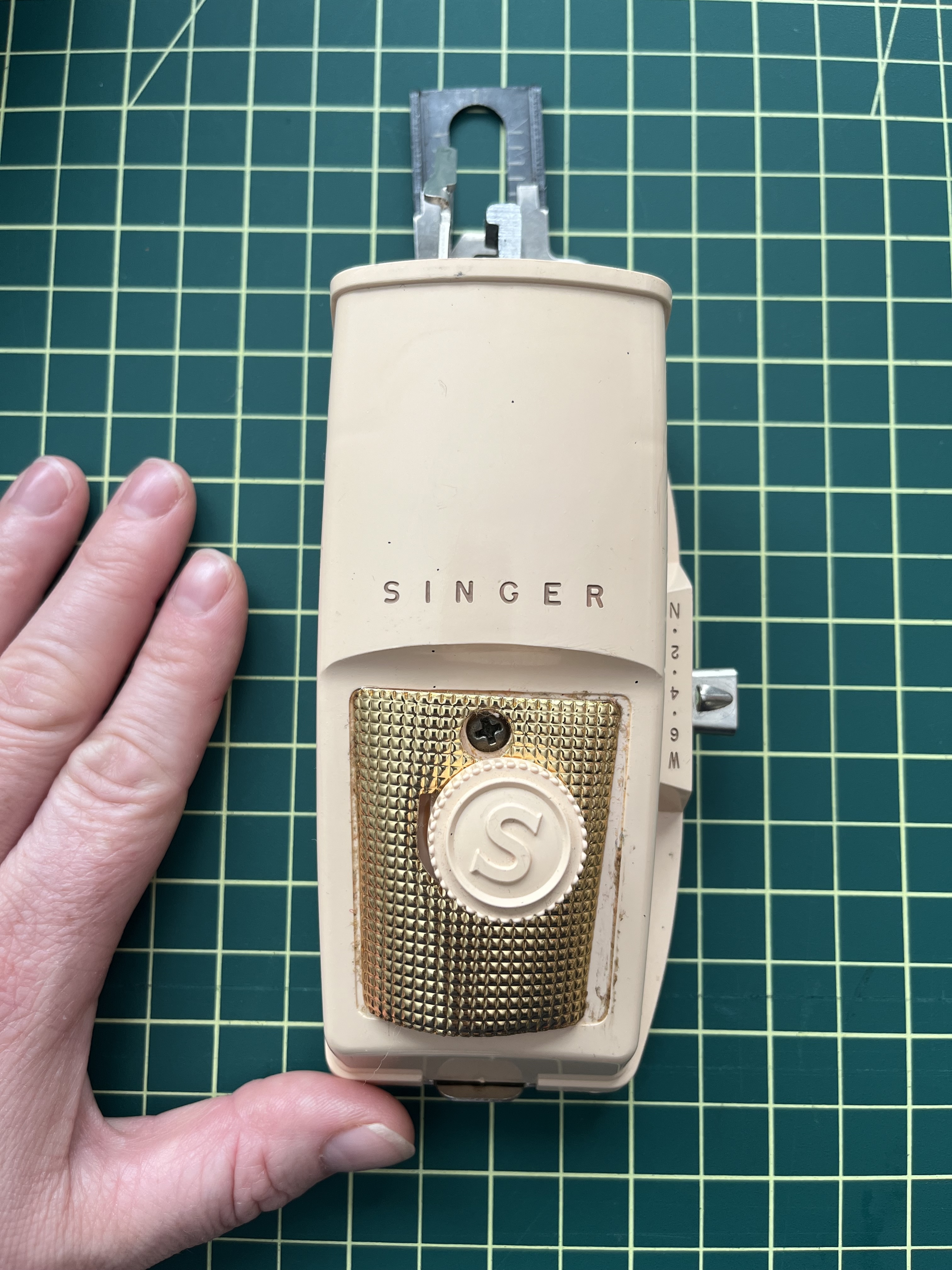
I do love a button up shirt. Making one though? I gave it some more consideration and buttons seem…challenging. Not to mention, I am absolutely terrified of the buttonholer attachment for my Singer. I mean, just look at that thing. So while a button up top would probably get a lot of wear, for this project I think I need to go a little simpler. The Donny shirt it is! It has some challenges that I’m willing to try tackling like inserting a collar and sleeves but there are no closures.

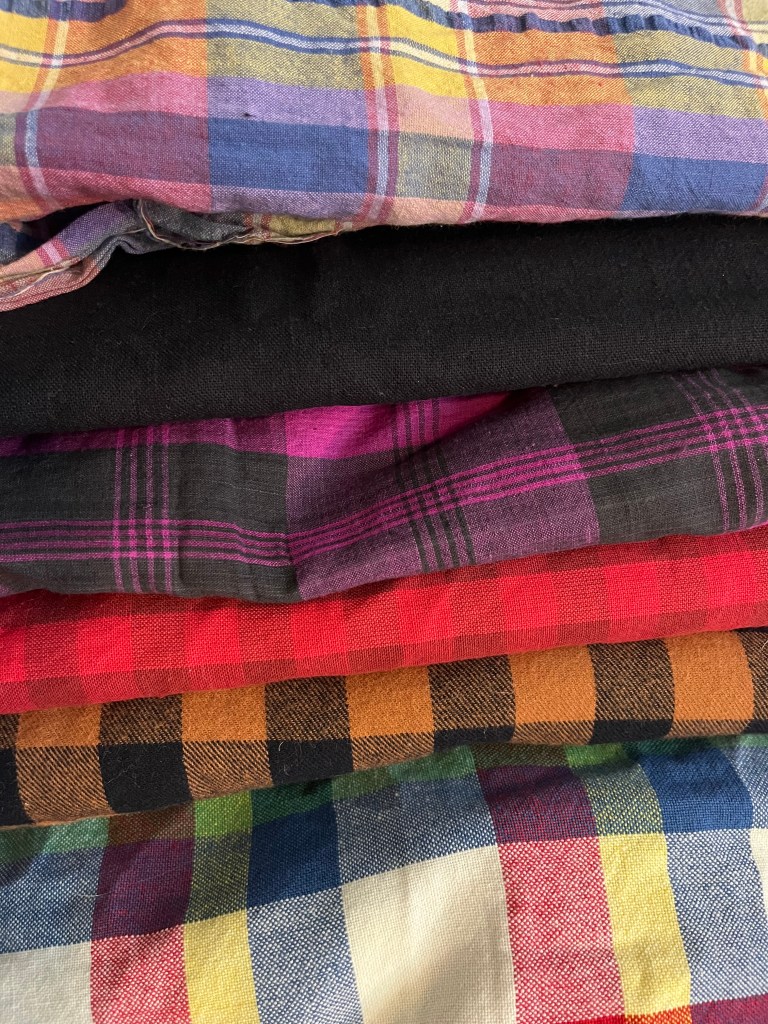
For the fabric, I learned my lesson on my last shirt project: no quilting cottons! I recently loaded up on fabric at the Textile Center’s annual garage sale, and I mean LOADED up. I felt so lucky, I got some really incredible fabric I’m really excited about, especially some of the linens and patterned cottons. I came home with two grocery bags full! I pulled out my options and started holding them up to my body and to the light to determine drape and opacity. The photo below has my favorites that I’m considering for this sewing project.

Fabrics from the Textile Center fabric sale except for the brown and black flannel (that came from SR Harris)

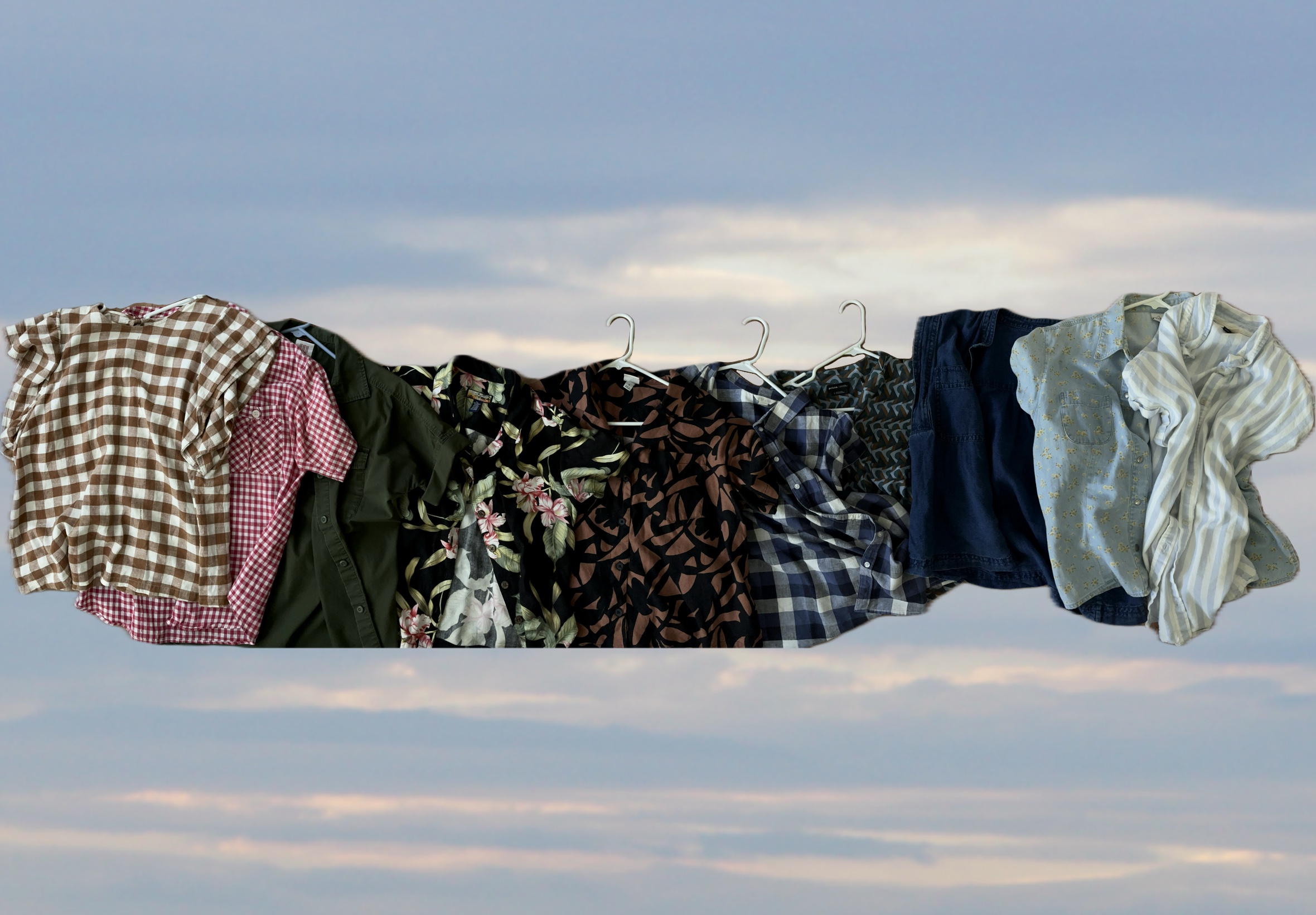
I also wanted to be mindful of what I actually wear and what I just aspire to wear when it comes to color. When I look at my closet it’s a little humorous–there’s a whole lot of navy, grey, black, plaid, and stripes. What can I say? I like what I like. Probably no florals this time around. My most-worn t-shirts are black.

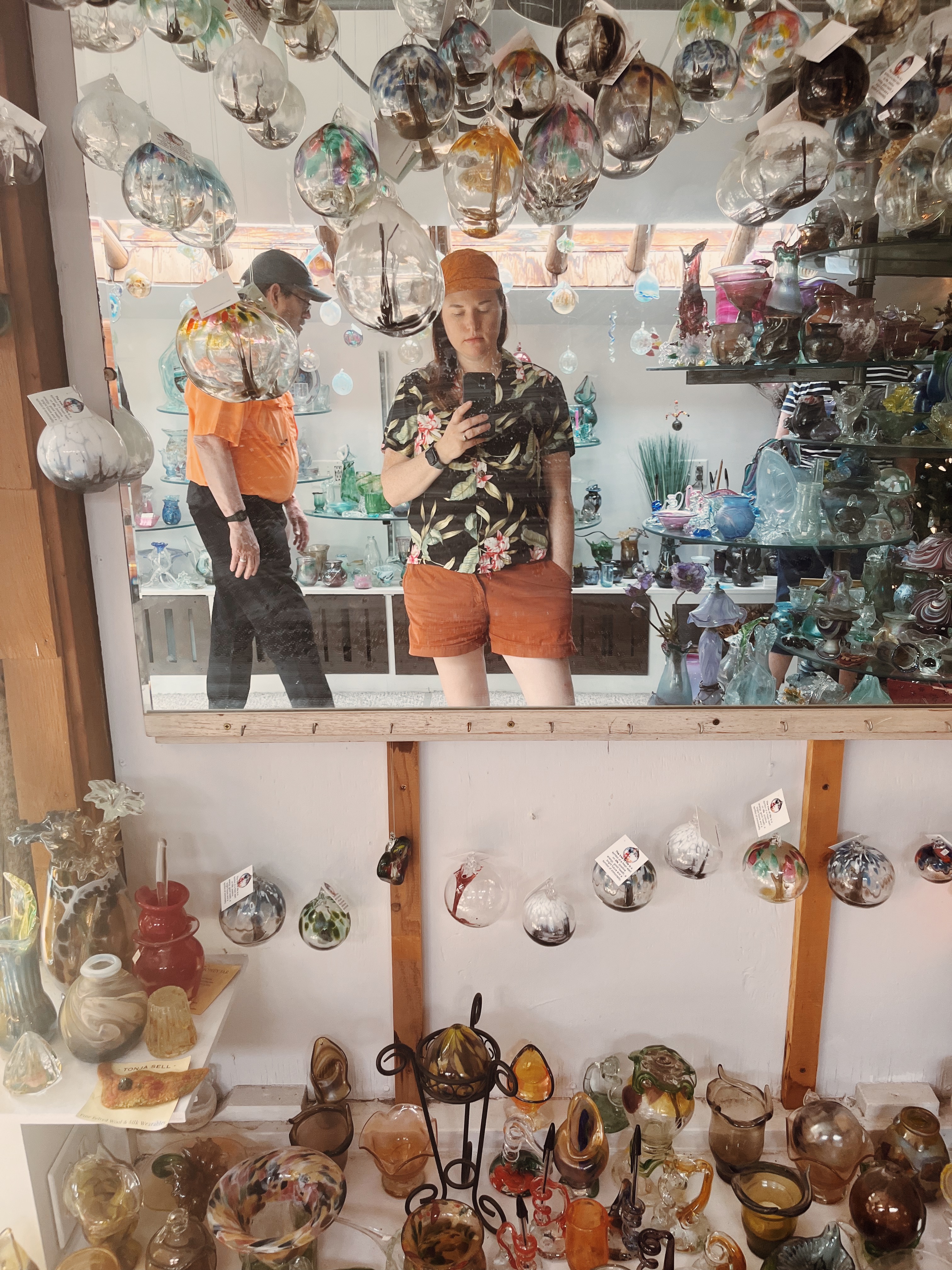
I found it really helpful to pull out my button down tops to look at their colors and patterns too. My favorite favorite shirt to wear right now is that black Hawaiian shirt, funnily enough. I bought it this summer in the curated vintage clothing section of a little shop in Cornucopia, WI. I like the cut, the drape, the feel of the fabric, the black with the bold floral–basically everything about it. It’s 100% rayon. I can’t believe this is my only black top that’s not a t-shirt! And it’s not even a solid black. This is beneficial data.

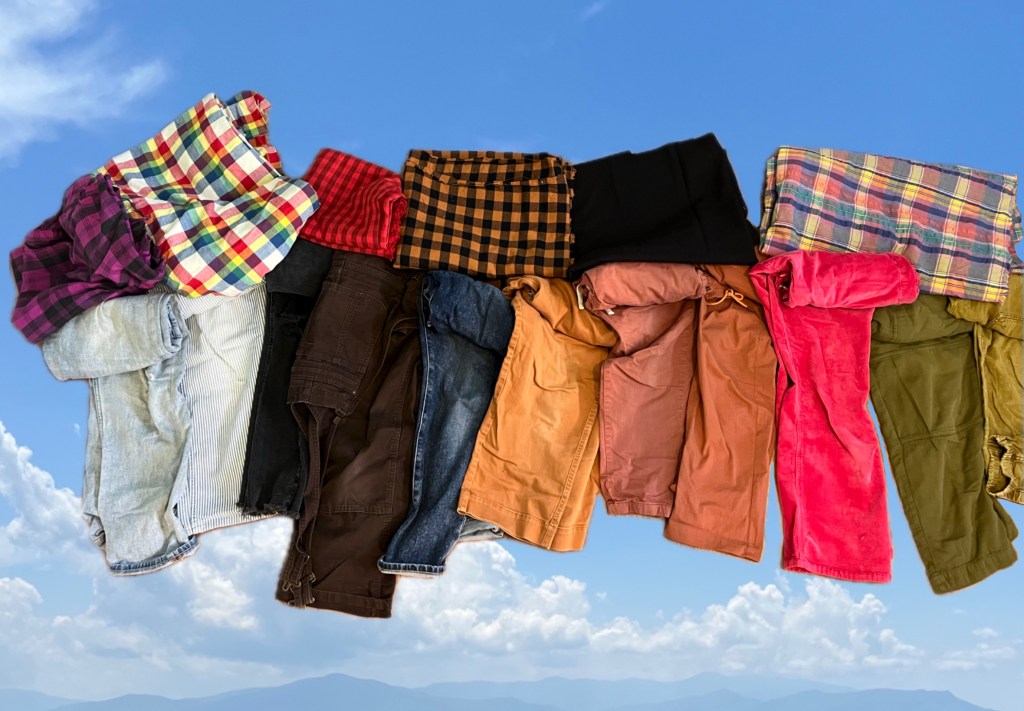
The other extremely helpful idea I had was to pull out my favorite/most worn pants (and overalls) to see if the fabrics I’m auditioning work with them. I’m really liking some of these fabrics with my pants. Which fabric would you choose?

pants with fabric in spaaaaaace

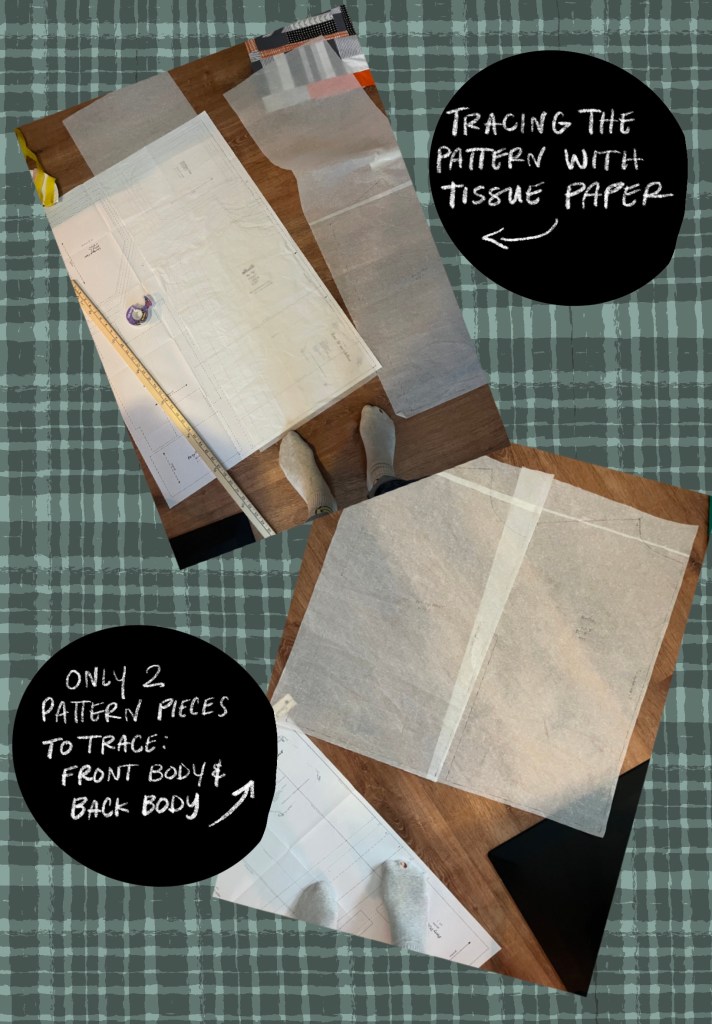
I bought the pattern at a local shop! I’m glad I didn’t have to get this one printed, but I will still trace it using Swedish tracing paper so I can choose to continue to use the pattern over and over. I’m hoping to write weekly about this project so check back in on my progress and to see what fabric I chose. Thanks for checking in!

Ash

I Made My First Garment!

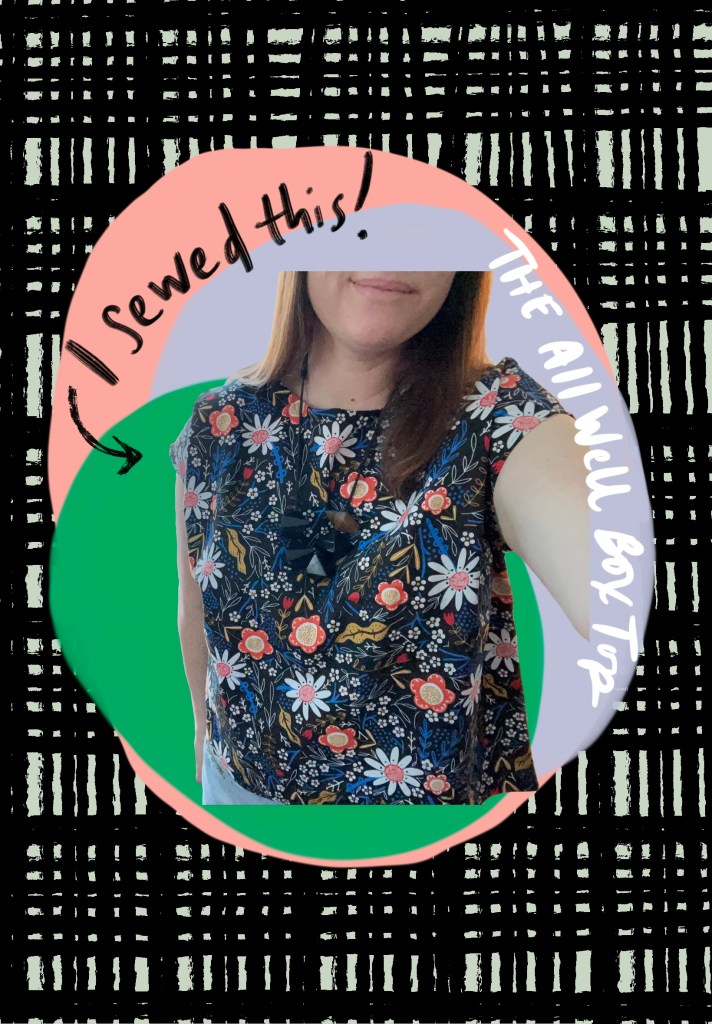
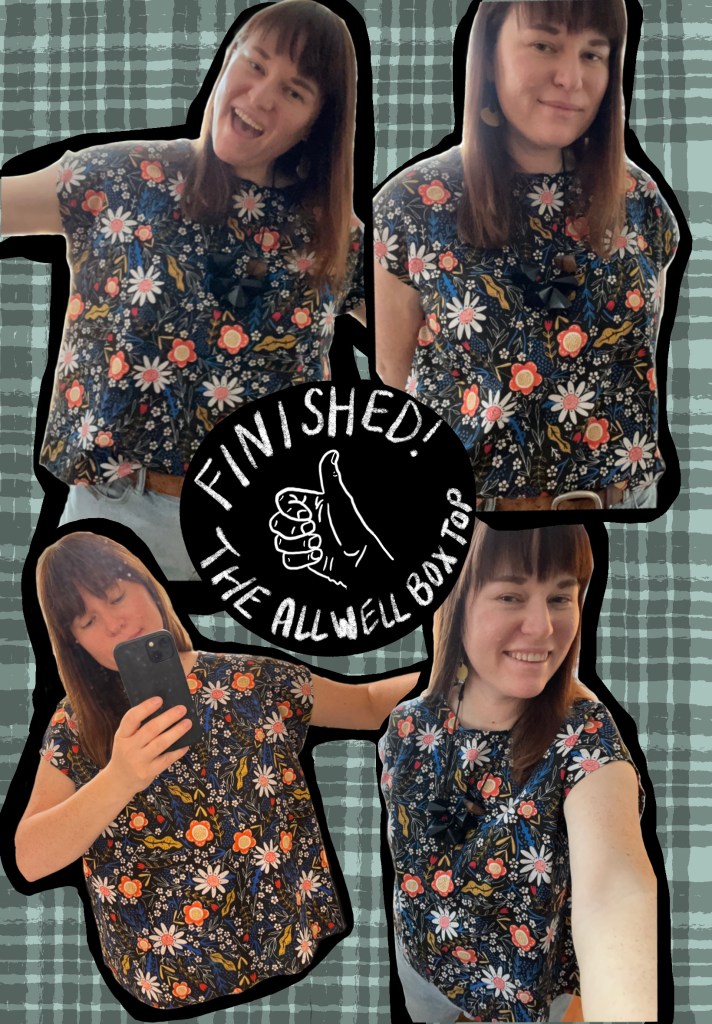
I don’t really like it, and that’s OK

TL;DR: I made my first garment and it took me a long time but that’s ok because I’m still learning. I don’t like the fabric I chose but I do like the pattern and will make it again after giving more thought to the fabric.

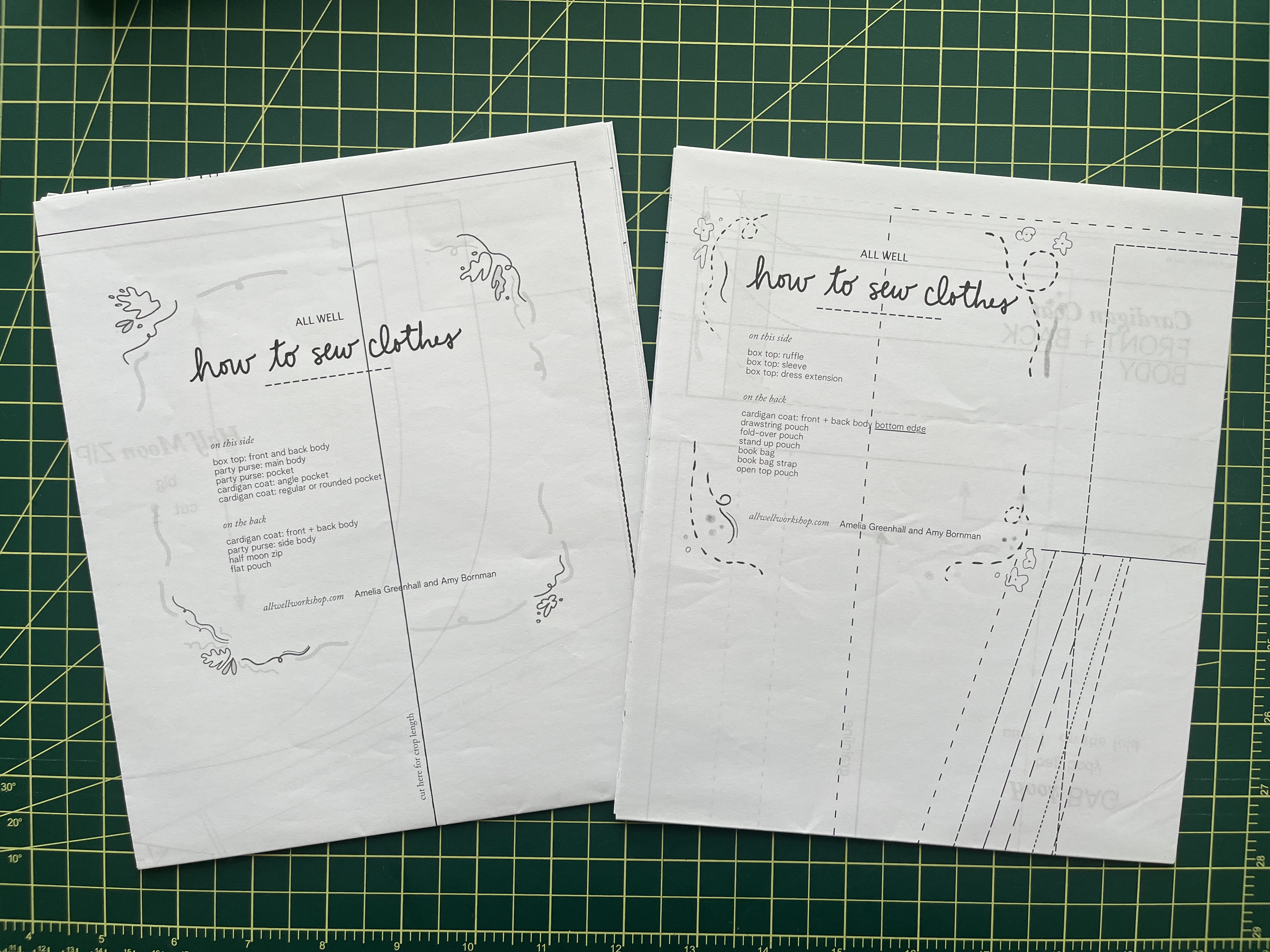
Pattern: The All Well Box Top from the book How to Sew Clothes by Amy Bornman and Amelia Greenhall

Fabric: Birdsong: July Floral in Raven by the designer Gingiber for Moda

Notions Used: .25 in wide black double fold bias binding by Wrights, 50 wt black cotton thread by Guttermann

Size: 3, no modifications

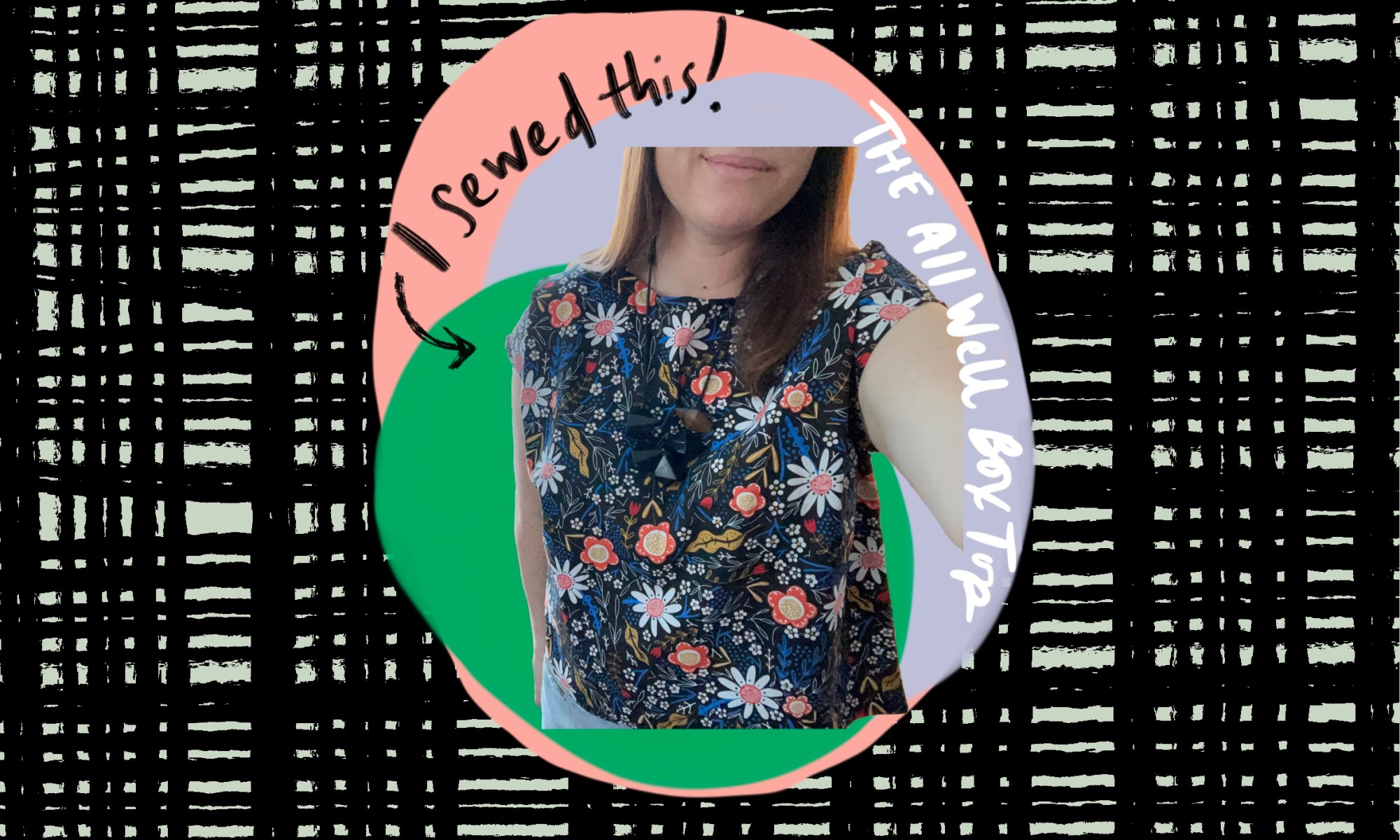
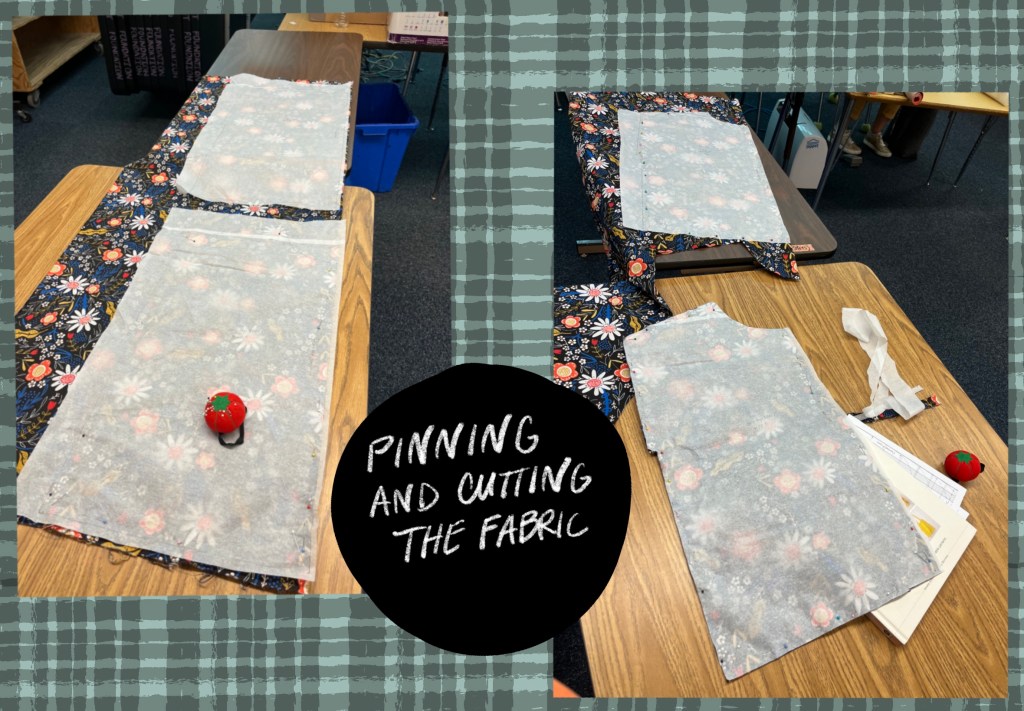
In the first full week of autumn 2023 I started working on my first garment. I chose what looked to be the absolute simplest garment I could, and that’s the Box Top from All Well Workshop. All Well is a collab between Amy Bornman and Amelia Greenhall. They sell patterns on Etsy (and their own site has a pay-what-you-can for their studio pants pattern) and they have a newish book (published by Abrams February 2023) titled How To Sew Clothes. They both have their own Substack newsletters found here and here, as well as an All Well newsletter found here. I subscribe to them all, they’re both great writers and have interesting, valuable things to say about creating. I cannot for the life of me remember how I found out about All Well Workshop but I’m so glad I did! This book came at just the right time for me. In April 2023 I set up my home office space into my sewing studio because of a burning desire to start quilting again. I hadn’t sewn since 2017 (except for a hand sewn felt alphabet I made for my kid in the beginning of 2021). I’ve kept up my sewing practice ever since spring of 2023, more or less, but it wasn’t until the fall that I finally had a desire to start making my own clothes. I picked up the book How To Sew Clothes from my local indie bookstore (*PLEASE CLAP*) and dove in. It’s so approachable and truly a perfect guide for the complete beginner garment sewist such as myself. 

When you start making a new garment in a new-to-you pattern most experts tell you to make it out of muslin first so you don’t cut into your “good”/expensive fabric in case the fit is off. Did I do that? No. I did not do that. I just wanted to start and hope for the best that I measured myself correctly and selected the correct pattern size. This time it worked out for me so no regrets, it’s nice and boxy and what I expected! What I wish I had done, though, is take a beat and actually decide if the fabric I selected for the project made sense for me. Where was I planning on wearing this top? What would I wear with it? Do I even like the print I chose for a garment?? The answer to that last question is a no, unfortunately, but I didn’t realize this until I started sewing and then decided I might as well finish and see if it fit well.

I found the fabric I used for the box top while shopping at SR Harris (the chaotic one in Brooklyn Park, MN. If you’ve been, have you ever given thought to how many dead rodents are probably in that place? Sorry!). When I saw it my immediate thought was “cute print”! SR Harris doesn’t seem to usually carry fabrics like that there. It’s a print called Birdsong: July Floral in Raven by the designer Gingiber for Moda. It IS a cute print but there’s just something about it that I don’t like. It’s too busy for my taste, I suppose? I don’t usually wear florals either so I don’t know what I was thinking getting it for a shirt. It’s also a quilting cotton so it’s not exactly the softest, nicest textile to have against your skin. If I were making this shirt again for the first time I would’ve chosen a solid fabric or a simple grid or plaid patterned fabric and maybe not a quilting cotton (it is easy to work with though!). Maybe you’re seeing the photos and you like it and I love that for you. It’s a cute fabric and I could totally see myself using some of the leftovers I have in a quilt. But for me, I just wish I had made a boring black shirt.

I can’t help it OK?

Since this was my first time sewing a garment I wanted to have help available if I ran into trouble. Normally I would turn to my mom for assistance who is a great sewist and knows her stuff but we don’t live in the same city. I know other people who sew but I also didn’t want to be a bother. When browsing the adult enrichment community education class catalog I came across the perfect class for my needs called Sewing Workshop. It was 3 consecutive Thursday evenings and each class was 2 hours and 45 minutes long. The great thing about this class is that you can work on whatever you want and an experienced, knowledgeable instructor is there to help you if you get stuck. All you need to bring to class is your own pattern, fabric, and notions; if you don’t have a machine (or don’t want to haul yours there) they have sewing machines and sergers available too. I found out after I signed up that many of the students are repeat customers, having signed up for the class several times before. Some just find it helpful to have that time carved out of their schedule in a place away from their home to work on their sewing projects. It was also really energizing to see so many of us working on different things–one woman was tackling overalls for her partner, another was making pillowcases and most of the rest of us were making tops.

I regret not writing about the minor hiccups I encountered sewing the box top at the time they happened because I’ve forgotten them all now. The one thing I do remember happening is during class my machine suddenly started to make a funny noise while sewing that it wasn’t making before. The instructor inspected it and decided what if we just tried changing out the needle for a brand new one? Admittedly I wasn’t sure when I last changed the needle. Thankfully that did the trick and the noise disappeared.  

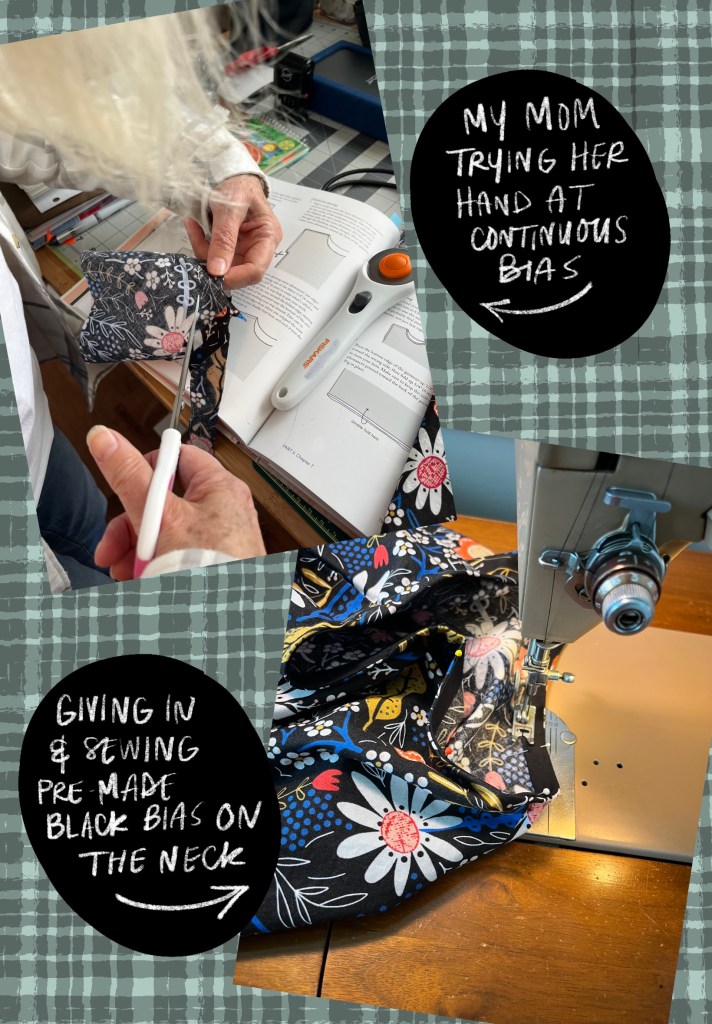
I think the average person who makes this top would finish it way faster than I did. It took me all 3 classes plus extra time at home to finally complete the box top, but I did it! In hindsight that’s kind of embarrassing it took so long to make such a simple garment but we all have to start somewhere. I did all but the bias binding around the neck opening during class time. When my mom was in town for a visit she was able to help me complete the bias around the neck as I found that to be the most challenging part of the pattern. I tried probably 3 times to make my own continuous bias binding out of the same fabric as the shirt and failed each time. All Well even has a video tutorial on how to make this but it didn’t work out for me so I just bought some black bias tape and called it a day. This skill is definitely on my list of things to learn though.

If you want a peek into the book before buying I found this YouTube video of a woman basically flipping through the book with commentary to show off the different things you can learn (or get it from your library! I know my library system has a few copies). The book is only tops/dresses/jackets and bags so if you were hoping to sew some pants, a jumpsuit, shorts, etc this is not the book for you! For the most part I liked the illustrations of the steps but sometimes, some steps are just better suited to a photo so there were times I wished those were included.

Will I make another All Well Workshop box top? I absolutely want to and I want to try some of the variations on the top that they offer in the book. Next time I’ll:

  • Choose a solid or simpler patterned fabric
  • Maybe try color blocking the front?
  • Do a high/low hem
  • Make the box dress?

When I do, I hope to write about it. If you made it this far, thanks for reading!

Ash

Still proud :’)